
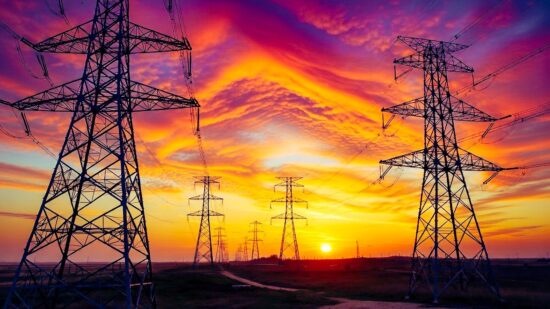
As environmental attorneys, we spend much of our time advising clients on regulatory risk, compliance, and strategic opportunities. Increasingly, those conversations converge on a single issue: energy, specifically electricity. Looking ahead to 2026, electricity is shaping up to be not only the defining environmental issue but also one of the most consequential economic and geopolitical matters of the year.
Importantly, this is not a pessimistic observation. It is an opportunity for prosperity while at the same time improving the human condition, if approached with realism, balance, and a renewed commitment to reliability.
Energy Demand is Accelerating
At its core, 2026 represents an inflection point. Energy demand is accelerating rapidly, the infrastructure required to support that demand is lagging, and the desire to transition to cleaner sources remains tepid and constrained. All of these forces are colliding at once. How policymakers, utilities, and businesses respond will define environmental outcomes for years to come.
The underlying driver is scarcity. For decades, the U.S. energy sector has been operated by mandated government monopolies in an environment of relatively flat demand growth. Planning horizons were conservative, permitting timelines were long, and incremental change was the norm. That world no longer exists. The exponential growth of artificial intelligence and data centers, coupled with dramatic demand from enhanced HVAC and increased intake of fresh air, has fundamentally altered the demand curve. Electricity supply has not kept pace and cannot do so quickly under the current regulatory and permitting frameworks.
For the climate focused among us, this matters enormously. The production and consumption of energy, especially electricity, remain the single largest source of global greenhouse gas emissions. For those who view climate change as the paramount environmental issue, electricity generation sits at the center of the problem and, therefore, the solution. Reducing emissions without addressing how we generate, transmit, and consume power is not plausible.
All of the Above
At the same time, it is impossible to ignore a major trend heading into 2026: the stifled and substantially slowed growth of renewable energy. Solar and to a lesser extent wind remain components of a cleaner energy future, but supply chain constraints, interconnection backlogs, land use conflicts, local opposition, and more have slowed deployment, not to mention that the economies of renewable energy only work with government subsidies. This reality does not undermine the role of renewables; it underscores the need for a diversified, “all of the above” resilient energy portfolio that prioritizes reliability and affordability alongside emissions reduction.
Maryland is an Energy Desert
Nowhere are these tensions more apparent than in Maryland. The state is, quite simply, an energy desert, and the situation is deteriorating. Maryland consistently imports more than 40 percent of its electricity from neighboring states, and that reliance is growing. State government forced coal and gas plant closures, economic shifts, and aggressive environmental legislative mandates have reduced in state generation while mandating all electric buildings, a Clean Heat standard, and a Zero Emissions Heating Equipment standard, and the like, at a time when electricity demand continues to rise across the broader PJM region.
This dependence on imported power has real negative consequences. It exposes Maryland consumers to higher electricity prices, including those who can least afford to subsidize bad political decisions, transmission bottlenecks, and increased risk of grid instability. Infrastructure investments to move power across state lines are costly, and those costs are borne by ratepayers. Reliability concerns are not hypothetical; capacity shortfalls, brownouts, and blackout risks are increasingly part of serious planning discussions at PJM and expected to begin in earnest in summer 2026. The state’s planning relies almost exclusively on one new energy source that is not going to happen, as we blogged, Offshore Wind Projects are Now ‘Really’ Dead.
The Most Expensive Utilities in the Country
It is also critical to distinguish between the cost of electricity and the reliability of electricity. Maryland’s electricity rates tell a cautionary tale. In 1972, the U.S. EIA reported the state ranked among the half dozen least expensive states for energy in the nation. Today, according to Doxo, utilities in Maryland are the most expensive in the country. While these issues are related, they are not identical.
Constellation Energy data is instructive. Since 2010, energy related price increases in Maryland have been driven overwhelmingly by transmission costs, not generation costs. Transmission costs in the PJM region have increased more than 300 percent over 15 years, while power generation costs in Maryland have remained essentially flat and have even declined slightly. A significant driver of these transmission costs is state regulation, most notably, according to Constellation is the Building Energy Performance Standard, which is accelerating the electrification and move to net zero large buildings without any commensurate expansion in local generation or transmission. Testimony at a recent hearing included that “Maryland is among the last jurisdictions that has not retreated from what is now recognized as impossible to reach net zero emissions.”
Most ratepayers, not just in Maryland, but across the country, are paying more for electricity this January than they did one year ago. Data centers appear to be getting much of the blame in the mass media, but they are not yet the energy hog they are made out to be and they are not part of the equation in Maryland despite plans for multiple data centers elsewhere in the PJM territory.
The subject of much dinosaur media attention last week, Bjorn Lomborg of the Copenhagen Consensus, cited data from 70 countries and multiple U.S. states from New York to Texas, concluding “the evidence is clear: Adding more solar and wind to the energy supply pushes up the price of electricity.”
Reliable Electricity
Energy security compounds these challenges. Reliable, affordable electricity is no longer just a local issue; it is a geopolitical one necessary to improve the human condition of the poorest among us. States and nations alike are reassessing vulnerabilities exposed by supply constraints and geopolitical tensions. In Maryland, this has led to extraordinary outcomes: the state’s largest government electricity user halting workforce expansion despite constructing its own generation, and the largest private sector user is constructing generating facilities for self supply. These are not signs of a healthy, resilient grid.
Against this backdrop, symbolic government gestures and litigation driven strategies offer little practical benefit. Announcements of accepting dark money to study potential climate litigation against energy suppliers may satisfy certain constituencies, but they do not produce electrons. They do not stabilize the grid. They do not lower rates.
Occam’s razor is instructive here. When faced with competing explanations, the simplest solution is often the correct one. Maryland and the nation (.. and for that matter the globe) need to generate more electricity. Cleanly, reliably, and at scale. That means permitting reform, pragmatic policy, and an honest assessment of trade offs. It means embracing innovation while acknowledging engineering and economic realities.
The solution in Maryland is not Luddite local laws, like Bill 54-24, enacted in Baltimore County, which restricts data centers in the name of conservation of electricity.
Closely associated with this issue, and with reliability, we blogged earlier this year about Battery Storage: The New “Must Have” Amenity in Commercial Leases. Beyond only emergency backup, battery energy storage systems improve day to day operational stability. If the one word advice in the 1967 film The Graduate was “plastics,” the one word advice in 2026 may be “batteries.” But today’s batteries, which have their own negative externalities, will only take us so far.
Beyond 2026
Thinking bigger and beyond 2026, it should be lost on no one that Bitcoin is based on energy. Energy is becoming the true currency. Or stated otherwise, power generation is going to be the de facto currency.
That may be a future view, but it will start in the short term, maybe within 3 years, with solar powered AI satellites.
Energy, especially electricity, will define environmental law and policy in 2026. If approached constructively, it will portend a more prosperous and more resilient era. The challenge is not whether electricity will be the central issue; it already is. The question is whether we will meet that challenge with seriousness, balance, and the resolve to keep the lights on while building a reliable, affordable, and sustainable future for all of us.
_________________________
Join us for the next in our webinar series at the Intersection of Business, Science, and Law, “Exposomics is the Environmental Issue Your Business Should Take Seriously” on Tues, Jan 20 at 9 am. The webinar is complimentary, but you must register here.