
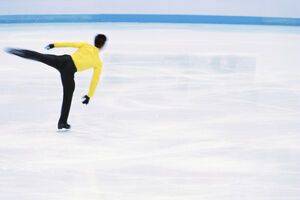
The Winter Olympics certainly generated its fair share of headline-grabbing stories over the last few weeks. In the figure skating, one of those stories was that surrounding Spanish skater, Tomas-Llorenc Guarino Sabate, and his now famed Minions-inspired routine.
As well as capturing the imagination of many fans with his yellow T-shirt and blue overalls costume, evoking the outfits worn by the distinctive pill-shaped creatures from the Despicable Me franchise, Sabate found himself at the centre of a copyright clearance issue for the “Universal Fanfare” track that he planned to incorporate into his routine.
Sabate, however, was not the only figure skater to face such issues at the Milano-Cortina Games, with several others also encountering copyright clearance hurdles affecting their preferred choice of music.
This article examines the intellectual property considerations underpinning these matters and why they ultimately reached varying conclusions. It also discusses the key considerations that must be borne in mind when considering the use of creative works owned by another, especially at one of the most-watched global sporting events.
For further on the broader legal talking points and challenges impacting the XXV Winter Olympic Games, please see my colleague Henry Goldschmidt’s Sports Shorts article: High stakes: Traversing the legal terrain of Milano Cortina 2026™.
Background
In competitive figure skating, skaters perform two distinct routines: 1) a short program and 2) a free skate. Both programs are choreographed and synchronised to music (sometimes cuts from different artists or medleys from the same artist) selected by the skater(s). This must meet prescriptive technical and structural requirements set out in the rules of the sport’s international governing body, the International Skating Union (“ISU”).[1]
For decades, the ISU’s rules restricted figure skaters to the use of purely instrumental music (or music containing vocals but not lyrics or words). This restriction led figure skaters to be more inclined to use traditional music in their routines which was typically out of copyright protection and meant that obtaining copyright clearance from the rights holder was not an issue.
However, in an attempt to modernise the sport, the ISU relaxed its rules in 2014 to permit lyrics and words in music.[2] Following this rule change, figure skaters began to choose more modern music that was still under copyright protection and which required permission to be sought from the rights holder(s), including for the use of music during routines within the competition venue, for the broadcasting of the performance internationally, and for other uses of the performance such as online. In some cases, where the necessary permissions were not obtained, figure skaters and other stakeholders (including broadcasters) began to find themselves on the end of copyright infringement claims.
To mitigate the risks of such claims, the ISU recommends that figure skaters use third-party platform, ClicknClear. They are able to both assist with verifying whether a licence is easily obtainable and to legally license music to figure skaters for use within their routines. That said, receiving a licence facilitated by the platform is not guaranteed. This is because “record labels and publishers … have the sole discretion to approve or deny uses of their music and set license fees.”[3]
Whilst it is not clear whether all figure skaters did in fact use the ISU’s recommended platform to assist them in obtaining the relevant permissions, several (with perhaps Sabate being the most high-profile) did encounter copyright issues impacting their preferred choice of music for performances at this year’s Milano-Cortina Games.
i) Tomas-Llorenc Guarino Sabate
The most well-publicised figure skater impacted by copyright issues was Tomas-Llorenc Guarino Sabate. The six-time Spanish national champion made his debut in the men’s event.
As mentioned above, Sabate had planned to employ his Minions-inspired routine at the Games as he had done throughout the 2025-26 season. His choice of music and costume have made him a firm favourite amongst fans, including at the 2026 European Figure Skating Championships earlier this year in Sheffield where he finished 18th and won a legion of new followers.
At the Winter Olympics, Sabate contended that he had submitted his request to use “Universal Fanfare” by The Minions via the ClicknClear system in August last year. However, just days before the men’s event was set to begin, Sabate was informed by the ISU that he did not have copyright clearance to use music from the rights holders to the franchise. This left him scrambling to locate alternative music for his routine on the eve of the competition.
Nevertheless, after taking to social media to highlight his plight he became somewhat of an online cause célèbre, with social media users employing #lettheminionskate in solidarity.
Following negotiations, the rights owner, Universal Studios, gave the relevant approvals.[4] This in turn paved the way for direct discussions with representatives of Pharrell Williams, the singer of one of Sabate’s chosen songs, leading to him obtaining licences for all four music pieces required.
ii) Marie Jade Lauriault and Romain Le Gac
The husband-and-wife duo previously competed at the 2018 Winter Olympics in PyeongChang where they represented France, placing 17th; this year, they competed for Canada in the pairs figure skating, having represented the country since 2020.
The duo had originally planned to use two Prince songs (“Thunder” and “Cream”) for their 1990s-themed rhythm dance. However, late last year, they were informed that they would not obtain clearance for use of “Thunder” at the Winter Olympics. This was despite having performed to the song throughout the season, although it is not known whether clearance had in fact been secured for these previous performances.
Upon learning that they could not use “Thunder”, the duo experimented with a range of other songs to accompany Prince’s “Cream”. They ultimately settled on “Sex Bomb” by Tom Jones for which copyright clearance was available.
iii) Loena Hendrickx
Hendrickx is a five-time Belgium national champion and two-time World medallist.
The 2024 European champion had competed in two previous editions of the Winter Games prior to her appearance at the Milano Ice Skating Arena and had “established herself as one of the sport’s most consistent and accomplished skaters.”[5]
Hendrickx’s preferred choice of music for her short program was “Ashes” by Celine Dion from the 2018 film, Deadpool 2. Nonetheless, it became apparent that obtaining the rights would be a lengthier process for a performance at the Winter Olympics (where commercial considerations are far greater) than at less prestigious competitions.
Having realised that obtaining the rights to her preferred song would be protracted, Hendrickx pivoted to another Dion song, “I Surrender.” Released in 2002, obtaining a licence for this older song was far easier and available at a reportedly limited price (€50).
iv) Petr Gumennik
Gumennik is the 2026 Russian national champion who, like Sabate, made his debut in the men’s event. Alongside other athletes from Russia and Belarus, Gumennik competed as an Individual Neutral Athlete (‘AIN’) at the games after both nations’ previous designations were banned following the Russian invasion of Ukraine in 2022.
All season, Gumennik had performed to music from the 2006 psychological thriller film, Perfume: The Story of a Murderer, for his short routine. However, like Sabate, he too learned that he did not have the proper permission to perform to the music just days before the men’s event, forcing him to also consider other options.
Last season, Gumennik had used music from the space opera film, Dune, and he initially hoped to be able to use this music as a substitute at the Winter Olympics. But, given the limited time available, he was not able to obtain the necessary clearance. This left him with no alternative but to use different music. He therefore opted for “Waltz 1805” by Edgar Hakobyan, for which he was able to get permission.
Gumennik’s free skate music from the Russian historical romance film, Onegin, did have approval and he was therefore able to use it. Nonetheless, his unfortunate situation was in direct contrast to his compatriot, Adeliia Petrosian. Also competing as an AIN, she reported no issues with her choice of music for the women’s event: 1) a Michael Jackson medley for her short program, and 2) a classical piece for her free skate.
v) Amber Glenn
Glenn is a three-time US national champion who secured gold in the figure skating team event at this year’s Games. During the free skate event, Glenn performed to “The Return” by Canadian recording artist, Seb McKinnon. However, having watched the performance, McKinnon – who performs under the name CLANN – took to social media to raise doubts as to whether the relevant clearances had been obtained. This was despite Glenn having performed to the track for approximately two seasons without prior objections by the artist. McKinnon’s response was later described as a misunderstanding by both parties, with the performer congratulating Glenn on her triumph.
In contrast to the other examples cited, Glenn’s case was unusual in that her copyright clearance was questioned by the artist themselves post-performance. All of the other figure skaters faced copyright clearance issues in relation to their music choices prior to taking to the ice.
Copyright
As can be seen, the legal issue at the heart of each of these cases was that each of the figure skaters wished to perform to music still benefiting from copyright protection and therefore required the necessary clearances to be obtained from the relevant rights holders.
From an English law perspective, copyright is an intellectual property right that grants the owner the exclusive legal right (subject to some limited exceptions) to copy, distribute, adapt, display, and perform a creative work. It extends to original creative works, including those of a literary, dramatic, artistic and musical nature. It also covers films, sound recordings, broadcasts and typographical arrangements. The principal statutory framework governing copyright under English law is the Copyright, Designs and Patents Act 1998, commonly referred to as the CDPA.
To legally use copyright music within their routines, the figure skaters thus needed to obtain prior permission from the relevant rights holders to use their chosen songs during the Winter Olympics in Italy. Typically, this will be way of a licence. However, as some found to their detriment, obtaining a licence is not always a quick or straightforward process and can be challenging to navigate.
The intricacies of music licensing for public performance can differ from jurisdiction to jurisdiction and, when tracks are included in public performances at events of such a scale and appeal as the Winter Olympics, the full array of commercial licensing considerations need to be factored in when obtaining appropriate clearances from the relevant rightsholders. Such considerations, include, for example, the scope of the event’s international broadcasting arrangements taking into account the jurisdictions in which those broadcasts are aired and the nature of the platforms and channels through which they are made available. This is one of the reasons why platforms such as ClicknClear advise securing global sports performance licenses rather than domestic-only clearances.
Key Considerations
Had any of the figure skaters used music in their routines without acquiring a licence, it could have risked enforcement action by the relevant rights holder against multiple parties. Such affected parties could potentially have included the figure skaters themselves, their respective Olympic Committees, national federations and the broadcasters airing their routines. This kind of enforcement action is what ensued in the United States following the figure skating event at the 2022 edition of the Winter Olympic Games in Beijing. It should therefore stand as a cautionary tale for figure skaters, national and international sports federations, and broadcasters alike.
Competitors in choreographed performance sports such as figure skating (as well as others such as gymnastics and dressage) therefore need to be acutely aware of the need to acquire the necessary permissions from rights holders and to ensure that the scope of such permissions adequately addresses what is being contemplated. Therefore, even if a licence is granted, it is important to be fully aware of its scope and limitations. These may include restrictions on which territories or events the licence applies to, the duration of the licence and, in the case of non-exclusive licences, there could be the risk that a licence may also be granted to another rival competitor.
Competitors should as well be mindful that even if they have used the music in a prior performance without issue, it does not necessarily follow that future use of that music will be issue free. Indeed, several figure skaters who faced copyright challenges at this year’s Games experienced difficulties despite having incorporated the same music into earlier routines, in some cases within the same season. Therefore, where approval has been expressly obtained for and limited to particular events, competitors should note that this cannot be relied upon for additional future events, particularly those as high‑profile as the Winter Olympics.
To mitigate against the risks of not obtaining the necessary copyright clearances for their first choice music, competitors may wish to consider alternative options. They could, for example, use less well known or older songs in their routines. As discussed, it was far easier for Lauriault and Le Gac, Hendrickx, and Gumennik to obtain permission for their secondary choices than it was for them to obtain permission for their initial selections. Using more traditional or less recognised pieces may also be a more cost-effective solution as licences are often cheaper than those for well-known, contemporary songs. Another option would be for competitors to minimise the number of different songs within their routines. This is because when cuts of music from different artists or in some cases medleys from the same artist are employed, the number of potential rights holders can increase, potentially requiring additional licences to be sought.
It is also worth noting that using AI-generated music will not necessarily circumvent the requirement to obtain a licence. When he first encountered issues with his choice of music, Sabate was contacted by people who suggested that he consider using AI-generated alternative tracks. However, whether and to what extent AI music attracts copyright protection can be a complex matter, requiring careful consideration on a jurisdiction-to-jurisdiction basis. Furthermore, having performed to an AC/DC remix that was generated using AI in the rhythm dance segment, press reports highlighted that Czech figure skaters Katerina Mrázková and Daneil Mrázek met a negative reception from fans.[6] As such, using AI-generated music is not necessarily as plain sailing as some may think.
Finally, whatever copyright work competitors do decide to use, it is crucial that any applications for permission are submitted in a timely manner and to regularly review the status of submitted applications. This is because the earlier that applications are submitted, the more time performers have to source and train to alternative music for their performances should they encounter issues in obtaining the relevant clearances. Leaving copyright clearance applications to the last minute only heightens the potentially damaging consequences should clearance issues be encountered at the eleventh hour.
[1] For further, see: Sports Rules – International Skating Union
[2] Christoper Clarey, ‘‘Rhapsody in Blue’ or Rap? Skating Will Add Vocals’ (New York Times, 18 February 2014) available at: https://www.nytimes.com/2014/02/19/sports/olympics/rhapsody-in-blue-or-rap-skating-will-add-vocals.html.
[3] Sera Germano, ‘Figure Skating Faces Music Licensing Headache on Eve of Olympics’ (Sportico, 3 February 2026) available at: ‘Minions’ Figure Skating Routine Faces Olympics Copyright Complication.
[4] On 12 February, Reuters reported that Universal Music Group and ClicknClear had agreed “a global licensing deal enabling athletes to license music from UMG for use in choreographed sports”. For further, see Reuters, ‘Universal Music and ClicknClear sign global deal for sports routines’, (Reuters, 12 February 2026) available at: https://www.reuters.com/sports/universal-music-clicknclear-sign-global-deal-sports-routines-2026-02-12/
[5] Olympics, ‘Loena Hendrickx’ (Olympics.com) available at: https://www.olympics.com/en/athletes/loena-hendrickx.
[6] Tyler Erzberger, ‘Olympic Team Faces Massive Backlash After Using AI in Gold Medal Attempt’ (Newsweek, 9 February 2026) available at: Olympic Team Faces Massive Backlash After Using AI in Gold Medal Attempt – Newsweek.