
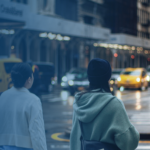
With the arrival of the fall season and progressively shorter days, pedestrians face an increased risk on the road. Reduced visibility, darkened commutes, and even increased driver fatigue can make it more difficult for drivers to spot pedestrians. Shorter days do not mean that the road is not a pedestrian-friendly place. Instead, pedestrians and drivers alike should be informed and prepared to prevent accidents. Should one occur, however, it is likewise important to know your rights.
Darker Conditions Make it Harder For Drivers to See Pedestrians
According to the National Highway Traffic Safety Administration (NHTSA), a whopping 76% of all pedestrian injuries and fatalities occurred at night, or other low-light conditions (such as dusk or dawn) underscoring the heightened risks pedestrians face when visibility is reduced. Another study, by the National Safety Council, reports that fatal crashes involving pedestrians and cyclists increase by an approximate 13% during the five weeks following the fall time change, when clocks fall back and evening comes earlier. This can largely be attributed to decreased visibility, a risk factor only increased by the naturally shorter days brought about by fall and winter. Researchers found that changing ambient light conditions played a significant role in pedestrian and bicyclist crash risk.
Reduced visibility does not mean that drivers do not see pedestrians at all, but rather that it becomes more difficult to see what is further ahead, and in turn, react to it. The risk factor in lower light conditions is that drivers may not see pedestrians until they are in much closer proximity, meaning there is less time to prevent an impending collision.
Another, and more surprising factor, is that some drivers may face increased fatigue during commutes due to temporarily disrupted circadian rhythms. Commutes where drivers are routinely used to taking in daylight are now driven in darkness, which may cause some drivers to feel groggier earlier in the evening. This also leads to a decreased reaction time, putting pedestrians at greater risk.
Knowing Your Rights as a Pedestrian
Motor vehicles do not own the road, and it is important for pedestrians to understand their rights as such. Pedestrians do not just include those commuting by foot, but also individuals who may be awaiting public transport at a designated waiting area, such as bus stops. Federal guidelines explicitly recommend that public transit stops have accessible sidewalks, clear sight lines, safe and defined crossings, and lighting. An absence of any of these indicates a transit stop that is not in line with public safety expectations— vulnerabilities that are only exacerbated by the effects of reduced visibility. Inadequate lighting fixtures, crossings, and sidewalks not only put pedestrians in a more vulnerable position, but it also makes it harder for drivers, including bus drivers, to operate safely. Faulty sidewalks, in particular, may pose an increased danger for disabled and wheelchair bound individuals, who must then cross into roadways to go around the damaged infrastructure.
Safety First: How To Prevent Accidents When It’s Dark Out
Fortunately for pedestrians and drivers alike, a number of safety measures can be put into place to prevent tragedy.
Safety tips for pedestrians include wearing reflective gear, remaining vigilant of oncoming traffic, and sticking to designated pedestrian crossings whenever possible. For cyclists, reflective lights can be easily attached to the bicycle’s wheels. If such products are unavailable, even simply wearing brighter colors helps to make one more visible to oncoming headlights. If possible, pedestrians and cyclists may also take a further safety measure by carrying a flashlight, preventing any number of other low-light related accidents, such as hazards hidden in dark sidewalks or roadways. Lastly, it is important for pedestrians to always be on the defensive. Even if you have the right of way, it is important to look both ways before crossing any road. Taking an extra moment of pause can make a world of difference when reduced visibility is an active factor.
The burden of prevention, however, is not only on the shoulders of pedestrians. Drivers should exercise an increased abundance of caution as the days grow shorter. Reducing speed in areas that lack abundant street lamps, and even generally, makes up for some of the reaction time lost when it is harder to see. Headlights, mirrors, and windshields should always be clean, so that hard-to-spot figures are not further obstructed by dirt and smudges. Lastly, drivers should be especially cautious when approaching pedestrian crossings, bus stops, residential neighborhoods, and other such thoroughfares.
What To Do If You Are Involved In A Crash
If you are involved in a pedestrian crash or are a witness to one, the first priority is to ensure the physical safety of oneself or the affected party. If you are able to safely move, you should first make sure to move away from an area that exposes you to continued hazard. Upon being in a safe location, call 911 in case of a medical emergency. If injuries have been sustained, it is imperative to seek immediate medical attention. A documented record of injuries is vital for establishing evidence of the event and its effects.
If you are able to do so before help arrives, take pictures of the area in which the accident took place, being sure to include the pedestrian access areas in the images. If you are the pedestrian, you should also take note of the driver’s license plate number, as well as the make and model of their vehicle. Should a driver flee the scene before authorities arrive, provide a description of any identifying details.
If you were injured in a pedestrian accident or involved in a crash where inadequate lighting or other infrastructure contributed to the accident, Napoli Shkolnik can help you understand your legal rights and determine whether you may have a claim. Our attorneys handle serious injury cases involving negligent drivers, transportation-related accidents, unsafe roadway conditions, and other circumstances that may contribute to pedestrian injuries.
Contact Napoli Shkolnik for a free consultation to discuss your pedestrian accident and the legal options that may be available to you.