
Contracts are everywhere—vendor agreements, client deals, employment terms, you name it. But reviewing them manually?
That’s a slow, tedious process that eats up valuable time and leaves plenty of room for mistakes. Miss a key clause, and you could be dealing with legal headaches down the road.
Hence, more businesses are using contract review automation to speed things up and catch mistakes. AI scans agreements, flags risks, and suggests edits, so legal teams spend less time reviewing documents and more time closing deals.
But how exactly does contract review automation work? What are the best tools out there? And is it the right fit for your business? This guide breaks it all down so you can decide if automation is the upgrade your contract process needs.
What Are The Challenges of Manual Contract Review?
Going through contracts by hand can feel like a never-ending task. It’s slow, prone to mistakes, and can cause all sorts of headaches. Here’s why manual contract review is a challenge:
- Takes too long: Reading every word, checking clauses, and comparing terms can eat up hours, if not days.
- Mistakes happen: It’s easy to miss risky terms or small errors that could lead to legal trouble later.
- Inconsistent reviews: Different people might interpret contract terms in different ways, making the process unreliable.
- Tracking changes is a pain: Keeping up with edits, approvals, and different contract versions can turn into a messy back-and-forth.
- Legal updates get overlooked: Laws and regulations change, but catching those updates manually isn’t easy.
- Finding old contracts is frustrating: Searching for specific terms in a pile of contracts takes forever.
Manual contract review isn’t just slow—it’s risky. That’s why more businesses and law firms are switching to AI.
What is Contract Review Automation Software?
Ever had to comb through a contract, line by line, to make sure nothing slips through the cracks? It’s a slow, tedious process, and one small mistake can lead to costly issues.
Contract review automation software takes that burden off your plate by using AI to scan, analyze, and flag potential risks in agreements.
Instead of manually reviewing every clause, these tools highlight key terms, spot missing or risky language, and compare contracts against company policies or legal guidelines.
They help maintain consistency, speed up approvals, and reduce the risk of errors. Some even integrate with document management systems, which can help make it easier to store and retrieve agreements.
These tools don’t replace legal teams, but they handle the repetitive, time-consuming parts of contract review. That means professionals can focus on strategy, negotiations, and higher-value work—without getting buried in paperwork.
How Does It Work?
Contract review automation software uses AI and other advanced technologies to analyze agreements faster and more accurately. While features vary from tool to tool, most follow a similar process:
- AI-powered text analysis: The software scans contracts, breaking them down into key sections to identify clauses, obligations, and risks.
- Natural language processing (NLP): AI understands legal language, even when phrased differently, making it easier to catch potential issues.
- Machine learning: The system improves over time by learning from past reviews. This means it gets better at spotting patterns and flagging risks.
- Rule-based automation: Some tools apply pre-set rules to compare contract terms against legal guidelines, company policies, or industry standards.
- Risk detection and flagging: The software highlights vague terms, missing clauses, or non-compliant language that may need attention.
- Suggested edits and approvals: Certain tools provide recommendations to help legal teams speed up contract negotiation and ensure compliance.
- Integration with other systems: Many platforms sync with document management systems, e-signature tools, and workflow automation software.
Not all tools work the same way—some focus on risk analysis, while others offer full contract lifecycle management. Choosing the right one depends on your needs.
What Are The Advantages of Using a Contract Review Automation Tool?
As you probably already know, manually reviewing contracts takes too much time, and mistakes can be costly. Contract review automation tools make a difference by offering these advantages:
Creates Time For More Valuable Work
Reading every clause, checking for missing terms, and making sure everything aligns with company policies can take hours—or even days—depending on the length and complexity of the agreement.
That’s time legal teams could spend on higher-value tasks, like negotiating better terms or handling strategic legal matters.
Contract review automation speeds this up. AI scans documents in seconds, identifying key clauses, flagging risky language, and even suggesting edits.
Let’s say your team handles vendor agreements regularly. Instead of manually reviewing the same types of contracts over and over, the software can instantly compare new agreements to your company’s standard terms and point out anything unusual or non-compliant.
Reduces Risky and Costly Errors
It’s easy to miss something in a long, complex contract—especially when you’re juggling multiple agreements under tight deadlines.
Even the best legal teams make mistakes, and a small oversight can lead to major issues later. Maybe a key clause gets left out, or a contract contradicts itself in different sections. Catching these errors manually takes time, and the more contracts you handle, the harder it gets.
That’s where automation helps. These tools scan agreements with precision, flagging inconsistencies and missing terms before they cause problems.
Here are some common mistakes automation tools help prevent:
- Inconsistent terms
- Missing clauses
- Risky language
- Non-compliance
- Outdated templates
By reducing these errors, contract automation tools help you create stronger agreements, speed up approvals, and avoid unnecessary legal headaches.
Keeps Contracts Consistent
When multiple people handle contract reviews, things can get messy. One person might approve a clause, while another flags the same wording as a risk. These inconsistencies slow things down, create confusion, and sometimes even lead to legal trouble.
Contract review automation solves this by applying the same rules to every agreement. In doing so, it helps make sure everything aligns with company policies and legal standards.
Think about vendor agreements. If one contract includes a strict payment deadline and another has more flexible terms, it could cause disputes later.
With automation, every contract is checked against the same set of guidelines, so there’s no guesswork. The software flags anything that doesn’t match company-approved terms, which helps legal teams stay consistent without manually comparing documents.

Speeds Up Approvals
Getting a contract approved can feel like a never-ending process. Legal teams go back and forth on wording, executives take their time reviewing, and small changes lead to long email threads. Before you know it, a simple agreement has been stuck in review for weeks.
Automation tools cut through the delays. Instead of waiting for someone to manually spot issues, AI flags risky clauses right away and suggests edits based on company policies. This means fewer last-minute revisions and faster decisions.
For example, if a vendor contract is missing a key compliance clause, the tool highlights it instantly, so legal teams can fix it before sending it up the chain.
With automation handling the heavy lifting, contracts move through approvals faster.
Improves Compliance
Keeping up with changing laws is a hassle. A contract that was fine last year might not meet today’s legal standards, and checking every agreement manually takes too much time. Miss one small update, and it could lead to fines, legal disputes, or compliance headaches.
Automation helps by tracking the latest legal requirements and flagging outdated terms before they cause problems. If a new data privacy rule goes into effect, the software scans contracts, spots clauses that need updates, and highlights them for review.
By making legal checks faster and more reliable, contract automation helps businesses stay ahead of changes, reduce risks, and keep every agreement up to date.
Cuts Legal Costs
Legal fees add up fast, especially when every contract needs outside review. Whether it’s a lawyer charging by the hour or an in-house team stretched thin, manual contract review takes too much time—and time costs money.
Automation reduces these costs without lowering accuracy. AI-powered tools handle routine contract analysis. It flags issues and suggests edits before legal teams step in. So, rather than spending hours reviewing standard agreements, legal experts can focus on complex negotiations and high-risk contracts.
This makes contract management more efficient. Businesses spend less on routine reviews, speed up approvals, and give legal teams more time for strategic work.
Who Can Benefit From Contract Review Automation?
Contract reviews aren’t just a legal team’s responsibility. Many departments deal with agreements daily, and automation helps them work faster, reduce errors, and stay compliant. Here’s who benefits the most:
Legal Teams
Reviewing contracts one by one takes up valuable time. Legal teams already have a full plate, and spending hours on routine reviews pulls them away from bigger priorities.
With automation, they don’t have to manually scan every agreement for risks, missing clauses, or compliance issues. AI-powered tools handle the most tedious tasks.
This doesn’t just speed things up—it also reduces the chance of human error. Contracts stay consistent, risky language gets flagged early, and legal teams can work more efficiently without getting stuck in repetitive reviews.
Procurement and Sales Teams
Procurement and sales teams need contracts approved quickly, but manual reviews can create frustrating delays. Automation speeds up the process by handling compliance checks, spotting risky clauses, and making sure agreements align with company policies.
With fewer back-and-forth revisions, contracts move through approvals faster. Sales teams can finalize deals sooner, and procurement teams can onboard vendors without unnecessary roadblocks. This keeps business operations running smoothly while reducing risks along the way.
Finance and HR Departments
HR teams process employment agreements more efficiently, while finance teams make sure payment terms and obligations are consistent across contracts. Automation helps both departments avoid costly errors and delays.
Best Contract Review Automation Tools
Choosing the right contract review tool depends on your needs. Some focus on AI-powered risk detection, while others offer full contract lifecycle management. That said, we’ve compiled some of the top options to consider:
1. Percipient
Percipient is a tech-enabled legal service provider that combines automation with expert legal oversight. One of its key services is speeding up contract processing by using AI to flag key clauses, risks, and inconsistencies, while experienced legal professionals review and refine the AI’s findings.
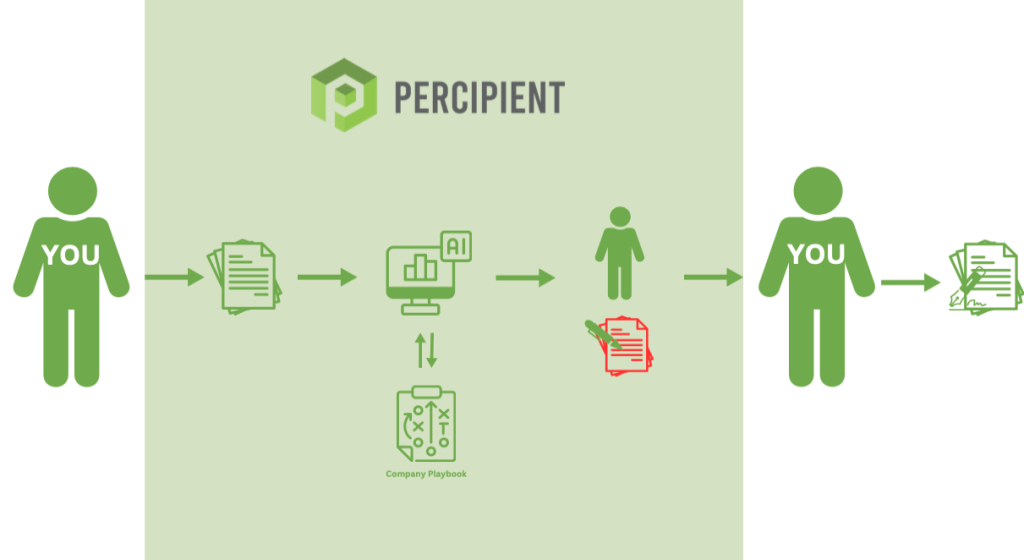
Unlike self-service tools or CLM platforms, Percipient provides a hands-on approach and works as an extension of your team. The AI handles the initial analysis, and legal experts confirm suggested edits, apply context, and address complex issues.
This combination streamlines workflows, reduces risks, and helps businesses of all sizes manage high contract volumes with confidence.
Best Features
- AI-powered contract redlining with human expertise: AI identifies key clauses, risks, and inconsistencies based on your legal playbook.
- Expert legal review: Experienced professionals validate AI findings to maintain accuracy and provide legal context.
- Faster turnaround times: A structured workflow improves collaboration and speeds up contract approvals.
- Customizable to your needs: Works with your contract standards and integrates with collaboration, communication, and CLM tools.
Percipient brings together AI efficiency and legal expertise to give you a smarter, more reliable way to handle contract reviews. Book your discovery call today!
2. Juro
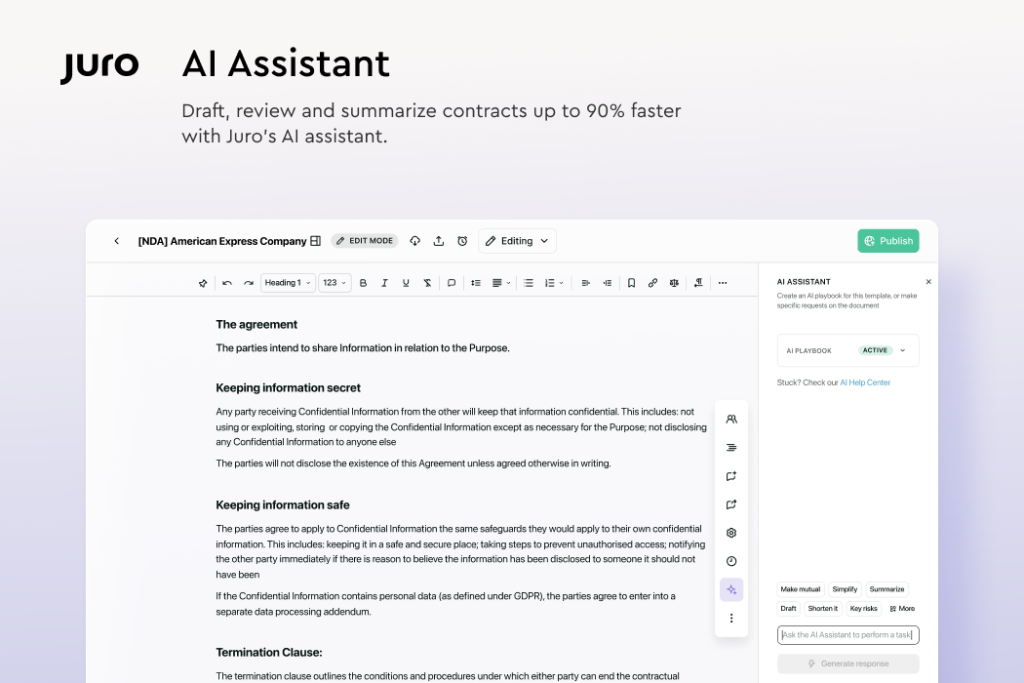
Juro is a contract automation platform that helps businesses create, review, and approve contracts without the usual back-and-forth. It replaces slow, manual processes with a dynamic, AI-powered system that speeds up reviews and keeps everything in one place.
Source: G2
With Juro, teams can draft, edit, and negotiate contracts directly in a browser-based editor. This eliminates the need for endless email chains and document swaps. AI assists by identifying key terms, spotting risks, and making sure agreements stay compliant with company policies.
Best Features
- AI-powered clause detection: Highlights important terms and flags potential risks.
- Collaborative editing: Teams can comment, suggest changes, and finalize contracts in real time.
- Automated workflows: Speeds up approvals with built-in routing and notifications.
- Seamless integrations: Works with CRM, document storage, and other essential business tools.
3. LegalOn Tech
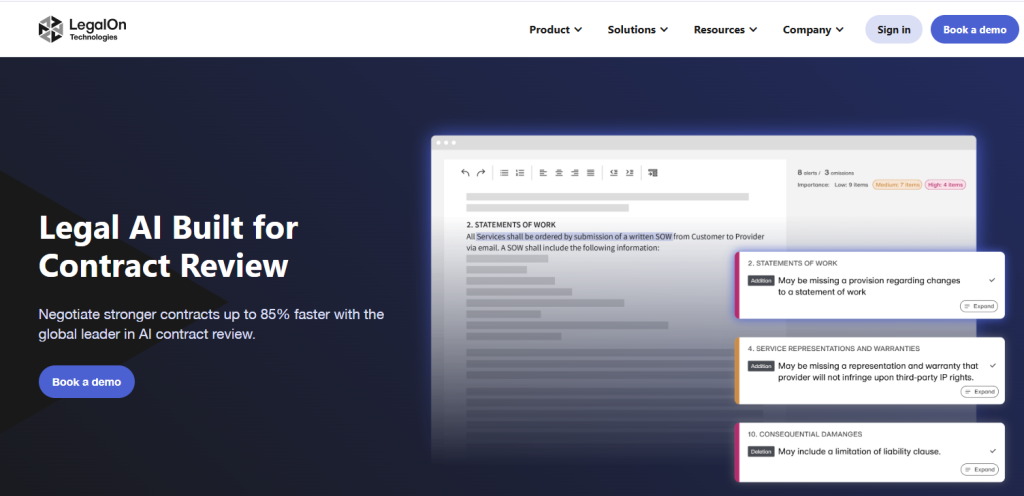
LegalOn Tech is a contract review platform built to help legal teams catch risks, ensure compliance, and speed up approvals. Using AI-powered analysis, it scans agreements for potential issues, highlights missing clauses, and suggests edits based on best practices.
Source: LegalOnTech.com
This contract analysis software is designed for in-house legal teams and law firms that need a faster way to process contracts without sacrificing accuracy. It provides pre-built legal templates, real-time risk assessments, and AI-driven insights to help professionals make informed decisions.
Best Features
- AI-powered risk assessment: Scans contracts to flag potential legal issues and compliance gaps.
- Pre-built legal templates: Helps teams create consistent, legally sound agreements.
- Clause analysis and recommendations: Identifies missing terms and suggests edits to reduce risk.
- Workflow optimization: Automates contract approvals and tracks changes for better collaboration.
4. ThoughtRiver
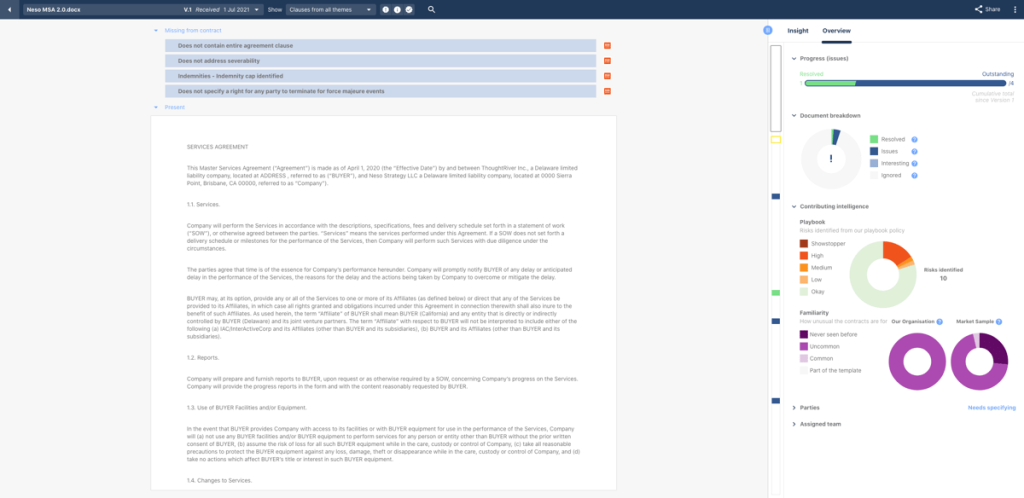
ThoughtRiver is another contract review platform that uses AI to assess legal risks and streamline negotiations. It scans agreements for potential issues, highlights problematic clauses, and provides clear recommendations to help legal teams make faster, more informed decisions.
Source: G2
Built for businesses that handle high contract volumes, ThoughtRiver applies pre-trained legal models to quickly analyze agreements and compare them against company policies.
Best Features
- AI-powered risk assessment: Identifies legal risks and suggests ways to mitigate them.
- Pre-trained legal models: Uses industry-specific insights to analyze contracts more accurately.
- Interactive risk dashboard: Provides a clear breakdown of flagged issues for faster decision-making.
- Custom policy configuration: Allows businesses to set contract guidelines tailored to their needs.
Upgrade Your Contract Review Process With Percipient
Manually reviewing contracts takes too much time, slows down deals, and increases the risk of costly mistakes. An AI contract review tool can help, but software alone isn’t always enough.
That’s where Percipient stands out. It’s not just a contract review tool—it’s a tech-enabled legal service that combines AI efficiency with human expertise.
With Percipient, you don’t have to choose between speed and accuracy. Its AI contract review handles the tedious parts while experienced legal professionals review and refine the results. This means faster contract approvals, fewer errors, and a smoother workflow for your team.
If your business deals with high contract volumes and needs a smarter way to manage them, Percipient can help.
Schedule a discovery call today and see how AI-powered contract review can optimize your contract management process!
FAQs About Contract Review Automation Software
What is contract review software?
Contract review software is a tool that helps businesses and legal teams analyze agreements faster and more accurately. It uses AI to scan legal documents, flag risks, and suggest edits to improve compliance and reduce errors. Many legal technology companies offer contract review solutions that integrate with existing workflows, making the review and negotiation process smoother.
Can you use AI to review contracts?
Contract review software is a tool that helps businesses and legal teams analyze agreements faster and more accurately. It uses AI to scan legal documents, flag risks, and suggest edits to improve compliance and reduce errors. Many legal technology companies offer contract review solutions that integrate with existing workflows, making the review and negotiation process smoother.
Can you use ChatGPT to review contracts?
ChatGPT can assist with contract review by analyzing legal documents, summarizing clauses, and identifying potential risks. However, it’s not a dedicated contract review tool and lacks the specialized features found in AI-driven legal technology companies’ software. For more accurate and reliable contract analysis, businesses typically use dedicated contract review solutions designed for legal teams.
What is contract review in software testing?
In software testing, contract review refers to the process of evaluating agreements between software providers and clients. This ensures that service levels, security policies, and compliance requirements are clearly defined. Legal teams use contract review solutions to assess these legal documents and verify that they meet industry standards before finalizing the negotiation process.
The post A Guide to Contract Review Automation Software appeared first on Percipient – Legal Services Powered by Technology.