
Partner Benjamin Wanger participated in a panel titled “AI Changes the Game. Cybersecurity Determines Who Wins” at ZogForward 2026, April 30, 2026, in Philadelphia, Pennsylvania. The discussion centered on how AI is changing business operations, where organizations have the most exposure and how aligning AI innovation with cybersecurity and compliance is essential to protect trust,
Weekly Blockchain Blog – May 4, 2026
In this issue:
- Traditional Financial Firms and Crypto Companies Launch Stablecoin Initiatives
- Crypto Companies Announce Acquisitions, AI Integrations, Proof of Reserves
- U.S. Companies Announce Tokenization Initiatives
- BIS Publishes Report on Cryptoasset Intermediaries, Policy Approaches
- USDT Issuer Freezes $344M Linked to Illicit Activity; Scam Centers Targeted
- April 2026 Losses to Crypto Hacks Reach Almost $630M; AI
Biogas Meets the Data Center Boom: How Sections 48E and 45Y Are Powering the Next Wave of Clean Electricity

For years, the Investment Tax Credit (ITC) under Section 48 and the Production Tax Credit (PTC) under Section 45 of the Internal Revenue Code provided the federal tax incentive foundation for biogas electricity projects.
An Assessment of EPA’s Progress in Deploying Artificial Intelligence in Regulatory Decision-Making

There are instances where the EPA is applying or plans to apply AI in connection with its regulatory functions. Stakeholders should be aware of what EPA has done to date and its future plans.
NERC Launches Project 2026‑02 to Address Reliability Risks from Computational Loads
The North American Electric Reliability Corporation (NERC) has determined that large computational loads connecting to the Bulk‑Power System (BPS) at an unprecedented speed and scale are reshaping demand profiles and exposing reliability gaps in both planning and operations.
AI Meets USPTO: The United States Patent and Trademark Office’s Evolution in the Digital Era
Artificial intelligence (AI) has become nearly ubiquitous in everyday life, and given AI’s widespread use across industries, it is no surprise that the United States Patent and Trademark Office (USPTO) has taken a keen interest in AI, issuing guidance on how AI should be treated and used by USPTO personnel and patent practitioners alike.
Questions and Comments:
The New Battleground—Water Rights and Data Center Development in the AI Era
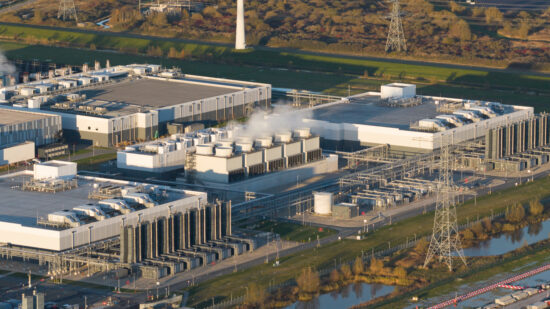
While much attention has focused on the electricity demands of AI-driven data centers, a quieter crisis is emerging around water consumption. Modern hyperscale data centers can consume between one and five million gallons of water daily for cooling systems, with some facilities using significantly more during peak operations. As tech companies announce plans to build
When Creativity Meets Code: Copyright and Trademark Troubles with AI-Generated Material
As businesses increasingly turn to generative artificial intelligence (GenAI) tools to develop brand and marketing assets – such as names, logos and product designs – they face novel legal questions, including who owns the copyright or trademark rights when GenAI contributes to the creation process.
Subscribe to BakerHosts®
Science Fiction as Prior Art?
Some inventors find their inventive spark through science fiction. Tasers, for example, were inspired by (and named after) the 1911 novel Tom Swift and His Electric Rifle.[1] Likewise, Motorola’s early cellphones were heavily influenced by the communicators in Star Trek.[2] Hugo Gernsback, the author of countless sci-fi classics and a prolific patent holder
DOE Genesis Mission: $293M Funding Opportunity for AI in Energy and Infrastructure
The U.S. Department of Energy has released a $293 million funding opportunity (DE-FOA-0003612) under its Genesis Mission to accelerate AI deployment across 26+ national challenges in energy systems, grid infrastructure, data centers, advanced manufacturing, microelectronics, and biotechnology. The focus is on creating deployment-ready solutions, not exploratory research. Unlike traditional DOE research grants, Genesis Mission prioritizes speed, integration, and measurable performance