
According to President Trump, “Tariff is the most beautiful word in the dictionary.” Throughout his presidential campaign, Trump promised to use tariffs as a central part of his foreign policy strategy. His America First Trade Policy memorandum also directs the administration to review various tariff- and tariff-adjacent levers the United States could use to further
FCA Regulatory Priorities report 2026: Consumer Investments
On 4 March 2026, the Financial Conduct Authority (FCA) published its Regulatory Priorities report for the consumer investments sector.OverviewThe FCA is introducing 9 annual Regulatory Priorities reports to replace its portfolio letters.So far, the FCA has published Regulatory Priorities reports for insurance and consumer investments.Each report outlines the FCA’s priority areas of focus for firms
New Foreign Investment Screening Regulation – Key Takeaways from the Agreed Compromise Text
On 10 February 2026, the EU released the agreed compromise text of the new Regulation on the screening of foreign investments in the EU (the “New FIR Regulation”). The three EU institutions (Commission, Parliament and Council) reached the compromise on the text in December 2025 (see our blog) following several months of trilogues (see
Synthetic Abuse, Real Harm: Closing the International Law Gap on AI-Generated Child Sexual Abuse Material
By Mariefaye (Efthimia) Bechrakis, Esq. Introduction Generative AI is often praised for its many transformative benefits across various fields, including that of law and human rights. The dual -use nature of the technology, however, has produced urgent harms, most notably the rapid rise of AI-generated synthetic child sexual abuse material (CSAM). Reports of AI generated
Outlook 2026: Emerging Technology

As innovations continue to accelerate, the technology landscape in 2026 may reach a turning point, marking a shift from research and development (R&D) to adaptation. This year’s outlook highlights a shift towards smarter, autonomous systems that operate within the physical world. Organizations that embrace this shift may thrive, while those that lag behind may risk
Sweeping Claims, Sliding Stones: Mastering AI Patent Prosecution with a Curling Twist

As the 2026 Winter Olympics captivate audiences, one sport in particular―curling―stands out as the perfect metaphor for the challenge of prosecuting AI inventions before the US Patent and Trademark Office (USPTO). Both arenas demand foresight, adaptability, and strategic thinking, whether it’s guiding a stone across the ice or shepherding an AI patent application through evolving
Sector-wide Review of the Online Video Content Creation Sector by the French Competition Authority
The French Competition Authority has published Opinion No. 26-A-02 of 18 February 2026, concerning the functioning of competition in the online video content creation sector in France. See the press release
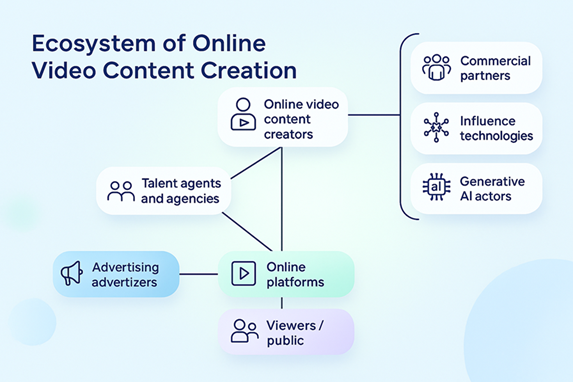
The online video content creation sector is now an integral part of the French audiovisual industry, having rapidly grown to over 150,000 professional creators
How to Negotiate with Your Chinese Manufacturers
How to Negotiate with Your Chinese Manufacturers
Most American companies hear the line “That’s not how we do it in China” and immediately start retreating.
They soften their tone, over-explain, and offer compromises before they have identified what matters. They treat the phrase like a cultural law that cannot be questioned, instead of what it
Podcast: Global Regulation Tomorrow Plus: AI mini-series – Episode 3 – Agentic AI
In the third episode of our Global Regulation Tomorrow Plus mini-series on artificial intelligence in financial services Professor Peter McBurney and Simon discuss Agentic AI and its opportunities and risks.