
On November 12, 2024, the U.S. Department of Justice (“DOJ”) published updated guidance on how the DOJ’s Antitrust Division will evaluate corporate compliance programs when making charging decisions and sentencing recommendations relating to criminal antitrust violations, such as bid-rigging, price-fixing, and market allocation schemes.[1] Notably, the new guidance for the first time instructs Antitrust
Wilson Sonsini Discusses the New National Security Rules for Investing U.S. Capital
In late October 2024, the U.S. Treasury Department (Treasury) issued its final rules (the Outbound Rules) implementing President Biden’s Executive Order (EO) 14105 on “outbound” U.S. investment. See our prior mailers here and here. The Outbound Rules will take effect on January 2, 2025, and will add a new layer of diligence to most
Government Finally Splits the Online Harms Bill: Never Too Late To Do The Right Thing…Or Is It?

Justice Minister Arif Virani yesterday finally bowed to public pressure by agreeing to split Bill C-63, the Online Harms bill. The move brings to an end the ill-conceived attempt to wedge together Internet platform responsibility with Criminal Code provisions and the potential weaponization of the Canada Human Rights Act that had rightly sparked concerns
Canadian Media Companies Target OpenAI in Copyright Lawsuit But Weak Claims Suggest Settlement the Real Goal
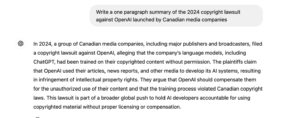
Canada’s largest media companies, including the Globe and Mail, Toronto Star, Postmedia, CBC, and Canadian Press, came together last week to file a copyright infringement lawsuit against OpenAI, the owners of ChatGPT. The lawsuit is the first high profile Canadian claim lodged against the enormously popular AI service, though there have been similar suits filed
How Low Can You Go?: DOGE and the SEC
The proposed Department of Government Efficiency (“DOGE”) in incoming President Donald J. Trump’s administration promises an ambitious agenda of “regulatory rescission, administrative reductions and cost savings” with the goal of “mass head-count reductions across the federal bureaucracy” by July 4, 2026.[1] Many questions remain about the logistical and legal paths to accomplish these objectives.
SEC Announces Enforcement Results for Fiscal Year 2024
The Securities and Exchange Commission announced on November 22 that it filed 583 total enforcement actions in fiscal year 2024 while obtaining orders for $8.2 billion in financial remedies, the highest amount in SEC history.
The 583 enforcement actions represent a 26 percent decline in total enforcement actions compared to fiscal year 2023. Of those
Debevoise & Plimpton Discusses Key Considerations for the 2024 Annual Reporting Season
As November comes to an end, the busy annual reporting and proxy season begins for many public companies. In this Client Update, we highlight key considerations for public companies when preparing their annual reports on Form 10-K or Form 20-F, including a new exhibit filing requirement for insider trading policies. For a checklist covering these
Utah Sandbox Inspires Similar Regulatory Initiatives in Canada and other States
 The regulatory sandbox modelA regulatory sandbox is a policy tool through which organizations can offer and test new models or services to assess marketability and impact, and to inform future policymaking while maintaining consumer protection. Regulatory sandboxes involve risk-based regulation and include one or more regulatory models. The regulatory sandbox model was first developed in
White & Case Discusses SEC 2025 Priorities: AI, Cybersecurity, and Crypto
On October 21, 2024, the US Securities and Exchange Commission (“SEC”) Division of Examinations (“Examination Division”) announced its 2025 Examination Priorities (“Report”). Investment advisers and broker-dealers should ensure that policies, procedures and surveillance efforts related to these priorities address concerns outlined in the Report.
The Examination Division conducts inspections of entities registered with the SEC,
Gibson Dunn Discusses New U.S. Outbound Investment Regulations
On October 28, 2024, the U.S. Department of the Treasury issued final regulations implementing an outbound investment control regime targeting AI, semiconductors, and quantum computing investments involving China that raise national security concerns. The regulations’ prohibitions and reporting requirements go into effect on January 2, 2025.
Outbound investment regulations have arrived, and with them the