
The Weinberg Center’s fifth annual “ESG in the Boardroom” program, titled “Shareholder Proposals at the Crossroads: Boards, ESG, and the Future of SEC Rule 14a-8,” held April 28 in Wilmington, Delaware, brought together directors, jurists, advisors, and regulators to examine a governance environment in which boards are operating with less regulatory certainty and more direct
The CBA Hosts First-of-Its-Kind Symposium Exploring Artificial Intelligence in the Legal Profession and the Judiciary
The CBA’s immersive, three-day symposium, AI 2035: The Legal Profession and the Judiciary in the Age of Artificial Intelligence, promises to help members of the legal community better understand Artificial Intelligence (AI) and provide guidance on its implications for the legal profession. The event will take place at Venue Six10 on May 11 – May
Why professional legal conferences like Legal Up matter
The legal industry is evolving quickly. New technology, shifting client expectations, and ever-increasing caseloads are putting more and more demands on legal professionals. Under that kind of pressure, professional development often takes a backseat to just getting the work done. But continuing education is essential to attorneys, paralegals and legal ops professionals who want to stay relevant and get ahead
New DOL Guidance Encourages Employer ‘AI Literacy’ Training
Quick Hits
- The DOL’s AI Literacy Framework defines essential skills for effectively using and evaluating generative AI technologies in the workplace.
- The framework encourages employers to provide hands-on training to ensure all employees possess baseline AI literacy skills to engage with AI tools responsibly and effectively.
- The framework outlines foundational content areas and key principles
Biogas Meets the Data Center Boom: How Sections 48E and 45Y Are Powering the Next Wave of Clean Electricity

For years, the Investment Tax Credit (ITC) under Section 48 and the Production Tax Credit (PTC) under Section 45 of the Internal Revenue Code provided the federal tax incentive foundation for biogas electricity projects.
Before AI Meets Your Biobank: Five Must-Do Steps for Research Institutions

This is the first in a series of blog posts focused on AI and clinical trials/research space, highlighting topics to be discussed at the upcoming BIO International convention on June 22-25, 2026.
A major research institution combines 15 years of patient genomic data with metabolomic profiles and clinical outcomes, feeding it into an AI model for drug target discovery. The resulting insights are groundbreaking—until the legal department asks: “Did any of those consent forms authorize AI analysis? Or data sharing across these datasets? Or commercial drug development?”
Guest Post – Think Before You Prompt: What Recent Case Law Tells Us About Privilege, Work Product, and Your AI Interactions
Today’s guest post is another tech-related discussion from Reed Smith‘s Jamie Lanphear. Given the increasing ubiquity of artificial intelligence (“AI”) in legal practice, the notion of AI prompts and output becoming yet another front in the never-ending ediscovery wars is concerning. Here are Jamie’s latest thoughts on the latest pertinent caselaw in this
Bragawatts is the measure of AI Gargantuan Energy Plans!
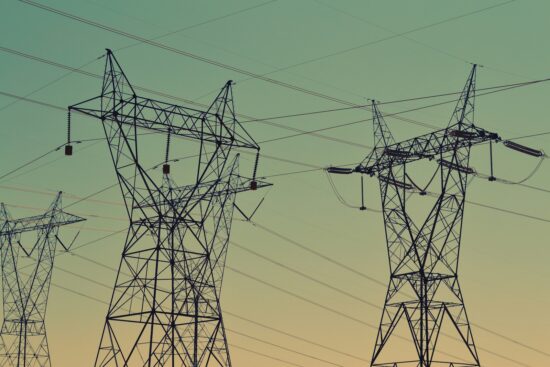
The NewYorkTimes.com reported that “The artificial intelligence boom has one big thing holding it back: energy. A.I. companies rely on power-hungry data centers to train their models, and they need gigawatts of power to keep them humming.” The April 27, 2026 “How Do You Measure A.I. Firms’ Gargantuan Energy Plans? In ‘Bragawatts.’” (https://www.nytimes.com/2026/04/26/business/artificial-intelligence-energy-data-centers.html?smid=nytcore-ios-share) included these comments:
With
New “Industrial Hemp” Definition – More Loopholes Instead of Real Reform?
Public Records Act Meets AI: What Recent Records Requests Reveal About ChatGPT Use in Government

As California public agencies increasingly experiment with generative artificial intelligence (“AI”) tools like ChatGPT, a critical question is no longer theoretical: are AI prompts and outputs subject to disclosure under the California Public Records Act (“CPRA”)?
Recent reporting and public records requests suggest the answer may soon be tested in real time—and that agencies should