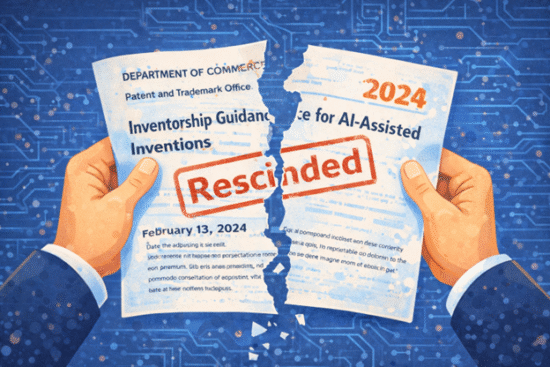
PatentNext Summary: The USPTO has rescinded its February 2024 inventorship guidance for AI-assisted inventions and replaced it with revised guidance issued on November 28, 2025, so prior materials relying on the earlier guidance should be treated as outdated. The revised guidance emphasizes traditional conception-based inventorship, makes clear that AI may assist but cannot be an inventor, and flags a practical priority risk where a foreign filing naming an AI system as the sole inventor can undermine U.S. priority claims. It also underscores that the guidance reflects USPTO examination policy—not binding law—so courts (or Congress) may ultimately provide the controlling rules.