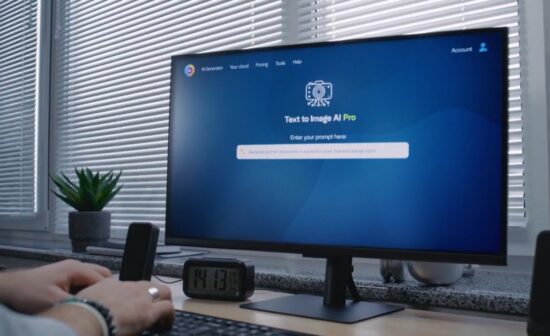
I think we can agree that granting someone full access to the open internet without education or tools to protect themselves would be dangerous, no?
OK, but what is a general-purpose LLM but a collection of everything that the model could ingest, without rules about what was safe and what wasn’t?
Yet we expect people
AI Legal Compliance for Law Firms: What Lawyers Need to Know in 2026
What is AI legal compliance?
AI legal compliance refers to a law firm’s duty to ensure the use of AI-based legal technology remains safe, ethical, and lawful. More specifically, while the methods for achieving AI legal compliance may vary, all law firms must be able to demonstrate that their use of AI tools remains in…
At a Crossroads- Issue #2: Legal Risk as a Tool for Navigating Supply Chain Volatility: Observations from the Semiconductor Industry at the Beginning of 2026
Please contact: Tim Flamank or Francesco Liberatore with any questions.
Supply chain disruption remains a key risk in the semiconductor industry. Recent events have shown that even beyond high-tech corners of the sector, supply and demand dynamics over critical components, expertise and end products can change quickly and dramatically. The consequences for the automotive industry…
Randal Shaheen, Sarah La Voi, Shareef Farag, Julie Singer Brady Take Part in Sessions at Consumer Brands CPG Legal Forum
Partners Randal Shaheen, Sarah La Voi, Shareef Farag and Julie Singer Brady will take part in panel and roundtable discussions during the Consumer Brands CPG Legal Forum, which takes place Feb. 18-20, 2026, in Frisco, Texas.
La Voi will join a panel titled “The AI Inflection Point: Artificial Intelligence and the Evolving Role of the…
New House Bill on AI Transparency Aims to Pull Back the Curtain on AI Training Data
On January 22, 2026, House Representatives Madeleine Dean (D-PA) and Nathaniel Moran (R-TX) introduced H.R. 7209, a bipartisan bill that could significantly reshape the relationship between copyright law and artificial intelligence. Known as the Transparency and Responsibility for Artificial Intelligence Networks (TRAIN) Act, the proposal seeks to give copyright owners a clearer path to understanding whether—and how—their works are being used to train generative AI models.
California AI and Privacy Legislation Update – January 2026
The new year is off to a quick start. February looms. Businesses are beginning to settle into 2026, and some trends (or at least outlines of such) are beginning to emerge. Businesses are digesting the AI and privacy bills that were signed into law last Fall. California Invasion of Privacy Act (CIPA) litigation shows no…
FTC Updates (January 12 – 16, 2026)
As we enter the new year, the FTC continues to prioritize consumer protection and fair competition, taking significant steps to prosecute offenders for alleged misleading conduct regarding consumer consent and enforce existing court orders. Additionally, the FTC has announced multiple revisions to the jurisdictional thresholds under the Clayton Act, increasing the thresholds for premerger notification filings, related filing fees, and interlocking directorates. Finally, Commissioner Meador delivered the keynote address at the 2026 Tech Antitrust Conference and discussed concerns about technology innovation and the emerging trend of “acqui-hires.” These stories and more after the jump.
Guest Post: Cybersecurity Risks & the Potential Impact on D&O Insurance
Arlene Levitin
As readers of this blog know well, cybersecurity issues can be an important potential source of directors’ and officers’ liability risk exposure. In the following guest post, Arlene Levitin, Esq., takes a detailed look at the many ways that cybersecurity-related issues can translate into D&O liability risk and insurance concerns, particularly with advent of artificicial intelligence technology. Arelene is Claims Officer, Complex Management Liability, NAS Financial Lines Claims, Liberty Mutual Insurance. I would like to thank Arlene for allowing me to publish her article as a guest post on this site. Here is Arlene’s article.
State AG News: Environmental Regulation, Health and Human Services, Consumer Protection (January 15-21, 2026)
Each week, Crowell & Moring’s State Attorneys General team highlights significant actions that State AGs have taken. See our State Attorneys General page for more insights. Below are the updates from January 15-21, 2026:
Multistate
- A multistate coalition of 24 state Attorneys General filed an amicus brief urging the D.C. Circuit Court to permit EPA to rescind up to $20 billion in grants issued under the Greenhouse Gas Reduction Fund. Amici argue that the Biden-era program was “unlawfully structured, riddled with waste and conflicts of interest, and intentionally designed to evade oversight.”
One More Long Thing: After the Post-Gazette
[Originally posted to LinkedIn on January 14, 2026 and reposted here for archival purposes.]
What’s new? What’s news?
Let me say at the outset that I do not have the answer. I only have a question. This essay is my Jeopardy!-ish contribution to the second-most important conversation happening in Pittsburgh right now. Maybe that’s appropriate;…