Marshall, Gerstein & Borun LLP

Latest from Marshall, Gerstein & Borun LLP - Page 5

PatentNext Summary: Artificial Intelligence (AI) systems are expected to increasingly provide automated decisions impacting, for example, home ownership, job recruitment, and other important life events. In this way, such AI systems have the power to impact a wide variety of people and should be trained in a manner that eliminates bias and promotes fairness. The
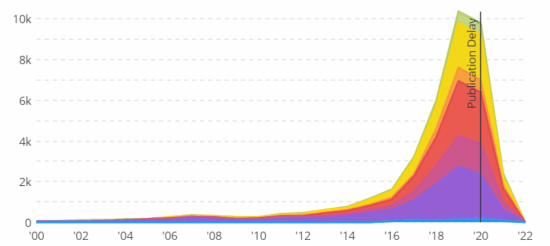
PatentNext Summary: Artificial Intelligence (AI) Patent Application filings continue their explosive growth trend at the U.S. Patent Office (USPTO). At the end of 2020, the USPTO published a report finding an exponential increase in the number of patent application filings from 2002 to 2018. This trend has continued. In addition, current data shows that AI-related

I am excited to announce the publication of the Intellectual Property Owner (IPO)’s white paper on “Protecting Inventions Relating to Artificial Intelligence: Best Practices.

The paper was authored by the IPO’s Software Related Inventions Committee and the Artificial Intelligence (AI) & Other Emerging Technologies Committee, of which I am a member.

PatentNext Summary: In order to prepare patent applications for filing in multiple jurisdictions, practitioners should be cognizant of claiming styles of the various jurisdictions that they expect to file AI-related patent applications in, and draft claims accordingly. For example, different jurisdictions, such as the U.S. and EPO, have different legal tests that can result in

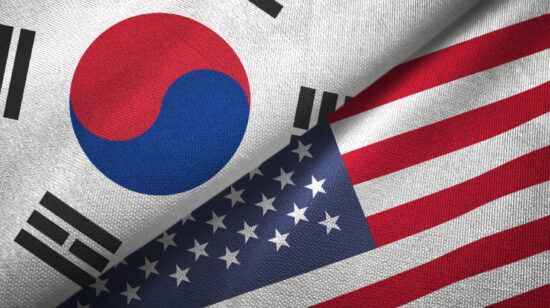
PatentNext Summary: Computer and software-implemented inventions, especially in the field of Artificial Intelligence (AI), have experienced explosive growth in both Korea and the U.S. This article compares the similarities and differences between the patent laws of the two countries and identifies considerations when drafting a software-related patent application, with a focus on AI as

PatentNext Summary: Currently, patent laws require human inventors. For this reason, no country or legal jurisdiction presently allows an Artificial Intelligence (AI) to be an inventor. Such patent laws, however, are typically decades old and we can expect continued debate, and possible legislation, on the topic of whether an AI can be an inventor.

SUMMARY

PatentNext Summary: AI-related inventions have experienced explosive growth. In view of this, the USPTO has provided guidance in the form of an example claim and an “informative” PTAB decision directed to AI-related claims that practitioners can use to aid in preparing robust patent claims on AI-related inventions.
The below article provides additional details.
***
Artificial

PatentNext Summary: Because AI is a relatively newer technology, court cases analyzing AI-related patents have been few in number. Given the increased numbers of AI patent filings, as recently reported by the USPTO, we can expect to see future court cases involving AI-related patents. We can also expect that courts will analyze these AI-related patents

PatentNext Summary: Software-related inventions are patentable. Considerations for patenting software-related inventions include:

  • Whether the patent claims fall into one of the four categories of “inventions patentable” (e.g., “a process”); and
  • Whether the patent claims recite (or do not recite) a judicial exception (e.g., an “abstract idea”) as described by the U.S. Supreme Court in