PatentNext

A Patent and Intellectual Property (IP) law blog focusing on Next-Generation and New-Age Technologies

PatentNext Takeway: Ex parte Desjardins—and especially the USPTO’s decision to make it precedential—appears to be shifting examination away from § 101 and toward § 112 written-description scrutiny, particularly for AI-related inventions. For AI-related inventions, a central takeaway is that practitioners should expect more examiner demands for concrete disclosure of how an AI model is trained,
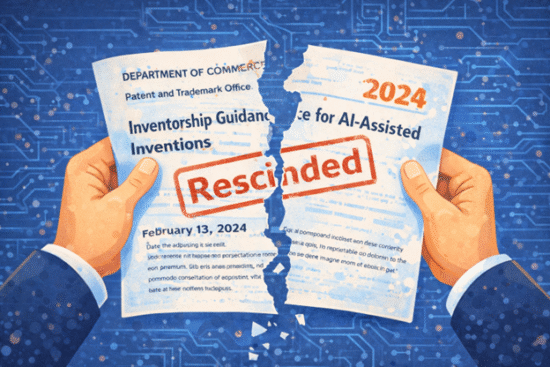

PatentNext Summary: The USPTO has rescinded its February 2024 inventorship guidance for AI-assisted inventions and replaced it with revised guidance issued on November 28, 2025, so prior materials relying on the earlier guidance should be treated as outdated. The revised guidance emphasizes traditional conception-based inventorship, makes clear that AI may assist but cannot be an

On December 4, 2025, the United States Patent and Trademark Office (USPTO) issued two memoranda addressing the use of Subject Matter Eligibility Declarations (“SMEDs”) during patent prosecution, both from Director John Squires.  The first, the SMED Examiner Memo, targets the Patent Examining Corps, clarifying how examiners should treat applicant-submitted evidence under 37 CFR 1.132

PatentNext Summary: Announcing the IPO’s AI Patenting Handbook V3.0, which is a newly updated third edition of IPO’s practical guide for attorneys working with AI-related inventions and technologies. It offers a clear framework for understanding modern AI (including foundation models and generative AI), drafting and prosecuting stronger AI patent applications, and navigating enforcement, global practice,

               On August 4, 2025, the USPTO issued a memo to patent examiners with the subject “Reminders on evaluating subject matter eligibility of claims under 35 U.S.C. 101.” [1] Much has been made of these reminders and what they might signal in terms of a possible shift in how the Office treats rejections under § 101, in particular

PatentNext Summary: The Desjardins decision, co-authored by new USPTO Director John Squires, signals a potential shift toward greater patent eligibility for AI and software innovations. By vacating a § 101 rejection and warning that “categorically excluding AI innovations from patent protection in the United States jeopardizes America’s leadership in this critical emerging technology,” the Appeals