
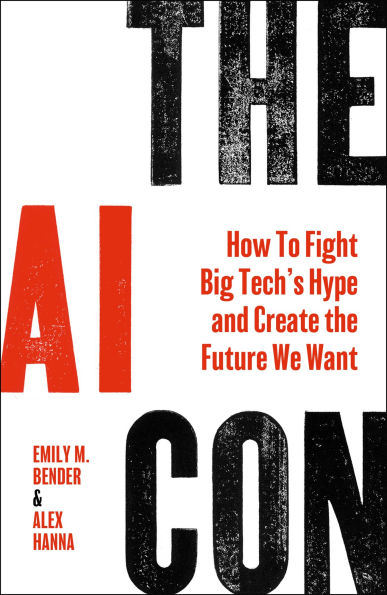
My review of the new book, The AI Con: How to Fight Big Tech’s Hype and Create the Future We Want (Harper 2025), by Emily M. Bender and Alex Hanna, is available at LLRX.com.
It’s the first negative book review I have written since I began writing reviews for The Federal Lawyer back in 1995. My usual practice is to review only worthwhile books, but this one had so many problems that I made an exception. Here is an excerpt from the review:
There are too many problems with the book to explain all in a 2000 word book review. Here are three of the worst:
The authors’ contribution to the existing literature is modest, especially when compared to AI Snake Oil: What Artificial Intelligence Can Do, What It Can’t, and How to Tell the Difference, by Arvind Narayanan and Sayash Kapoor. While sharing a similar theme, AI Snake Oil preceded ‘The AI Con’ by approximately seven months.
While AI Snake Oil is far from perfect, its analysis and recommendations are more convincing than those in The AI Con. This may be a consequence of the authors of AI Snake Oil having stronger technical backgrounds and more hands-on experience with generative AI. As a lawyer and liberal arts major myself, I’m the last person to say that a linguist and sociologist can’t have valuable insights about AI, and might even be able to give helpful advice to a company like Google on some AI-related topics (like co-author Alex Hanna has done), but for a project like this, having degrees in computer science is a significant advantage.
AI Snake Oil’s higher level of technical sophistication is a plus, but its more balanced perspective is even more important. The AI Snake Oil authors acknowledge up front that, even in its infancy (having been “born” with the release of the revolutionary version of ChatGPT less than four years ago), Generative AI is already valuable and shows potential for even more practical benefits. The AI Con has no similar acknowledgement. The relentless negativity becomes grating far before the book’s conclusion.