
AI-powered healthcare matching platforms are transforming how Nurse Practitioners (NPs) and physicians collaborate by using intelligent algorithms to pair providers based on specialty, location, workload, and patient demand. These technologies reduce physician shortages, improve care continuity, and streamline staffing operations across hospitals, clinics, and telehealth networks.
Introduction
Healthcare systems across the globe are facing a growing collaboration crisis between Nurse Practitioners and physicians. Physician shortages, provider burnout, and fragmented care models are pushing healthcare organizations to find faster, smarter solutions. Traditional staffing models can no longer keep up with patient demand. Enter AI-powered healthcare matching—a powerful technology-driven solution that is reshaping how NP–physician partnerships are formed, managed, and scaled. Artificial intelligence is now the missing link connecting healthcare talent with the patients who need them most.
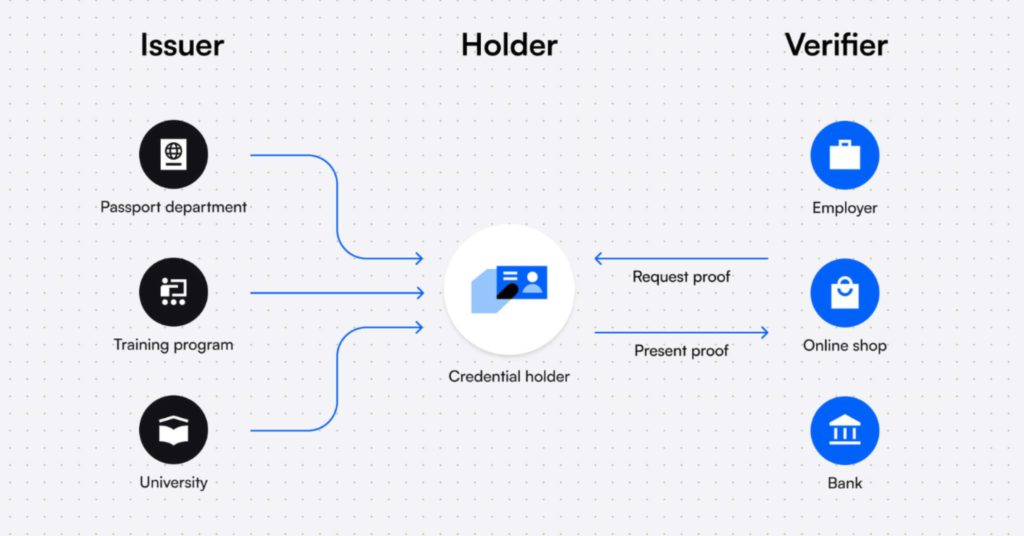
Understanding the NP–Physician Collaboration Crisis
The collaboration gap between Nurse Practitioners and physicians is not caused by lack of talent—it is caused by inefficient matching systems.
Key Challenges Driving the Crisis
- Worsening physician shortages, especially in rural and underserved regions
- Increasing patient loads and chronic disease complexity
- Manual scheduling systems causing delays in care delivery
- Regulatory oversight requirements for NP–physician supervision
- Burnout due to poor workload distribution
When collaboration fails, patient wait times increase, provider stress escalates, and healthcare costs rise across the system.
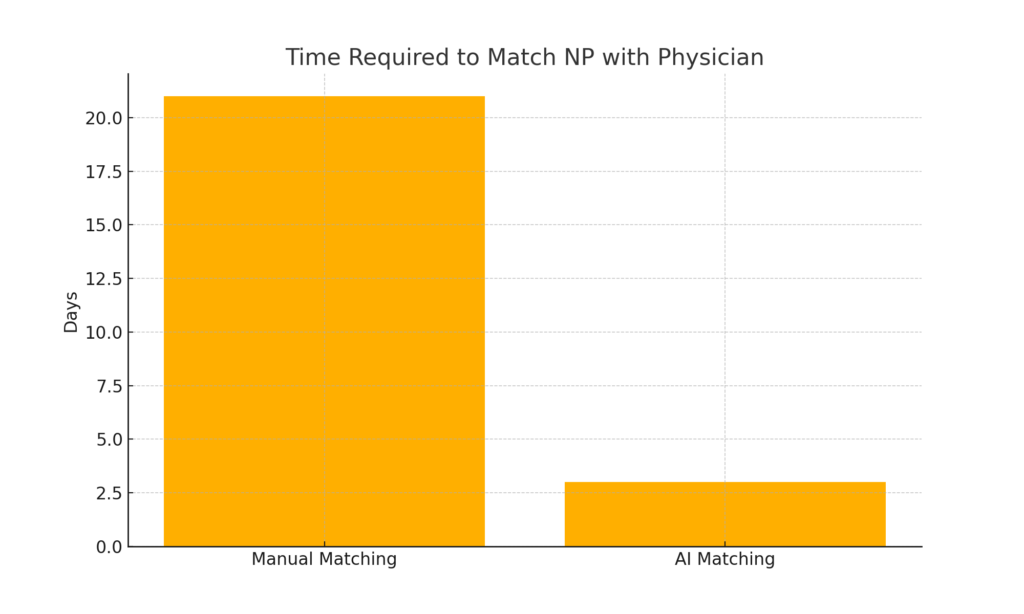
What Is AI-Powered Healthcare Matching?
AI-powered healthcare matching uses machine learning algorithms to analyze vast datasets, including:
- Provider credentials and licensure
- Clinical specialization and scope of practice
- Geographic availability
- Workload capacity
- Patient acuity levels
- Regulatory supervision requirements
The system then creates real-time, optimized matches between Nurse Practitioners, physicians, and healthcare organizations—something manual staffing systems simply cannot achieve efficiently.
How AI Is Solving Physician Shortages
AI-driven matching platforms directly address physician shortages by:
- Optimizing physician oversight ratios for NPs
- Expanding coverage through remote supervision and telehealth
- Redistributing workloads across multi-state provider networks
- Reducing administrative burden on healthcare facilities
This ensures that physicians focus on complex cases while NPs handle primary and preventive care—maximizing the value of both roles.
Modern NP collaboration platforms powered by artificial intelligence now offer:
- Automated credential verification
- Licensure and compliance tracking
- Smart scheduling across clinic networks
- Predictive workforce analytics
- Real-time NP–physician pairing
These platforms ensure compliance with state supervision laws while enabling faster onboarding and smoother daily operations.
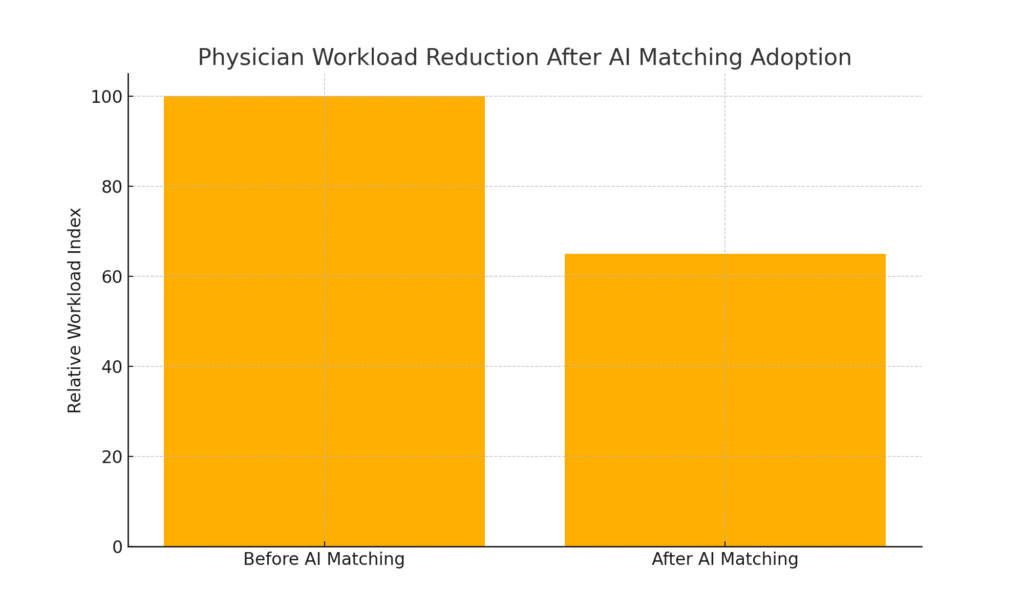
Feature Spotlight: NP Collaborator Technology Integration
AI-enabled NP collaborator platforms act as the digital backbone of collaborative care. These platforms:
- Instantly connect NPs with supervising or collaborating physicians
- Automate documentation for regulatory compliance
- Monitor supervision ratios in real time
- Predict staffing shortages before they occur
- Provide performance analytics for continuous improvement
By embedding AI directly into collaboration workflows, these platforms transform what used to be a slow, manual process into a dynamic, self-optimizing system.
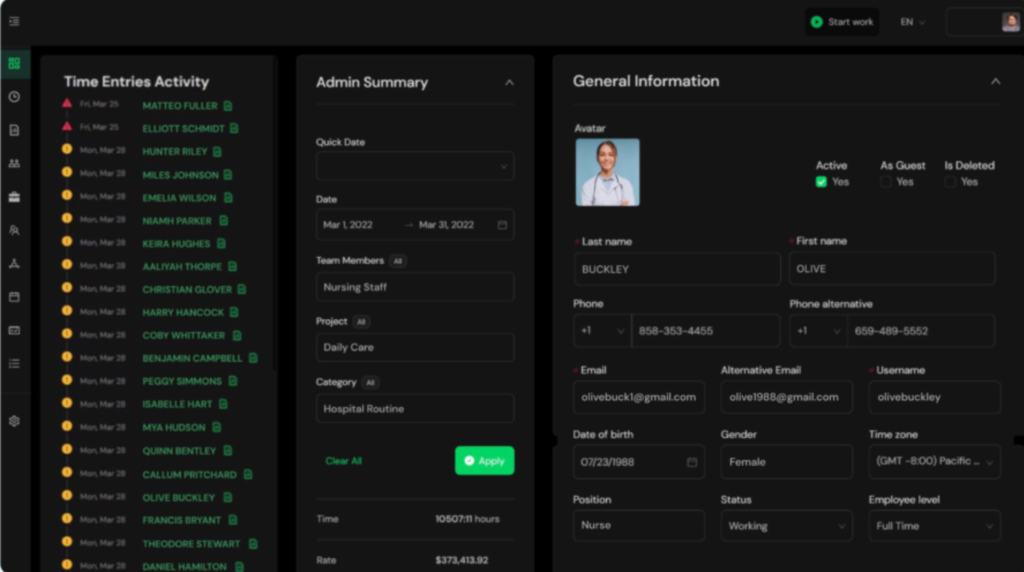
Artificial Intelligence and the Future of Collaborative Care
AI is not replacing healthcare professionals—it is augmenting human collaboration. In NP–physician care models, AI allows:
- Faster clinical decision support
- Smarter patient triage
- Optimized provider availability
- Reduced medical errors
- Higher patient satisfaction scores
AI ensures that NPs and physicians operate at the top of their licenses, improving outcomes without increasing operational costs.
Benefits of AI-Powered NP–Physician Matching
✅ 1. Faster Placement & Scheduling
Matching that once took weeks now happens in minutes, allowing clinics to respond to patient surges immediately.
✅ 2. Reduced Provider Burnout
Balanced workloads improve morale, retention, and long-term workforce stability.
✅ 3. Regulatory Compliance Assurance
Automated supervision matching ensures clinics stay compliant across changing state regulations.
✅ 4. Lower Operational Costs
Administrative automation eliminates redundant staffing processes.
✅ 5. Improved Patient Outcomes
Better match quality leads to more consistent, coordinated care.
Use Cases Across Healthcare Settings
AI-powered matching is now widely used in:
- Primary care and urgent care clinics
- Rural and community health centers
- Telehealth networks
- Hospital outpatient departments
- Behavioral health and chronic disease management
Each of these settings benefits from faster collaboration, fewer staffing gaps, and stronger continuity of care.
Data Security and Ethical Safeguards in AI Healthcare Technology
Security remains a core concern in AI healthcare platforms. Leading systems deploy:
- HIPAA-compliant encryption
- Role-based access controls
- Continuous compliance monitoring
- Transparent algorithm auditing
- Bias mitigation frameworks
These safeguards ensure that patient privacy and provider fairness are preserved while harnessing the power of automation.
Market Growth of AI in Medical Staffing Technology
The global market for AI-driven medical staffing technology is expanding at record speed due to:
- Increased telehealth adoption
- Rising provider shortages
- Regulatory complexity
- Demand for cost-efficient healthcare operations
Healthcare organizations that fail to adopt AI matching risk falling behind in both efficiency and patient satisfaction.
Challenges and Limitations of AI Matching
While revolutionary, AI matching still faces hurdles:
- Data quality dependency
- Integration with legacy hospital systems
- Initial implementation costs
- Provider training requirements
However, these challenges are rapidly being addressed through cloud-based deployment, standardization, and enhanced user interfaces.
What the Future Holds for NP–Physician Collaboration
Within the next decade, AI-powered collaboration systems are expected to:
- Enable fully autonomous scheduling networks
- Support cross-border healthcare teams
- Deliver predictive workforce modeling
- Integrate with national health exchanges
- Provide real-time outcome optimization
This evolution will redefine how collaborative care operates at scale.
Why TechHealthPerspectives.com Focuses on AI Collaboration
At TechHealthPerspectives.com, our mission is to spotlight the most transformative healthcare technologies shaping the future of medicine. AI-powered NP–physician collaboration sits at the intersection of:
- Artificial intelligence innovation
- Healthcare workforce transformation
- Patient outcome optimization
- Digital health infrastructure
It is not just a staffing solution—it is the future operating system of modern healthcare.
Frequently Asked Questions
How does AI match NPs with physicians?
AI analyzes provider credentials, location, patient demand, and regulatory requirements to create optimized supervision and collaboration pairs in real time.
Can AI replace human staffing coordinators?
No. AI supports coordinators by automating data-heavy tasks while humans retain final decision authority.
Is AI matching approved by healthcare regulators?
Yes. Many AI staffing platforms are designed to comply with state medical boards, HIPAA, and labor regulations.
Does AI matching work for telehealth?
Absolutely. AI is a critical driver of scalable telehealth collaboration across multi-state provider networks.
Conclusion
The NP–physician collaboration crisis is no longer just a workforce issue—it is a technology challenge with a technology-driven solution. AI-powered healthcare matching is redefining how providers connect, collaborate, and care for patients. By automating credentialing, optimizing supervision, and predicting staffing needs, artificial intelligence is turning collaboration into a data-driven advantage rather than an operational bottleneck. The future of collaborative care is not only digital—it is intelligent.
The post AI-Powered Matching: How Technology Is Solving the NP-Physician Collaboration Crisis appeared first on Tech Health Perspectives.