

Finance leaders today navigate a complex, high-stakes environment where expectations of speed, scale, and adaptability are rising faster than capacity. They are driving digital transformation in the finance function and scaling operations at a time of limited resources and rising costs of modernization.
Added to these are sector-specific imperatives, such as an insurance CFO’s priority of realigning capital allocation as the business landscape evolves. There is a greater demand for advanced solutions for accurate forecasting of cash flow, enhanced regulatory reporting and to rebalance portfolios to address changing risk profiles.
In Gartner’s “Top Priorities for Finance Leaders in 2024” survey, as many as 79% of CFOs are prioritizing taking the lead in digital transformation efforts in the finance function. Yet, they are adopting a calibrated approach. Leaders must overcome internal resistance, chart roadmaps across functions, and deliver tangible results quickly without compromising control or compliance.
In this environment, understanding the next wave of disruption is not optional but essential. Successful finance transformation depends on how well enterprises embrace emerging capabilities and integrate them into their strategy. This article highlights technology trends that are shaping the future of finance, drawn from our experience of working as a transformation partner to global finance teams.
Hyperautomation in Financial Operations

Organizations have pursued efficiencies and cost savings by automating mundane and repetitive tasks for decades now. However, businesses have entered a new era with the integration of AI, Machine Learning (ML), Natural Language Processing (NLP), process mining, and intelligent BPM suites into automation frameworks. This synergistic blend is amplifying the outcomes from automation even further.
For CFOs, this represents a shift from task-based automation to adopting hyperautomation as a framework for intelligent and adaptive operations. According to the Gartner report, “Top Technology Trends That CFOs Should Address Today”, organizations that combine hyperautomation technologies with redesigned processes can reduce operational costs by up to 30%. Built on the foundation of automation, hyperautomation addresses nuanced and more complex aspects of finance processes.
- AI-Driven Decision Making: Enables contextual decision-making and judgment in processes like collections by interpreting client requests and automating approvals
- Predictive Analytics and Forecasting: Uses ML algorithms to detect trends and anomalies, leading to more accurate financial forecasts and enabling proactive interventions
- NLP: Streamlines communication-intensive tasks like initiating client outreach and inquiry management with contextual responses
- Process Discovery and Optimization: Identifies areas of automation and improvement within existing processes and enables organizations to optimize their workflows intelligently
- Intelligent Automation of Complex Tasks: Handles exceptions in invoice processing, intricate reconciliation scenarios, and other nuanced financial processes
- AI-Driven Fraud Detection and Prevention: Flags suspicious activities by detecting unusual patterns and transactions in financial data and provides a proactive layer of risk management
Hyperautomation is transforming key finance workflows, from improving accounts receivable and financial close to streamlining tax compliance and procure-to-pay cycles. In 2025, CFOs leveraging hyperautomation will drive smarter, faster, and resilient finance operations.
The Generative AI Surge
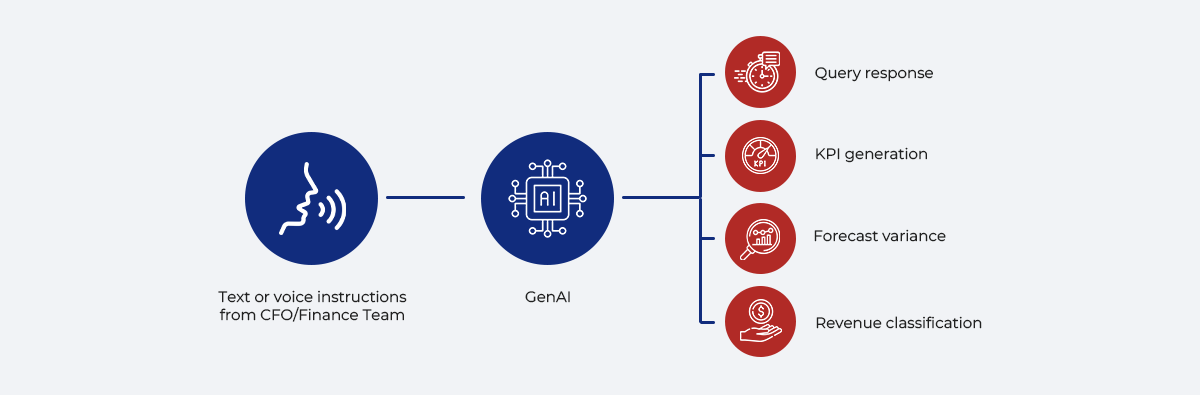
Generative AI (GenAI) is undoubtedly a transformative force in Finance and Accounting (F&A), enabling intelligent automation and bringing a disruptive shift in F&A operations and strategies. Built on Large Language Models (LLMs), this technology helps process massive volumes of financial data, identify patterns, and produce context-aware, human-like responses that accelerate cycle times and improve service delivery for internal and external customers.
In Gartner’s 2024 Generative AI in Finance survey, 66% of finance leaders said GenAI would have the greatest impact on forecast and budget variances, followed closely by use cases in revenue and spend data classification and management reporting. In the future, GenAI could empower finance executives to use text and voice to direct LLMs to respond to supplier queries and generate custom KPIs. As a result, applications driven by GenAI will become invaluable personal assistants to finance teams.
For CFOs, achieving end-to-end process automation and connecting finance functions across their businesses have been long-awaited goals. GenAI can complement existing and legacy systems, helping CFOs push the boundaries of process automation and drive collaboration and higher levels of efficiency.
Recognizing this shift, F&A technology providers are embedding GenAI capabilities into their SaaS offerings and accelerating finance transformation. For example, SAP collaborated with Microsoft to offer recruitment solutions and Salesforce launched Einstein GPT.
- SAP and Microsoft have partnered to integrate GenAI into SAP SuccessFactors products, Microsoft 365 Copilot, and Azure OpenAI services. The collaboration focuses on recruitment and learning to help organizations deal with talent shortages in areas such as financial planning, analytics, and compliance. GenAI technologies also support organizations by generating tailored job descriptions, interview prompts, and personalized learning paths for future-ready F&A roles.
- Salesforce is embedding GenAI into its ecosystem through Einstein GPT. This integration opens up powerful capabilities for finance leaders in financial planning, customer account management, and real-time forecasting. It can generate automated summaries of key customer interactions that influence billing cycles, revenue planning, and ensure alignment with finance goals and compliance standards.
Empowering Finance Teams to Innovate with Low-Code
Low-code platforms offer a simple approach to software development, allowing applications to be built in a visual and intuitive way with minimal hand-coding. For finance teams, this translates to faster delivery of tailored solutions that meet evolving business needs and complex regulatory demands without long development cycles or deep programming expertise.
The low-code approach bridges the gap between IT and finance by facilitating collaborative effort and innovation. Teams can now build workflows, automate processes, and deploy new digital services, improving the agility and responsiveness of the F&A processes.
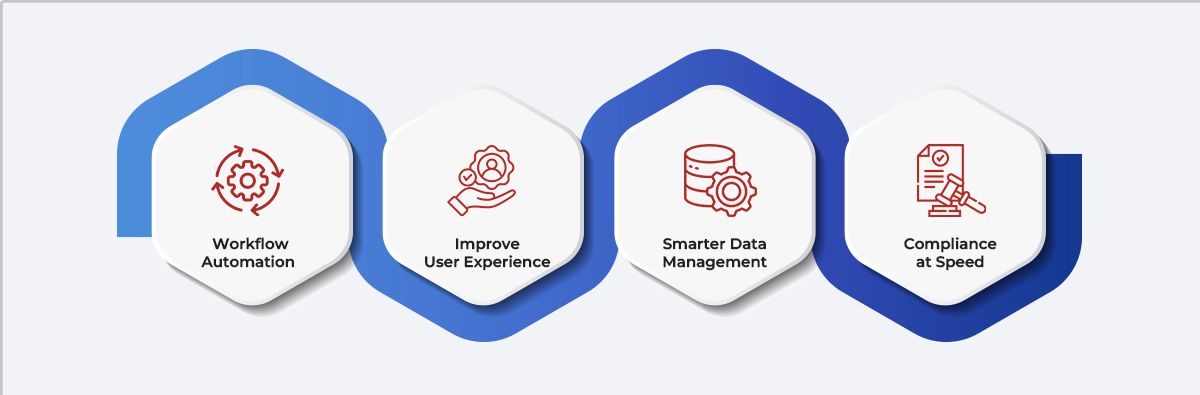
The key areas of impact for F&A include:
- Workflow Automation: Repetitive, manual, and time-consuming processes like KYC and compliance checks can be streamlined into rule-based, automated systems that reduce error and increase efficiency.
- Improve User Experience: With low-code, enterprises can roll out AI-enabled chatbots and self-service portals, enhancing client engagement and digital interactions.
- Smarter Data Management: Built-in connectors and analytics facilitated by low-code platforms make it easier to unify financial data across systems and run predictive analytics for fraud detection and risk analysis.
- Compliance at Speed: Low-code platforms enable quick adaptation to evolving compliance requirements with automated regulatory reporting, dynamic rule engines, and built-in audit trails that track and demonstrate adherence.
Intelligent Automation Is the Future of Finance
Modern-day CFOs are strategic changemakers, turning to Intelligent Automation (IA) to modernize finance operations, improve decision-making, and elevate workforce productivity.
Unlike rule-based RPA, intelligent automation combines AI and ML with process automation software to handle complexity, variability, and unstructured data, something that is common across F&A functions like risk analysis, reporting, and reconciliations.
As F&A is among the core business operations of an organization, intelligent automation in finance not only transforms internal processes but also accelerates enterprise-wide digital maturity.
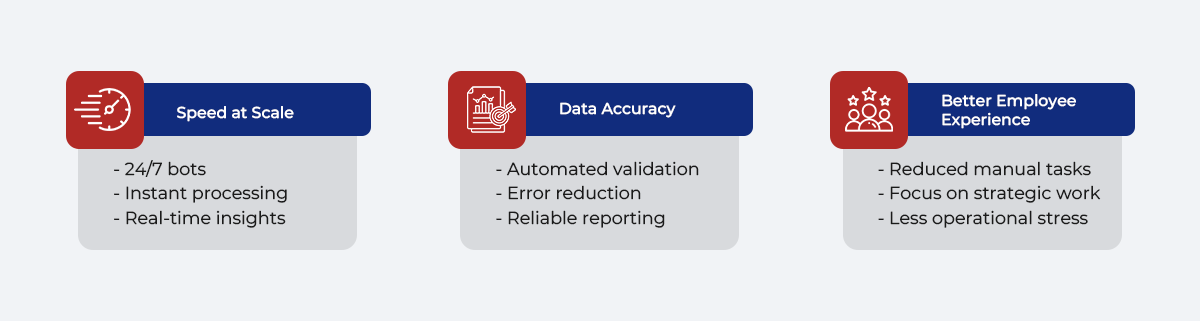
Here’s what makes IA a high-impact trend to watch:
- Speed at Scale: IA platforms can operate 24/7, interfacing with existing systems and data to execute tasks in minutes while offering on-demand insights. For example, F&A teams working in healthcare use IA to consolidate customer master data from disparate sources and generate real-time risk analysis of patients and payers to reduce delinquent debt and total days outstanding.
- Data Accuracy: As the volume of data analyzed by F&A teams increases, the chances of error increase as well. IA systems allow automation and build effective processes leading to accurate analysis and reduced manual errors.
- Better Employee Experience: F&A teams manage several tasks that involve low skills but high stress. By automating such tasks, finance teams can support complex and higher-value processes and ensure digital transformation, growth, and valuable use of employees’ time.
Turning Numbers into Strategic Narratives with Financial Storytelling
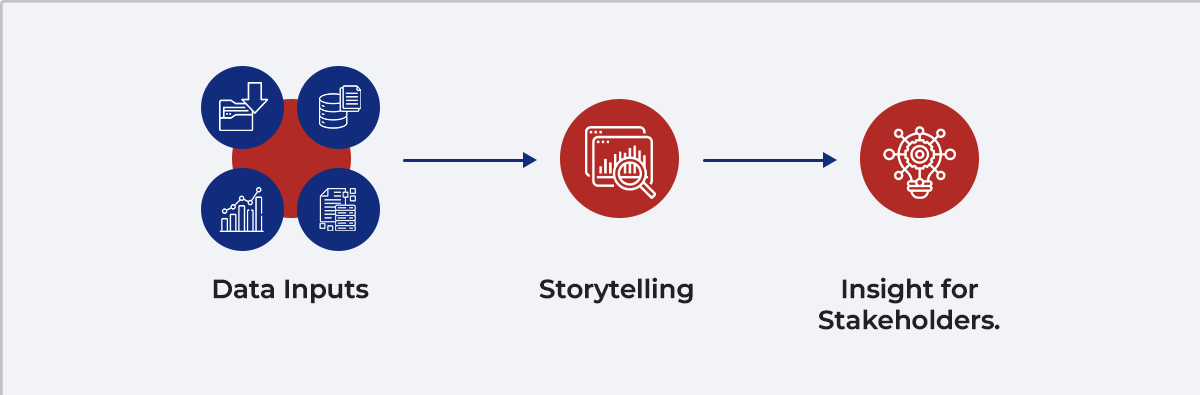
As a strategic business partner, CFOs need to communicate the story behind a raft of data. They are expected to go beyond performance reporting, slice and dice the data, and build narratives around it. For example, why do the numbers look the way they do, what does it mean for the business, and how can future decisions be made based on what the data reveals?
In 2025, the rise of advanced analytics, IA, and real-time reporting platforms is changing the way finance leaders communicate insights. New technologies not only accelerate access to data but also enhance the impact of financial narratives for diverse stakeholder groups, including board members, investors, employees, and analysts.
Here are four ways CFOs can elevate financial storytelling in tech-powered finance functions:
- Understand Your Audience: Use AI-driven personas and insights to tailor the level of detail, tone, and key takeaways for your audience and address their concerns and priorities, whether you are justifying rate increases to a regulator in insurance or explaining financial statements to manage investor relations.
- Gather and Curate Relevant Data: Leverage advanced analytics to identify KPIs that matter, like loss ratios in P&C insurance, cost-to-serve in a consumer packaged goods company, or working capital efficiency in retail, and filter out irrelevant data that could overwhelm the audience.
- Craft a Clear, Compelling Narrative: Use NLP and visualization tools to structure data into coherent stories. For instance, ESG metrics can be woven into narratives that resonate with public investors, governments, and business partners who are assessing transparency against progress on sustainability goals.
- Strengthen Your Analysis: Ensure accuracy with intelligent data validation tools, be transparent about assumptions and limitations, and focus on delivering forward-looking insights instead of just raw data. For example, finance teams in the insurance sector can validate loss reserve estimates, align with regulatory reporting needs, and explain actuarial assumptions to regulators with an analytical layer of financial storytelling.
Whether it’s strategic foresight for the board, clarity for employees, or forward-looking statements for analysts, CFOs need to master this art. Insight-led storytelling will be the cornerstone of effective leadership in finance, bringing data to life and aligning the organization behind a shared vision.
Leading the Shift to Intelligent Finance Transformation
Today, the CFO’s office has an expanded role—shaping business strategy, spotlighting opportunities, and steering an intelligent and adaptive enterprise. To lead in 2025 and beyond, leaders must orchestrate change across people, platforms, and partners, evolving F&A from a transactional function into a connected and insight-led entity. This evolution demands the strategic integration of advanced technologies to unlock enterprise-wide intelligence, agility, and cross-functional collaboration.
Equally important is human-tech collaboration, as finance leaders blend digital innovation with human judgment, ethical oversight, and business context. The role of ecosystem partners is growing too—offering guidance on the complex technology landscape, tailoring solutions to the organization’s needs, and bringing in resources with deep domain expertise and hard-to-find skills.
Cogneesol is powering BPM 4.0 with its proprietary Adaptive Digitally Intelligent Solution (ADIS) framework that adopts a modular architecture and technology integration approach. Discover how ADIS is enabling finance leaders to accelerate change by integrating AI, ML, and advanced analytics into processes and building smart, self-optimizing systems.
The post From Automation to Intelligence: Trends Shaping the Finance Function in 2025 and Beyond appeared first on Cogneesol Blog.