
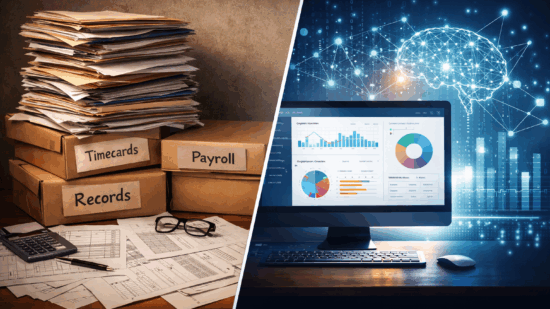
For most California employers, employee time and pay data has historically been treated as a legal obligation—something you keep because the law requires it, not because it creates value.
That mindset needs to change in 2026.
After years of defending employers in wage-and-hour class actions and PAGA cases, I have seen firsthand how employee data can either become an employer’s greatest liability or its strongest asset. The difference is no longer about company size or resources—it is about whether employers are using modern tools, including AI, to unlock the value of the data they already have.
Here are five reasons why this shift matters now more than ever.
1. Litigation Exposed Just How Broken the Old System Was
One of the primary reasons I became involved with Scaled Comp is simple: I saw how broken—and inefficient—the old approach was.
When employers were sued, we often had to:
- Manually review thousands of PDF timecards
- Reconstruct meal and rest break data by hand
- Calculate exposure using spreadsheets built from incomplete records
- Or, in some cases, physically go through boxes of paper records and scan them just to create a usable digital file
This process was painfully slow, extraordinarily expensive, and created unnecessary risk. By the time data was analyzed, employers were already on their back foot—reacting instead of defending.
What struck me most was that this kind of analysis should not be reserved only for companies with massive IT teams and unlimited budgets. Every employer deserves access to tools that make compliance manageable and defensible.
2. AI Has Turned Employee Data Into a Strategic Asset
AI has fundamentally changed what is possible.
What once took teams of lawyers, paralegals, and weeks of manual work can now be done in hours. AI-driven platforms can:
- Continuously analyze time entries
- Identify compliance risks in real time
- Generate clear, defensible reports
- Highlight trends and outliers across locations or job roles
In 2026, employee data is no longer static. With AI, it becomes dynamic, actionable, and predictive—allowing employers to address problems before they become lawsuits.
This is not just about avoiding liability. It is about understanding how your business actually operates day to day.
3. Data Is the Key to the “Reasonable Efforts” Defense Under PAGA
The 2024 PAGA reforms changed the calculus for employers—but only if they can prove it.
Employers who can demonstrate reasonable efforts to comply with wage-and-hour laws may limit penalties to 15% of the total potential exposure. That defense does not come from good intentions; it comes from documented, ongoing data analysis.
Employers using software like Scaled Comp can show:
- Continuous monitoring of compliance
- Identification of risk areas
- Corrective actions taken based on real data
In other words, AI-powered data analysis turns compliance from a one-time audit into an ongoing process—exactly what the law now rewards.
4. The Same Data That Protects You Legally Helps You Run a Better Business
Another major shift employers must recognize is that this data is not just for lawyers.
When properly analyzed, employee time data allows employers to:
- Evaluate labor efficiency in real time
- Improve scheduling decisions
- Identify timecard fraud or ghost employees
- Spot systemic issues tied to specific managers, locations, or shifts
AI makes it possible to move from hindsight to insight. Employers can use historical data to fix recurring problems and real-time data to prevent new ones from developing.
Compliance and efficiency are no longer separate conversations—they are driven by the same dataset.
5. Compliance Is Mandatory—But Value Comes From How You Use the Data
California law requires employers to maintain detailed time records.
The Wage Orders mandate records showing when employees begin and end work, meal periods, split shifts, and total daily hours worked. Labor Code section 1174 requires employers to keep records of hours worked and wages paid. And because wage-and-hour claims can reach back four years, employers must be able to produce accurate, readable records long after the fact.
The mistake employers make is stopping there.
In 2026, compliance is the floor—not the ceiling. The employers who succeed will be those who ensure their records are not only compliant, but usable, searchable, and defensible.
Final Thought
Employee data used to be a necessary burden. In 2026, it is a competitive advantage.
AI has made sophisticated analysis accessible to employers of all sizes. The question is no longer whether you can use your data—it is whether you are willing to continue treating it as a liability instead of the asset it has become.
That shift in mindset is exactly why tools like Scaled Comp exist—and why employers who embrace this approach will be far better protected, better informed, and better positioned for what comes next.