
The French Competition Authority has published Opinion No. 26-A-02 of 18 February 2026, concerning the functioning of competition in the online video content creation sector in France. See the press release
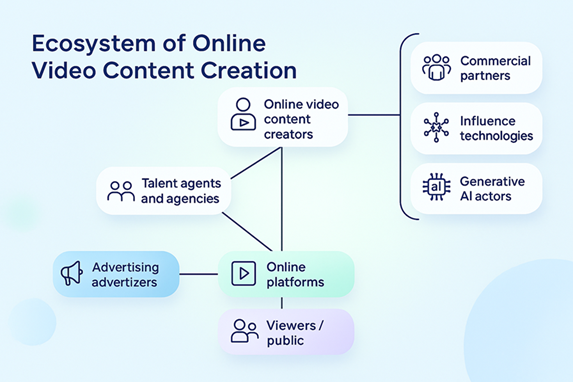
The online video content creation sector is now an integral part of the French audiovisual industry, having rapidly grown to over 150,000 professional creators in 2024.
The sector brings together many interdependent actors; creators (the majority of very small size), talent agencies, advertisers, platforms and audiences, which raises several competition competition-related challenges.
To analyse these issues, the French Competition Authority launched a public consultation targeting industry stakeholders, conducted a survey aimed at content creators and held hearings with major platforms and an AI company, the industry association Union des métiers de l’influence et des créateurs de contenu (UMICC) and several well‑known creators.
The authority examines:
- Competition between creators, both for audience attention and for commercial partnerships and advertisers
- The development of generative artificial intelligence (AI) and its impact on the sector
- Relationships between creators and other key actors, particularly business partners, talent agencies and online platforms
Regarding this last point, creators have a structural dependence on a small number of unavoidable platforms (YouTube, TikTok, Instagram and to a certain extent, Twitch). Barriers to entry and to the expansion of competitors, as well as a certain degree of creator lock-in due to different formats, themes, cultures, forms of expertise and audiences reinforce this imbalance.
This dependence gives platforms significant negotiating power, enabling them to unilaterally set financial terms and content visibility. The authority has issued seven recommendations based on its analysis which on broad terms covers the following issues:
- Financial terms do not necessarily involve revenue‑sharing (or only above a certain volume) and come with non-transparent implementation methods.
The authority warns platforms that, in the absence of true negotiation, these terms must not be unfair. It also recommends that platforms improve transparency regarding revenue sharing mechanisms
- Content visibility is determined primarily by the operation of recommendation algorithms and, to a lesser extent, by moderation measures, both of which are entirely controlled by the platforms.
The authority recommends more transparency including in case of changes to the algorithm.
It encourages platforms to allocate sufficient resources to allow creators to find representatives able to explain the reasons for a drop in the visibility of their content, a moderation action taken against them or a ban, for example.
The authority also warns against unfair practices that could disrupt competition between content and significantly harm the diversity of offerings available to consumers such as, for example, a strategy by platforms consisting of favouring the visibility of certain content that is especially profitable and advantageous for them or, possibly, of their own content entirely created by generative artificial intelligence.
Operators of generative AI systems and online platforms must enable clear identification of content generated by generative AI.
This opinion is in line with the general trend for more fairness and transparency in relation to various aspect of monetization in the digital industry. Stakeholders should act with caution and remain wary of on any enforcement by the French competition authorities in this sector.