
Editor’s Note: Governments are no longer just harassing journalists; they are constructing legal and digital systems designed to make the act of reporting itself punishable. This evolution represents a fundamental shift from sporadic intimidation to a formalized architecture of repression that is rapidly spreading across borders. From treason prosecutions in Belarus to surveillance-driven case building in Azerbaijan, and the attempted weaponization of vague cybercrime laws in Kenya and beyond, we are witnessing the emergence of a global blueprint for the criminalization of information.
For cybersecurity, data privacy, regulatory compliance, and eDiscovery professionals, the relevance of this shift is immediate and profound. The same statutory frameworks used to silence reporters are increasingly being applied to digital speech, internal whistleblowing, and the disclosure of technical vulnerabilities. These laws now dictate the terms of records preservation and cross-border data handling, creating substantial compliance risk for any organization operating in high-risk jurisdictions.
There is a critical point often missed outside media circles: journalists are rarely the last targets of these laws. History and current data suggest they are almost always the first. For the professionals responsible for protecting sensitive information or advising multinational organizations, understanding how press repression operates is no longer adjacent or elective knowledge. As the legal barriers between “journalism” and “data management” continue to erode, this intelligence has become operationally relevant, strategically important, and increasingly essential for managing modern legal exposure.
Industry News – Technology Beat
When the Press Is Silenced: Why the Criminalization of Journalism Matters to Cybersecurity, Compliance, and eDiscovery in 2026
ComplexDiscovery Staff
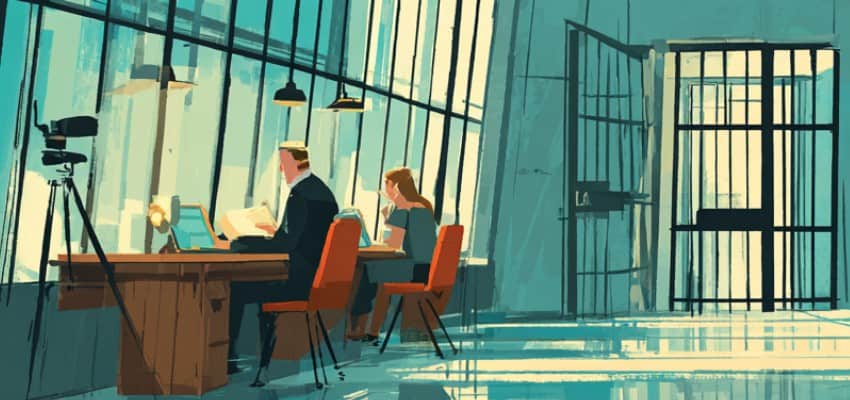
The cell door closes, the courtroom empties, and one by one, the voices that hold power accountable go dark — this is not the backdrop of a dystopian novel; it is the documented record of press freedom across the globe in 2025 and 2026. The assault on independent journalism has now reached a scale that watchdog organizations are calling unprecedented, with authoritarian governments weaponizing everything from treason statutes to AI-powered surveillance systems to silence the reporters who document their abuses.
The numbers alone are alarming enough. The Committee to Protect Journalists (CPJ) recorded at least 330 journalists imprisoned worldwide as of December 1, 2025 — the third highest total since the organization began keeping records in 1992, and down from a higher count of 384 at the close of 2024. While the modest decline might suggest progress, the CPJ is clear: imprisonment figures have now exceeded 300 for five consecutive years, and the conditions inside detention have worsened considerably. The organization warns that the actual toll is likely far higher because captors routinely suppress information and families fear retaliation for speaking out. CPJ has documented widespread reports of abuse against imprisoned journalists, with some of the highest numbers of alleged mistreatment occurring in countries such as Iran, Israel, and Egypt — reflecting conditions the organization describes as among the harshest it has recorded since beginning to track such abuses in 1992.
It is worth noting that CPJ and Reporters Without Borders (RSF) use different counting methodologies, which is why their country-level figures often diverge. CPJ applies a stricter evidentiary standard focused on journalists who are confirmed to have been imprisoned in direct connection with their work, while RSF’s barometer casts a wider net, including media workers and press freedom defenders. Both are credible; readers should treat the figures as complementary rather than contradictory.
What the aggregate data consistently shows is that journalists are rarely the last category these legal frameworks reach — they are typically the first. The statutes drafted to silence a reporter covering a protest become the infrastructure for silencing a compliance officer who flags a government contract, a security researcher who publishes a vulnerability, or a corporate whistleblower who files an internal disclosure. Understanding how these laws are drafted, tested, and applied to journalists is not background reading for media professionals. It is operational intelligence for anyone who manages, advises on, or defends the flow of sensitive information.
Belarus’s “Conveyor Belt of Repression”
Nowhere is the machinery of press repression operating more efficiently than in Belarus. On March 6, 2026 — the same day Kenya’s courts were delivering a landmark win for digital free speech — a closed-door courtroom in Minsk was quietly handing down another devastating sentence. Pavel Dabravolski, who has reported for international and domestic news outlets and won numerous prizes for his work, was found guilty of treason during a closed-door trial at Minsk City Court and sentenced to nine years in a maximum-security prison — the fifth journalist to be jailed in Belarus in two weeks.
Dabravolski, 36, was prosecuted for his coverage of the 2020 nationwide protests that erupted after President Alexander Lukashenko’s widely disputed election. His detention had been made public in August, and the charges stemmed from Article 356, Part 1 of the Belarusian criminal code. Exiled opposition leader Sviatlana Tsikhanouskaya described the charges as “trumped-up,” stating that his only crime was doing his job — and it was Tsikhanouskaya who used the phrase that has since come to define the Belarus situation internationally, calling it a “conveyor belt of repression.” Andrei Bastunets, the head of the Belarusian journalists’ association, told the Associated Press that repression is escalating and that Dabravolski’s sentence shows authorities are increasing pressure on journalists in a country that already has, as Bastunets put it, “the worst freedom of speech in Europe,” with 28 journalists currently imprisoned.
At least six Belarusian journalists — including Dabravolski — are imprisoned specifically on treason charges. Simultaneously, Belarus’s KGB designated four independent publishing houses that print books in the Belarusian language as “extremist” without explanation, part of a broader cultural erasure campaign. For cybersecurity and information governance professionals, this pattern is instructive: when states label outlets and publishers as extremist or foreign agents, they build legal architecture that can be replicated globally and adapted for digital environments. This is not only a concern for law firms and media industry consultants — multinationals with employees, contractors, or operations in Belarus, Azerbaijan, or similarly restrictive jurisdictions face direct corporate compliance exposure when “extremist” designations affect data transfer agreements, vendor relationships, and document preservation obligations. Chief compliance officers and general counsel at global organizations should treat these legal designations with the same jurisdictional scrutiny they apply to sanctions screening. Understanding how data designations function as political tools is foundational knowledge for anyone managing information in high-risk environments.
Technology as a Weapon — and a Defense
The RSF’s 2025 World Press Freedom Index classified the global state of press freedom as “difficult” for the first time in the organization’s history. Among the five indicators measured, the economic indicator fell to its lowest point ever, with media outlets in 160 out of 180 assessed countries struggling to achieve financial stability, and news outlets shutting down due to economic hardship in nearly a third of countries globally.
But beyond economics, technology has emerged as the new frontier of repression. Some actors are using AI for mass surveillance of journalists and citizens, creating a chilling effect on freedom of expression, while private platforms increasingly use AI to filter, moderate, and curate content, becoming gatekeepers of information. The Azerbaijan case makes this concrete and documented. Investigations by OCCRP and Amnesty International — first published in 2021 and further corroborated in subsequent forensic reports — found that the Azerbaijani government used Pegasus, a powerful surveillance program purchased from the Israeli company NSO Group, to hack the phones of hundreds of people, with leaked data including the numbers of 245 individuals linked to Azerbaijan, most of them journalists, activists, or opposition figures. That same government’s State Security Service has since deployed MİRAS, a centralized intelligence database that integrates government data sources for digital analysis, which Human Rights Watch warns poses serious risks of arbitrary or disproportionate surveillance, given Azerbaijan’s well-documented history of unlawful digital surveillance of journalists, human rights defenders, and activists. In June 2025, seven journalists affiliated with Abzas Media and Radio Free Europe — the investigative outlet whose financial records were digitally monitored as part of the government’s case construction — were sentenced to prison terms ranging from seven and a half to nine years on charges widely described by international organizations as fabricated.
United Nations human rights bodies, including the Office of the High Commissioner for Human Rights, have warned that states are using AI tools to monitor journalists and their sources online, violating their right to privacy and creating a chilling effect on media workers everywhere. For eDiscovery professionals, this reality carries direct operational implications: communications metadata, device usage patterns, and cloud storage logs from journalists operating in repressive environments may contain material that governments can subpoena or seize. Counsel advising international media clients — and the in-house legal teams at multinationals whose employees work alongside or fund journalism organizations in these jurisdictions — should treat these risks the way they treat data sovereignty: as jurisdiction-specific, multi-layered, and legally consequential.
Practical steps matter here. Organizations should adopt end-to-end encrypted communications as a default, not a feature, and establish data minimization protocols that ensure sensitive source information is never retained longer than operationally necessary. Legal holds that are triggered too broadly in cross-border investigations can inadvertently expose journalist-source relationships; eDiscovery teams should work with editorial counsel to ensure privilege review frameworks account for journalist shield protections under applicable law.
The Americas Under Pressure
The Inter-American Press Association’s 2025 Chapultepec Index painted a grim picture across the Western Hemisphere. Venezuela and Nicaragua were categorized as entirely devoid of press freedom, while Ecuador, Bolivia, and Mexico drew “high restriction” ratings. Even the United States faced scrutiny, with the Freedom of the Press Foundation documenting at least 170 assaults on journalists domestically in 2025. Federal agents deployed chemical irritants, including tear gas and pepper spray, against protesters and journalists, and four reporters for Chicago’s Block Club were shot with pepper spray bullets and tear-gassed while covering protests.
The U.S. government’s actions extended to international media infrastructure as well. The administration froze over $250 million in assistance for independent journalism organizations in early 2025, forcing outlet closures, layoffs, and stripping journalists of essential protection in countries where press freedom is already hanging by a thread. Guatemala’s Jose Rubén Zamora, a journalist who had already spent more than 800 days in pretrial detention for reporting on government corruption, was ordered back to prison in March 2025 after four months of house arrest — the latest in a series of judicial maneuvers that have continued into 2026 — illustrating how prosecutorial cycles can be used to exhaust and silence reporters over years.
For corporate legal and compliance teams, the funding freeze carries a less visible risk: organizations that previously maintained robust records governance and source-protection protocols can lose that capacity overnight when institutional funding disappears. Multinationals whose supply chains, grant portfolios, or human rights due diligence programs rely on partner NGOs operating in affected environments should treat the collapse of those organizations’ data governance capabilities as a third-party risk event — not merely a geopolitical news item. The question is not whether you have a relationship with a journalism NGO; it is whether any of your vendors, partners, or diligence providers do, and whether you have mapped what happens to the data those relationships touch when the funding dries up.
Kenya’s Counterpoint: Courts Can Push Back
Against this backdrop, Kenya’s Court of Appeal offered an instructive model on March 6, 2026. A three-judge bench invalidated Sections 22 and 23 of the Computer Misuse and Cybercrimes Act, saying the provisions were vague and infringed constitutional protections for freedom of expression and media freedom. The ruling came after a sustained legal campaign led by the Bloggers Association of Kenya, which argued that laws designed to address legitimate digital crimes — hacking, identity theft, and financial fraud — had been repurposed to arrest journalists and government critics for online commentary.
The court described the provisions as “so broad, wide, untargeted, akin to unguided missiles, and likely to net innocent citizens.” The victory, however, is partial. Cyber harassment provisions and sweeping surveillance and seizure powers remain intact under the law, and an additional provision of the Act — Section 27 — was suspended by a Nairobi High Court pending constitutional review in October 2025. The pattern Kenya presents — courts as a corrective mechanism when legislative bodies fail — is one that press freedom advocates and legal practitioners globally should study and replicate.
For cybersecurity professionals, the Kenya ruling is directly relevant to discussions around how cybercrime statutes in other markets are drafted. Overly broad definitions of “false information” or “harmful communications” in cybercrime frameworks create exposure for security researchers, whistleblowers, and incident reporters just as much as for journalists. Advocating for precision and proportionality in legislative language is not just a press freedom issue — it is a digital rights issue that touches every practitioner in the information security space. Industry associations including ISACA, the IAPP, EDRM, and ARMA International regularly engage in public comment processes and legislative working groups on cybercrime and data regulation frameworks; professionals who have not yet participated in those channels have a direct, accessible pathway to influence how these laws are written before they reach the courtroom — or the prison cell.
Authoritarianism’s Expanding Playbook
According to the V-Dem Institute, autocracies now outnumber democracies globally — 91 to 88 as of 2024 — in what researchers are describing as a sustained wave of authoritarianism, with 45 countries moving in an authoritarian direction, including the United States, while only 19 are experiencing democratization. In Georgia, journalist and media founder Mzia Amaglobeli was imprisoned following a politically motivated prosecution arising from her participation in anti-government protests — a case CPJ, IPI, and the European Parliament have condemned as a disproportionate attack on press freedom. In Russia, independent outlets labeled “undesirable” face criminalization of their work and exile. In Azerbaijan, the editor of anti-corruption investigative outlet Abzas Media sits in reportedly horrific conditions, telling courts that her case is not about journalism — even as she insists it is about nothing else.
Reporters Without Borders labeled conditions for practicing journalism in 2025 as “difficult” or “very serious” in over half of the world’s countries, and satisfactory in fewer than a quarter — the worst ratio in the organization’s history of recording this data.
The trajectory matters for this professional audience because the template transfer is already documented, not merely theoretical. Russia’s foreign agent media law, first enacted in 2012 and repeatedly expanded, was widely characterized by international watchdogs, academics, and former Soviet-bloc democracy researchers as the direct model for Georgia’s foreign agents legislation passed in 2024, triggering mass protests and international condemnation. Hungary’s media licensing framework has been cited by researchers and press freedom organizations as a reference model being replicated across Central and Eastern Europe. The pattern is consistent: a legal architecture that successfully silences journalists without triggering institutional resistance migrates — and its next iteration rarely stops at the press. Corporate whistleblowers, civil society researchers, and security professionals who publish vulnerability disclosures have all found themselves targeted under statutory language first calibrated against journalists.
The global record of 2025 and 2026 is clear: press freedom is not a media industry problem. It is an information governance problem, a digital rights problem, and an institutional design problem. The question every legal, security, and governance professional must now sit with is this: when the legal architecture built to silence journalists reaches the data you manage, the clients you advise, or the platforms you secure, will the protections be strong enough to hold?
News Sources
- Belarus sentences journalist Pavel Dabravolski to 9 years on treason charges (Committee to Protect Journalists)
- Court of Appeal strikes down Kenya’s fake news cybercrime law (TechCabal)
- CPJ Reports Near-Record Global Journalist Imprisonments in 2025 (OCCRP)
- RSF World Press Freedom Index 2025: Economic Fragility a Leading Threat to Press Freedom (Reporters Without Borders)
- Azerbaijan’s Surveillance Platform Risks Sweeping Privacy Violations (Human Rights Watch)
- New System of Total Digital Surveillance in Azerbaijan: Legal and Technological Perspectives (JAM News)
- What Is the State of Global Press Freedom in 2025? (Amnesty International)
- Chaos and Credibility: A Snapshot of How AI Is Impacting Press Freedom and Investigative Journalism (Global Investigative Journalism Network)
- In 2025, Press Freedom Came Under Direct Attack (Columbia Journalism Review)
Assisted by GAI and LLM Technologies
Additional Reading
- The Gatekeeper’s Key: How the Conformity Assessment Unlocks the EU AI Market
- From Press Release to Data Layer: Scaling Brand Authority in the AI Era
- How Prompt Marketing Is Redefining Thought Leadership In The AI Era
- Raising The Age Ceiling: How AI Is Extending Executive Leadership
- Staying Curious: One Practical Defense Against Creative Burnout
- From Longbows To AI: Lessons In Embracing Technology
- 20 Ways Creative Professionals Battle Burnout And Find Fresh Ideas
- 14 Points For Brands To Consider Before Making Sociopolitical Statements
Source: ComplexDiscovery OÜ
ComplexDiscovery’s mission is to enable clarity for complex decisions by providing independent, data‑driven reporting, research, and commentary that make digital risk, legal technology, and regulatory change more legible for practitioners, policymakers, and business leaders.
The post When the Press Is Silenced: Why the Criminalization of Journalism Matters to Cybersecurity, Compliance, and eDiscovery in 2026 appeared first on ComplexDiscovery.