
Editor’s Note: At Slush 2025, Harvey’s Co-Founder Gabe Pereyra offered a striking blueprint for how AI can thrive in even the most conservative industries. Speaking on the Founder Stage, he detailed how Harvey—a legal AI platform—scaled from a two-person idea into a global force with over 700 clients across 58 countries. For cybersecurity, eDiscovery, and information governance professionals, the session underscored that in regulated environments, trust and domain expertise are non-negotiable. Harvey’s success is more than legal innovation; it’s a signal to all professional service sectors about how infrastructure-first AI can unlock both efficiency and deeper client value.
Industry News – Artificial Intelligence Beat
Lessons from Slush 2025: How Harvey Is Scaling Domain-Specific AI for Legal and Beyond
ComplexDiscovery Staff
What happens when a legal startup harnesses the power of AI and trust to transform a centuries-old profession? Harvey’s story, unveiled at Slush 2025, is rewriting the rules for legal—and beyond.
HELSINKI — Slush, the world’s most founder-focused startup gathering, brings together over 13,000 curated attendees, including innovators, founders, investors, and global media, to Finland’s capital each November. The event has become a crucial meeting point for the European and global tech ecosystem, known for facilitating meaningful connections and transformative partnerships.
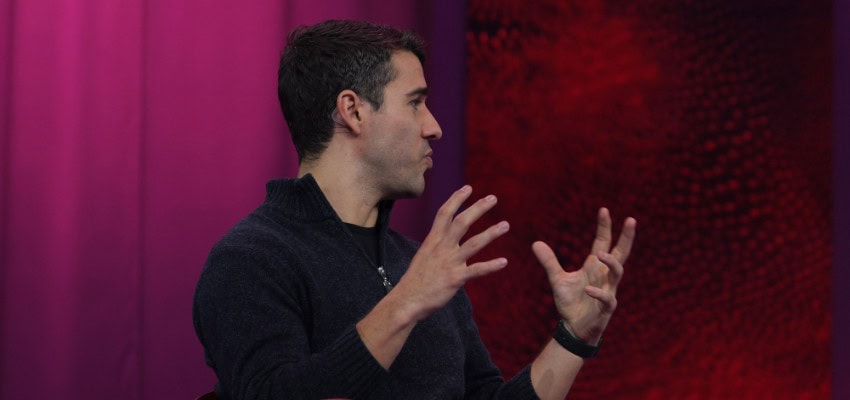
At this year’s Slush 2025 Founder Stage on November 19, Harvey Co-Founder and President Gabe Pereyra joined Kleiner Perkins General Partner Ilya Fushman for a fireside chat titled “How Harvey is Changing the Legal Game for Good.” The discussion, one of the event’s highlighted sessions on legal tech and AI applications, offered insights into how a domain-specific AI platform has achieved remarkable growth in one of the world’s most traditional professions.
Harvey, an AI platform built specifically for legal and professional services, has grown to serve over 700 customers across 58 countries in just three years, generating more than $100 million in annual recurring revenue. The company now employs over 500 people across offices in London, Toronto, Sydney, New York, San Francisco, and Bengaluru.

From Roommates to Co-Founders
Pereyra shared the company’s origin story during the panel. While roommates at Meta, Pereyra (an AI researcher with experience at Google Brain and DeepMind) and Winston Weinberg (a litigation attorney) discovered the potential of large language models for legal work. The breakthrough moment came when Weinberg spent 14 hours testing early models.
“I did all of it,” Weinberg told Pereyra after his marathon session, referring to the associate-level legal work he had accomplished using the models. “When I saw that combined with the research I’d done at DeepMind in reinforcement learning, it was so clear you would be able to build these agents,” Pereyra recalled.
OpenAI provided seed funding, and the team’s first major demonstration went to Allen & Overy in the UK, followed by PwC UK — making Harvey an international company from the start.
Building Trust Through Domain Expertise
Contrary to expectations about lawyer resistance to technology, Pereyra noted surprising enthusiasm from the legal community. “I think historically lawyers haven’t been tech-forward because the tech has not been based around language, and so much of the work they do is language-based,” he explained. “But I think it was actually surprising to most people how quickly these law firms adopted this technology.”
Harvey’s success stemmed from embedding legal expertise directly into the company’s DNA. Early hires included Pereyra’s younger brother and colleagues from Winston’s law firm. “We got a bunch of lawyers early on the sales side,” Pereyra said, noting that having “lawyers from big law” on both the product and sales teams “really shaped how we thought about both building the product and communicating the value.”
From Individual Productivity to Business Transformation
Harvey’s vision has evolved beyond individual lawyer productivity. “When we first built the product, it was a co-pilot for individual lawyers,” Pereyra explained. “As we’ve scaled, really the value prop that we want to sell to law firms is we will make your business better.”
This shift means focusing on platform capabilities that improve firm profitability through better client matter management, workflow optimization, and direct collaboration between law firms and their clients on Harvey’s platform. “We think of a lot of the product as not going to be the models, it’s going to be all of the infrastructure around them,” Pereyra noted.
Scaling Through Trust and Rigor
Growing from approximately 20 employees at Series B to over 500 today required careful attention to culture and leadership. Pereyra emphasized that the first 10, 20, and 50 hires “really set the foundation of the culture of the company,” focusing on finding people who “cared as much as Winston and I did.”
Quality assurance remains paramount, with human-in-the-loop systems ensuring accuracy. “Part of why we wanted to start working with the largest law firms is they are one of the best industries in the world at making sure that you don’t make mistakes,” Pereyra said, noting that Harvey has “learned a ton in working with them as design partners.”
European Expansion and Partnerships
With Europe as Harvey’s initial market, the company maintains a strong presence there with 70 employees in its London office. Recent strategic partnerships include collaborations with EQT, open-source model provider Mistral, and voice AI company Eleven Labs to expand multilingual capabilities.
“There’s a lot of interesting regulatory data privacy problems that we want to solve,” Pereyra said about European expansion. The Eleven Labs partnership will help “make Harvey’s voice work in every language and all of the different regions with the right dialect,” as Harvey begins working with government systems on access to justice initiatives.
The Future of Legal Work
Despite concerns about automation displacing junior lawyers, Pereyra remains optimistic about the profession’s future. “I don’t think there’s a better time than now to enter these very high-skilled knowledge work professions,” he said, comparing the current moment to his own experience learning programming a decade ago.
Rather than replacing lawyers, Pereyra sees AI giving knowledge workers “so much more leverage,” predicting that “the top most skilled knowledge workers will actually be more successful than they are today.”
Looking ahead, Harvey is exploring how to help law firms and clients convert their expertise and private data into AI systems. “Law firms and professional service providers have some of the most unique human knowledge in the world, but it’s all private,” Pereyra explained. The company is developing ways to help organizations “convert that relationship, that expertise into AI systems, into models and monetize those in new ways.”

From Access to Justice to Legal System Innovation
Harvey’s ambitions extend beyond law firms to court systems and governments. Pereyra described two levels of access to justice: providing high-quality legal services to individuals, and the “even more exciting” possibility of helping societies “figure out better legal systems.”
“We’ve done some things with court systems in various countries,” Pereyra revealed. “When I think of why are we doing this, that feels super meaningful.”
Implications for Adjacent Domains
For companies in cybersecurity, information governance, and legal discovery looking to build AI-enabled services, Harvey’s trajectory offers valuable lessons. The company’s success demonstrates that trust, rather than technical sophistication alone, drives adoption in regulated environments.
By embedding domain expertise directly into AI workflows and focusing on seamless integration with existing professional practices, Harvey has shown that specificity is essential. The company’s approach — treating AI as infrastructure rather than the end product — creates secure, collaborative systems that enhance decision-making between firms and clients.
For eDiscovery platforms, governance software vendors, and cybersecurity service providers, Harvey’s emphasis on human oversight, data security, and clear adoption pathways provides a blueprint for building AI products that are both powerful and trustworthy. Success requires not just cutting-edge models but thoughtful product decisions that prioritize risk management and long-term trust.
As Pereyra noted about the future of AI in professional services, the focus is shifting to “figuring out how to turn your product into these reinforcement learning environments,” where systems can learn from long-term, end-to-end professional tasks while maintaining the rigor required in highly regulated industries.
Harvey’s rapid growth — from a conversation between two roommates to a global platform transforming legal services — illustrates how AI can succeed in traditional industries when built with deep domain expertise, rigorous quality controls, and a focus on enhancing rather than replacing human professionals.
News Sources
- ComplexDiscovery Staff. (2025, November 19). How Harvey is rewriting the legal playbook with AI: Lessons from the Slush 2025 Founder Stage. Reported by Rob Robinson. ComplexDiscovery.
- Slush 2025 | November 19 & 20, 2025 (Helsinki, Finland)
- Slush 2025 Event Information (Explore Slush)
Assisted by GAI and LLM Technologies
Additional Reading
- Building Stronger: The Porvoo Paradigm for Technology at Slush 2025
- Slush 2025 Survey: Startup Struggles Expose Risk, Resilience, and Opportunities for Governance Pros
- What UK Law Firms Really Want: Procurement Insights from LegalTechTalk 2025
- When Founders Have Red Lines: Investing Beyond ROI at Latitude59
Source: ComplexDiscovery OÜ

The post Lessons from Slush 2025: How Harvey Is Scaling Domain-Specific AI for Legal and Beyond appeared first on ComplexDiscovery.