
Editor’s Note: As Holocaust survivors dwindle in number, their call to remembrance grows louder and more urgent. The 81st anniversary of Auschwitz’s liberation is more than a historical marker—it’s a passing of the torch. For those working in cybersecurity, data privacy, and eDiscovery, this moment is also a reminder of the moral imperative to safeguard truth and memory in the digital realm. From the weaponization of census data during the Nazi regime to today’s threats of AI-generated disinformation and digital antisemitism, the parallels are sobering. Technology professionals now play a pivotal role in ensuring the past is not erased, distorted, or forgotten.
Industry News – Data Privacy and Protection Beat
Honoring Holocaust Remembrance Day in the Digital Age: 2026 Update
ComplexDiscovery Staff
Today, candles flickered at dawn at the vast Holocaust memorial in Berlin. In Poland, survivors laid flowers at the death wall in Auschwitz. Across Europe and beyond, people paused to mark International Holocaust Remembrance Day—the 81st anniversary of the liberation of Auschwitz-Birkenau, where some 1.1 million people, most of them Jews, were murdered.
An estimated 196,600 Jewish Holocaust survivors remain alive globally, down from 220,000 just a year ago. Their median age is 87, and nearly all—some 97 percent—are “child survivors” born in 1928 or later. The window for firsthand testimony is closing.
Bridging Generations: The Last Witnesses Speak
This year’s international theme, “Bridging Generations,” reflects an urgent truth: the responsibility of remembrance must now pass to those who did not witness the events firsthand. Across the world on Tuesday, January 27, survivors delivered that message directly.
In London, 95-year-old Mala Tribich addressed the British Cabinet in what Prime Minister Keir Starmer described as a first. Government members wiped away tears as she described how Germany’s invasion of Poland in 1939 destroyed her childhood. She recalled being forced into hard labor at age 12, the hunger and disease of the ghetto, and the murder of her mother, father, and sister. She was sent to Ravensbrück and then Bergen-Belsen, where she was liberated by the British Army in April 1945.
“Soon, there will be no eyewitnesses left,” Tribich told the Cabinet. “That is why I ask you today not just to listen, but to become my witness.”
In Brussels, 88-year-old Tatiana Bucci addressed the European Parliament. She was just six years old when she was deported to Auschwitz with her family. Her testimony serves as a reminder of the 1.5 million Jewish children murdered in the Holocaust—and the duty of the next generation to carry these stories forward.
In the Czech Republic, 90-year-old Pavel Jelinek spoke at the upper house of Parliament. He told those gathered that he is now the last living of the 37 Jews who returned to his city of Liberec—which had a prewar Jewish population of 1,350—after the war.
“Through the Eyes of a Child”
The European Parliament’s 2026 observance centered on its theme “Through the Eyes of a Child,” underscoring how the Holocaust shattered the lives of the youngest and most vulnerable. President Roberta Metsola opened the ceremony in Brussels with a stark warning.
“Today, antisemitism spreads faster than ever, amplified online and turning old lies into deadly realities,” Metsola said. “Remembering the Holocaust means confronting hatred wherever it appears—before it is allowed to take root again. Because if ‘Never Again’ is to mean anything at all, it has to guide the choices we make today and the Europe we choose to build together.”
The United Nations has designated “Holocaust Remembrance for Dignity and Human Rights” as its 2026 theme, a direct call to protect universal rights in the face of modern threats.
Rising Antisemitism and New Threats
Leaders across the world used the day to sound alarms about rising hatred. Kaja Kallas, the EU’s High Representative for Foreign Affairs and Security Policy, warned in her official statement that the world is witnessing “the highest levels of antisemitism worldwide since the Shoah.”
“From terror attacks such as those witnessed on Bondi Beach to harassment, vandalism, and threats against Jewish communities, antisemitism is manifesting with renewed visibility and brutality,” Kallas wrote, referencing the December 14, 2025, attack in Sydney, Australia, when two gunmen opened fire on a Hanukkah celebration, killing 15 people in what officials declared the first deadly antisemitic terrorist attack in Australian history.
Kallas added that these threats “are taking new and disturbing forms. Among them is the use of AI-generated content to blur the line between fact and fiction, distort historical truth, and undermine our collective memory.”
European Commission President Ursula von der Leyen echoed the concern: “We have witnessed a spike of antisemitic acts all over Europe, forcing many Jews to hide their identity and live in fear. This is unacceptable. There is no place and no justification for antisemitism.”
Preserving Memory in the Digital Age
As the survivor generation fades, technology offers both promise and peril for preserving their testimonies.
Organizations like the USC Shoah Foundation have developed interactive testimony projects such as Dimensions in Testimony, which uses natural language processing to allow students to ask questions and receive real-time video responses from pre-recorded survivor interviews. These tools ensure that voices like those of Tatiana Bucci and the late Eva Schloss can continue to educate future generations.
Yet the same technologies pose dangers. The rise of “deepfake history”—AI-generated disinformation and fabricated “historical evidence”—has become a tool for Holocaust denial. As Kallas noted, without robust digital safeguards and content verification, the technologies used to preserve history can be weaponized to rewrite it.
The EU has committed to countering antisemitic hate speech and disinformation online, including through digital literacy initiatives that help young people identify and challenge antisemitic narratives.
The Historical Warning
The Holocaust remains a stark warning of how technology can be weaponized for persecution. The Nazi regime’s use of Hollerith punch card machines to process census data and track individuals was an early, devastating example of data-driven oppression. In an era of mass data collection, biometric surveillance, and AI-powered profiling, the potential for “digital authoritarianism” creates haunting parallels to the systemic information-gathering that facilitated past atrocities.
Becoming Witnesses
Ukraine’s President Volodymyr Zelenskyy underscored that the Holocaust teaches how indifference to hatred enables catastrophe and that the world ultimately united to defeat Nazism, calling for the same resolve today whenever hatred and war threaten nations.
For professionals in technology, law, and information governance, Mala Tribich’s words offer a direct charge. The lessons of the Holocaust call us to strengthen privacy protections against authoritarian misuse, to develop ethical AI with robust fact-checking against historical revisionism, and to promote digital literacy against disinformation.
But above all, they call us to listen—and to become witnesses ourselves.
News Sources
- World pauses as it observes annual International Holocaust Remembrance Day (Euronews)
- European Parliament commemorates the International Holocaust Remembrance Day (European Parliament)
- Holocaust Remembrance Day 2026: Through the eyes of a child | Think Tank (European Parliament)
- International Holocaust Remembrance Day: Statement by the High Representative/Vice President Kaja Kallas (EEAS)
- Holocaust Remembrance 2026 (EEAS)
- Statement by President von der Leyen ahead of International Holocaust Remembrance Day (Enlargement and Eastern Neighbourhood)
- Bridging Generations: Theme for 2026 (Holocaust Memorial Day Trust)
- International Holocaust Remembrance Day (Congress of Local and Regional Authorities)
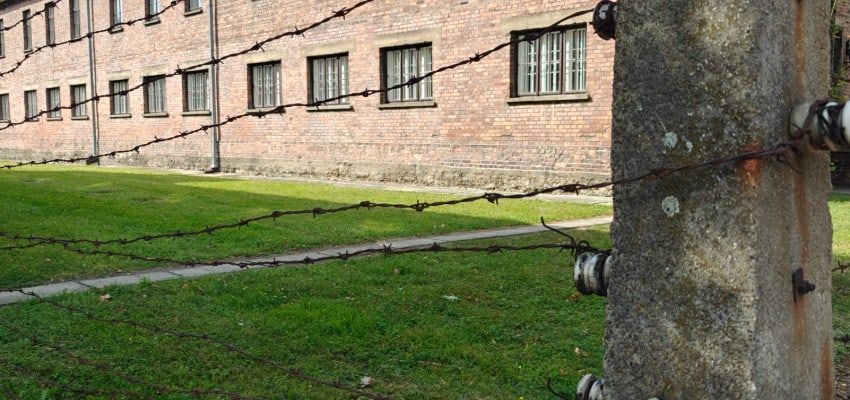
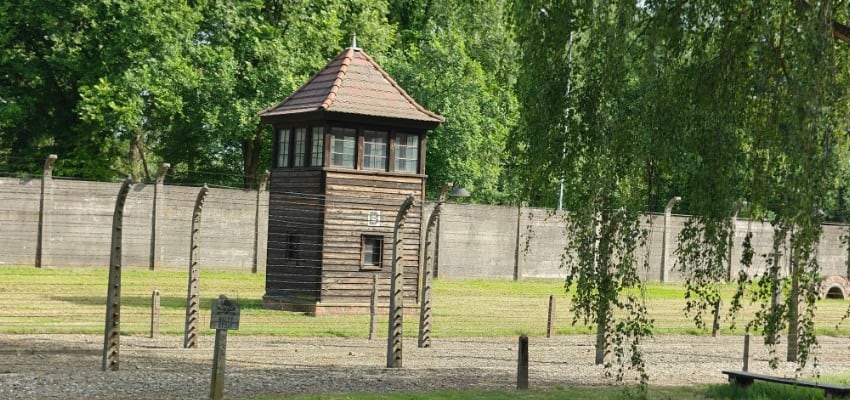
Reference: All images were captured by Rob Robinson at Auschwitz-Birkenau in June 2024. They are reproduced with explicit permission from the photographer. Usage of these images is intended solely for educational and documentary purposes, preserving the historical record and respecting the significance of the location.
Assisted by GAI and LLM Technologies
Additional Reading
- Honoring Holocaust Remembrance Day in the Digital Age
- From Hollerith to Holocaust? The Impact of Technology and Privacy
- Geopolitics Archives – ComplexDiscovery
Source: ComplexDiscovery OÜ

ComplexDiscovery’s mission is to enable clarity for complex decisions by providing independent, data‑driven reporting, research, and commentary that make digital risk, legal technology, and regulatory change more legible for practitioners, policymakers, and business leaders.
The post Honoring Holocaust Remembrance Day in the Digital Age: 2026 Update appeared first on ComplexDiscovery.