Intellectual Property

Third-party generative artificial intelligence systems (AI) are rapidly transforming creative work, introducing new opportunities and real legal and business risks. Many contracts do not yet cover how AI tools are used, who owns resulting intellectual property, or what happens if errors or unlicensed materials are incorporated into your final product. Creative professionals should strongly consider

REGISTER HERE

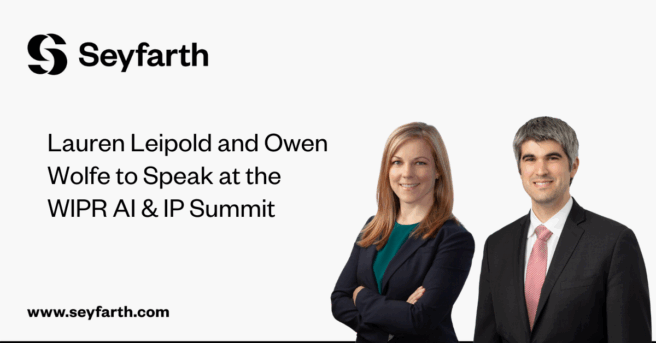
Wednesday, November 12, 202512:00 p.m. to 1:15 p.m. Eastern11:00 a.m. to 12:15 p.m. Central10:00 a.m. to 11:15 a.m. Mountain9:00 a.m. to 10:15 a.m. Pacific

About the Program

Hosted by Seyfarth Shaw LLP, a Platinum Sponsor of the NBA–Corporate Law Section (NBA–CLS), this CLE webinar explores the growing risks of trade secret exposure in

PatentNext Summary: The Desjardins decision, co-authored by new USPTO Director John Squires, signals a potential shift toward greater patent eligibility for AI and software innovations. By vacating a § 101 rejection and warning that “categorically excluding AI innovations from patent protection in the United States jeopardizes America’s leadership in this critical emerging technology,” the Appeals

We represent AI companies that provide market analysis and trading tools, as well as businesses that utilize these tools in the market. In fact, AI tools are becoming increasingly commonplace within the financial, fintech, and banking industries. Here is what an experienced attorney specializing in Artificial Intelligence would want you to know about this growing

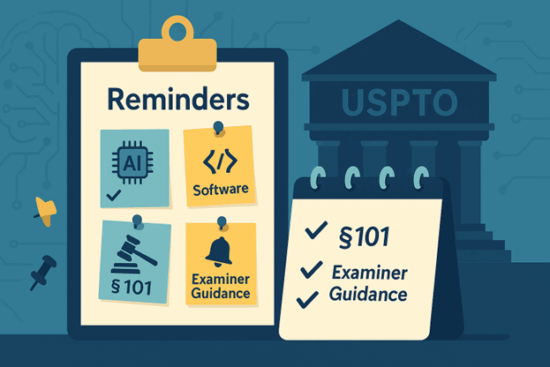
PatentNext Summary: The USPTO issued “Reminders” for examiners in Tech Centers 2100/2600/3600 addressing §101 eligibility for software and Artificial Intelligence(AI) / Machine  Learning (ML)-related inventions; while not changing the MPEP, the guidance is meant to sharpen examination practice. It clarifies Step 2A, Prong One by limiting “mental process” to what can be practically performed in