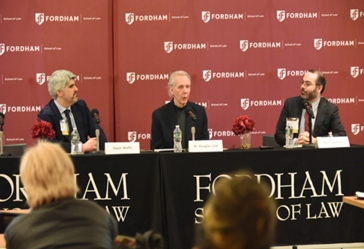
On January 5, 2026, the federal U.S. District Court for the Southern District of New York upheld two discovery orders requiring OpenAI to produce a sample of 20 million de-identified user logs from ChatGPT as part of wide-ranging copyright litigation brought by news organizations and class plaintiffs. This decision offers important insights into how federal
Intellectual Property
2026 Will Reward the Companies that Operationalize AI
After a decade of cloud migration and incremental modernization, the technology sector is approaching an inflection point. This year, 2026, is shaping up to be the year AI must move from pilots to production. The focus is shifting from more tools and bigger platforms toward autonomy, context, and embedded intelligence across the stack, from software…
Privacy Tip #475 – Gmail Users Urged to Switch Off New Smart Features Over Privacy Concerns
Gmail users are being urged to review and disable two key “Smart Features” settings following privacy concerns stemming from reports that these tools may allow Google to access email content to support AI‑driven services and may use users’ data for training. The two features are included in Gmail, Chat and Meet, and Google Workspace Smart…
Little At Sea Over Legacy Trademarks:
Commodore, What Can You Learn From Drifters?

By James P. Flynn, Epstein Becker Green
Trademark lawyers eventually learn a hard truth: brands often do not die; instead, they drift.
Sometimes they drift quietly into nostalgia. Sometimes they drift into the hands of the entrepreneurial and well-advised. Other times, they drift along unattended. Of course, sometimes, they drift straight into court.
Few issues in intellectual property law reveal the fault lines…
Ex parte Carmody: A Quiet but Important Signal on AI Eligibility Under §101
Following the USPTO’s high-profile actions in Desjardins, the next question was how that guidance would play out in ordinary PTAB appeals. Ex parte Carmody provides an early answer.
The decision itself is short. The analysis is sparse. And that is precisely why it matters.…
What Are Intellectual Property Rights? A Strategic Breakdown for Founders and Operators
Intellectual property rights are legal claims to non-physical assets. These rights give businesses the power to protect, license, and commercialize the products of human effort, whether that effort produces code, content, designs, formulas, or data sets.
IP rights are enforced under different legal systems: patents and copyrights are primarily federal, trademarks can be protected under…
Join me for the OSBA’s “2026 Trade Secrets and Restrictive Covenants Symposium: How to protect your trade secrets, navigate an ever-evolving legal landscape and manage technologies like generative AI”

For those looking for a comprehensive webinar on developments in trade secret and restrictive covenant law by experts from around the country, please join me for the first annual “Trade Secrets and Restrictive Covenants Symposium” for the Ohio State Bar Association on Wednesday, January 28, 2026 from 1:00 p.m. ET to 4:15 p.m. ET. Distinguished speakers…
How to File a Trademark and the Hidden Costs of Doing It Yourself
How to File a Trademark and the Hidden Costs of Doing It Yourself by Kennington Groff
How to File a Trademark and the Hidden Costs of Doing It Yourself

Trademark Filing Made Simple, Until It Isn’t
The internet offers no shortage of advice on how to file a trademark. A search yields hundreds of step-by-step…
Year in Review: Big Deals of 2025
As we head into what is anticipated to be a strong year for biopharma dealmaking, we look back at some of the biggest deals in 2025 that focus on biologics and biosimilars.
Antibody Therapy Deals
Novartis acquires Avidity Biosciences
On October 26, 2025, Novartis AG and Avidity Biosciences, Inc. announced that they had entered into…
USPTO Issues Guidance on Subject Matter Eligibility Declarations (“SMED”)
On December 4, 2025, the United States Patent and Trademark Office (USPTO) issued two memoranda addressing the use of Subject Matter Eligibility Declarations (“SMEDs”) during patent prosecution, both from Director John Squires. The first, the SMED Examiner Memo, targets the Patent Examining Corps, clarifying how examiners should treat applicant-submitted evidence under 37 CFR 1.132…