
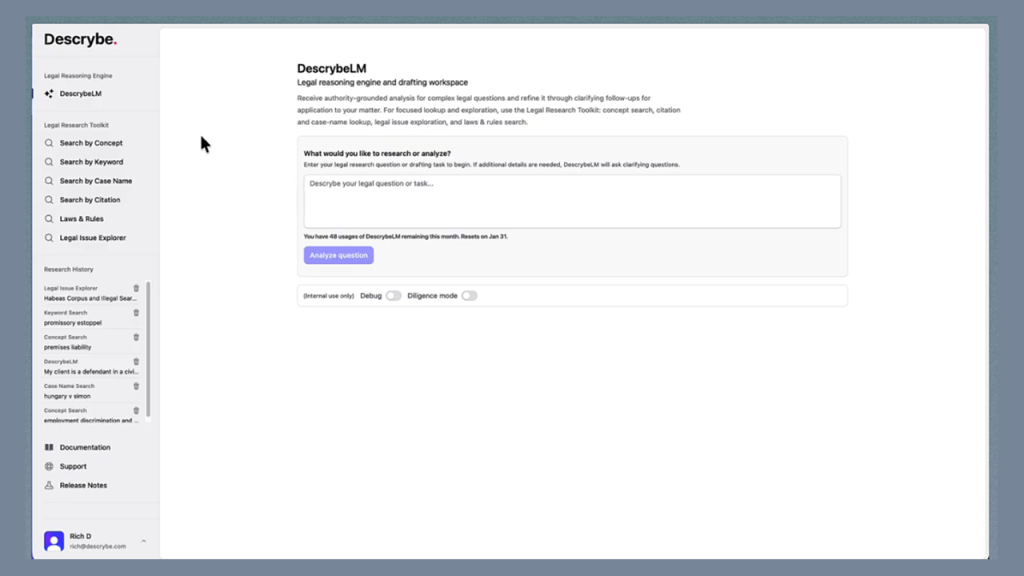
 The AI legal research startup Descrybe today launched a “legal reasoning” product, DescrybeLM, that it says outperforms leading general-purpose AI models on a standardized legal reasoning benchmark — and it is publishing the methodology and scoring data to invite scrutiny. The company also launched an all-new website that features the new product while also retaining
AI Adoption Among Legal Professionals Has More Than Doubled in a Year, New 8am Report Finds, But Firms Lag Far Behind Individual Practitioners
 Nearly seven in 10 legal professionals now use generative AI tools for work — a figure that more than doubled in a single year — but the majority of law firms still lack formal AI policies or training programs, according to the 2026 Legal Industry Report released by 8am, the legal technology company behind LawPay,
I Interviewed the Claude-Native Lawyer Whose Viral Post Broke the Internet, and What He Said Changed Everything…
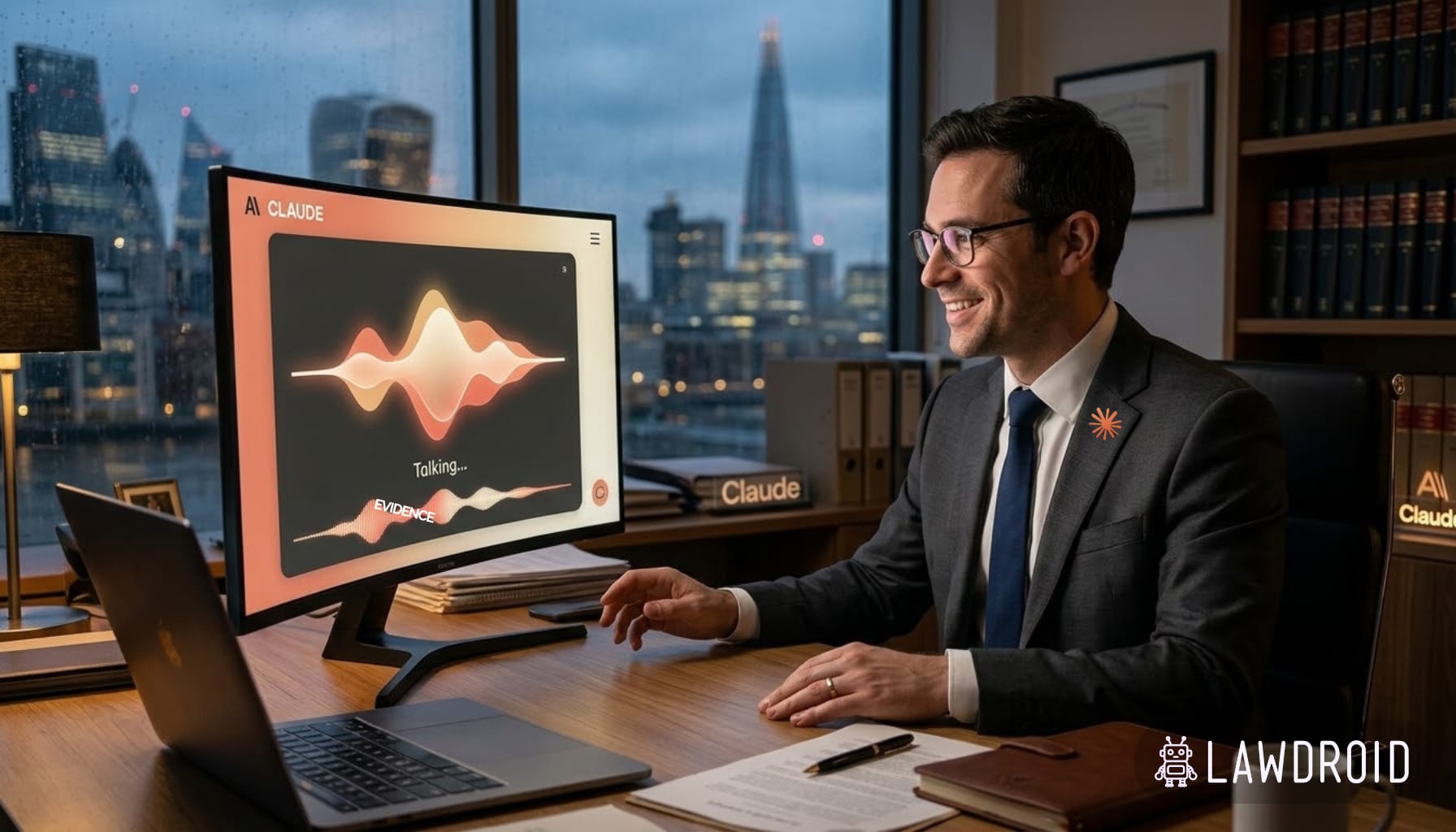
Last week, Zack Shapiro published a post on X called “The Claude-Native Law Firm.” If you’re reading this newsletter, you probably saw it. Over 7.5 million people did. More than 320 comments. Thousands of reactions, and lawyers reaching out to him directly. For context, there are about 1.3 million lawyers in the United States. This
AI Update: SCOTUS Declines Review in Thaler Case

The U.S. Supreme Court has declined to hear Dr. Stephen Thaler’s appeal seeking copyright protection for his AI‑generated artwork A Recent Entrance to Paradise. The decision allows to stand the long series of administrative and judicial rulings holding that a work created autonomously by an AI system cannot be protected by copyright under U.S. law
American Arbitration Association Launches Resolution Simulator, Expanding Its AI Arbitrator Tool
 The American Arbitration Association is launching a new AI-powered tool called the Resolution Simulator, which builds on the organization’s previously launched AI Arbitrator to provide simulated, nonbinding dispute outcomes before formal arbitration proceedings begin. The Resolution Simulator is designed for single-party use in documents-only commercial and construction disputes. Users submit their materials and receive an
Why the Online Harms Act is the Wrong Way to Regulate AI Chatbots

In the wake of reports that AI Minister Evan Solomon may press AI companies such as OpenAI to more aggressively report potential safety risks identified in private chats to law enforcement, attention has quickly turned to the Online Harms Act as a potential regulatory solution. The Online Harms Act or Bill C-63, died
Can’t Stop, Won’t Stop: One Semester, Eight Vibe-Coded Teaching Tools
Somewhere around tool number five, I realized I had a problem. The kind where you keep saying “almost done” and then it’s 2 AM and you’re finalizing a React app that lets your students act as bots and deploy hallucinations against one another.
I teach 21st Century Lawyering at The Ohio State University Moritz College
Glyphosate in Defense of America? AI Answers May Be Misleading? Who Knew?!
A February 18, 2026, Executive Order (EO) from President Trump, entitled “Promoting the National Defense by Ensuring an Adequate Supply of Elemental Phosphorus and Glyphosate-Based Herbicides,” concerns phosphorus’ use as a critical mineral in fertilizers for crop production (and the manufacture of explosives, among other things), and the role phosphorus plays in the production of
Vibe Coding and the Control Plane
Many friends and colleagues in the legal technology world have been telling me I need to start vibe coding. My answer is that in vibe coding, you are intentionally surrendering the control plane. That is not a tradeoff I am willing to make.Let me explain why that is a principle, not a preference, and why
One Algorithm, Three Standards: AI Patent Eligibility Across the UK, EPO, and U.S.

Artificial intelligence may be global, but patent eligibility remains stubbornly local. A recent decision out of the Supreme Court of the United Kingdom seems to have nudged UK practice for computer-implemented inventions closer to the approach historically taken by the European Patent Office. The decision lowers the threshold for exclusion from patentability, reducing the likelihood