
In our previous blog posts here and here, we reported on the Hong Kong government’s efforts to update the Copyright Ordinance to align with the latest technological developments, especially in relation to artificial intelligence. This month, the government released a further public consultation to update the Registered Designs Ordinance (RDO) in view
On the Eighth Day of Data… AI Regulation – A 2025 Recap and a Look Ahead to 2026

In 1950, reflecting on the future of machine intelligence, Alan Turing observed: “We can only see a short distance ahead, but we can see plenty there that needs to be done.” With several large language models, most notably OpenAI’s GPT-4.5, passing the Turing Test in 2025, some governments have taken steps towards stricter regulation this year, with others still working to determine what “needs to be done” for AI regulation in the year ahead.
Most notably, this year saw key provisions of the EU AI Act—the world’s first comprehensive AI-dedicated law—take effect. However, instead of seeing the “Brussels effect” with AI regulation, going into 2026, the global approach appears to be leaning towards that of the UK and U.S., which have led the charge for a looser regulatory environment in recent years.
The Day That ChatGPT Died: Lessons For The Rest Of Us
Imagine this: You’re on deadline, procrastinated on research (don’t judge), and ChatGPT that you counted on to help suddenly dies. That was my Nov 18. Turns out the Cloudflare outage revealed some uncomfortable truths about tech dependency and cybersecurity gaps. Maybe lawyers and legal professionals need to pump the brakes on wholesale AI adoption. And
The Risk of Using Artificial Intelligence in Workplace Investigations

Artificial intelligence (“AI”) tools are increasingly being marketed as a way to streamline workplace investigations: summarizing evidence, generating interview outlines, comparing witness statements, or even “detecting inconsistencies” in testimony. While these tools may appear to help investigators move faster, public employers should approach AI-assisted investigations with caution. California public agencies have unique obligations to ensure
Recent Developments in Artificial Intelligence and Privacy Legislation in New York State
New York State’s 2025 legislative session marked a notable moment in the evolution of artificial intelligence (AI) and privacy regulation. Governor Kathy Hochul signed the Responsible AI Safety and Education (RAISE) Act, creating one of the first state-level frameworks aimed specifically at the most advanced AI systems, while vetoing the proposed New York Health Information
New York Governor Vetoes NY Health Privacy Act

On December 19, 2025, New York Governor Kathy Hochul vetoed the New York Health Information Privacy Act (NY HIPA), a health data privacy bill that would have afforded consumer protections to non-HIPAA health data.
Although NY HIPA resembled existing laws, like Washington’s My Health My Data Act, it had several important differences that would have
Preempting the Patchwork: How Employers Can Thread the Needle Between Trump’s AI Executive Order and State Regulations

President Trump’s sweeping AI Executive Order just stitched another layer onto the already tangled patchwork of state AI regulations — and employers may feel left out in the cold. But we have you covered. This week, we piece together the EO itself, the legal challenges that may cause it to unravel, and tips for employers
Might We See a Streamlining of EU Digital Compliance?
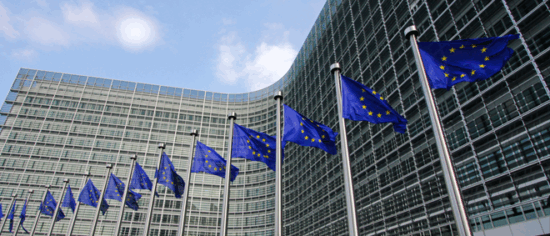
For those operating in the European Union, the list of digital technology laws is becoming daunting. Compliance with GDPR to the AI Act — with stops along the way for the ePrivacy Directive and many more – is a significant undertaking. To simplify this confusion, the European Commission is proposing modifications to many of its data laws. It released the first attempt of these changes in the Digital Omnibus Regulation Proposal.
New California AI Laws Taking Effect in 2026
In 2026, a wide range of California laws regulating the development, marketing, and use of artificial intelligence (AI) go into effect. Together, these bills impose new requirements on generative AI developers, frontier-model companies, healthcare-related AI tools, platforms distributing AI-generated content, and businesses that rely on algorithmic pricing. With the deadline to comply coming up quickly,
Law Pod UK: Best Cases of 2025

Join me and co-presenter and barrister Lucy McCann with public law specialist Jonathan Metzer as we take you on a journey over most significant cases that have been decided over the course of the year. This is Episode 232. Below are the citations of all the cases referred to in our discussion:
IA and