
GEO for law firms — generative engine optimization — is the practice of making your firm visible inside AI-generated answers, not just traditional search results.
This guide covers what GEO means for attorneys in practical terms, how it differs from SEO and search engine optimization, which signals AI models use to decide which firms to cite, where that visibility happens across 6 major AI platforms, and what to implement first to close the gap between your firm’s traditional rankings and its AI presence.
What GEO Actually Means for Law Firms (And Why It’s Not Just a Buzzword)
The search behavior that matters for law firms has shifted. A prospect researching a personal injury claim, a divorce, or a business dispute is increasingly starting that research by asking ChatGPT or Gemini — not by running a Google search. ChatGPT alone has over 400 million weekly users.
That audience is asking legal questions, getting AI-generated answers, and forming opinions about which firms are authoritative before they ever visit a website or click an ad.
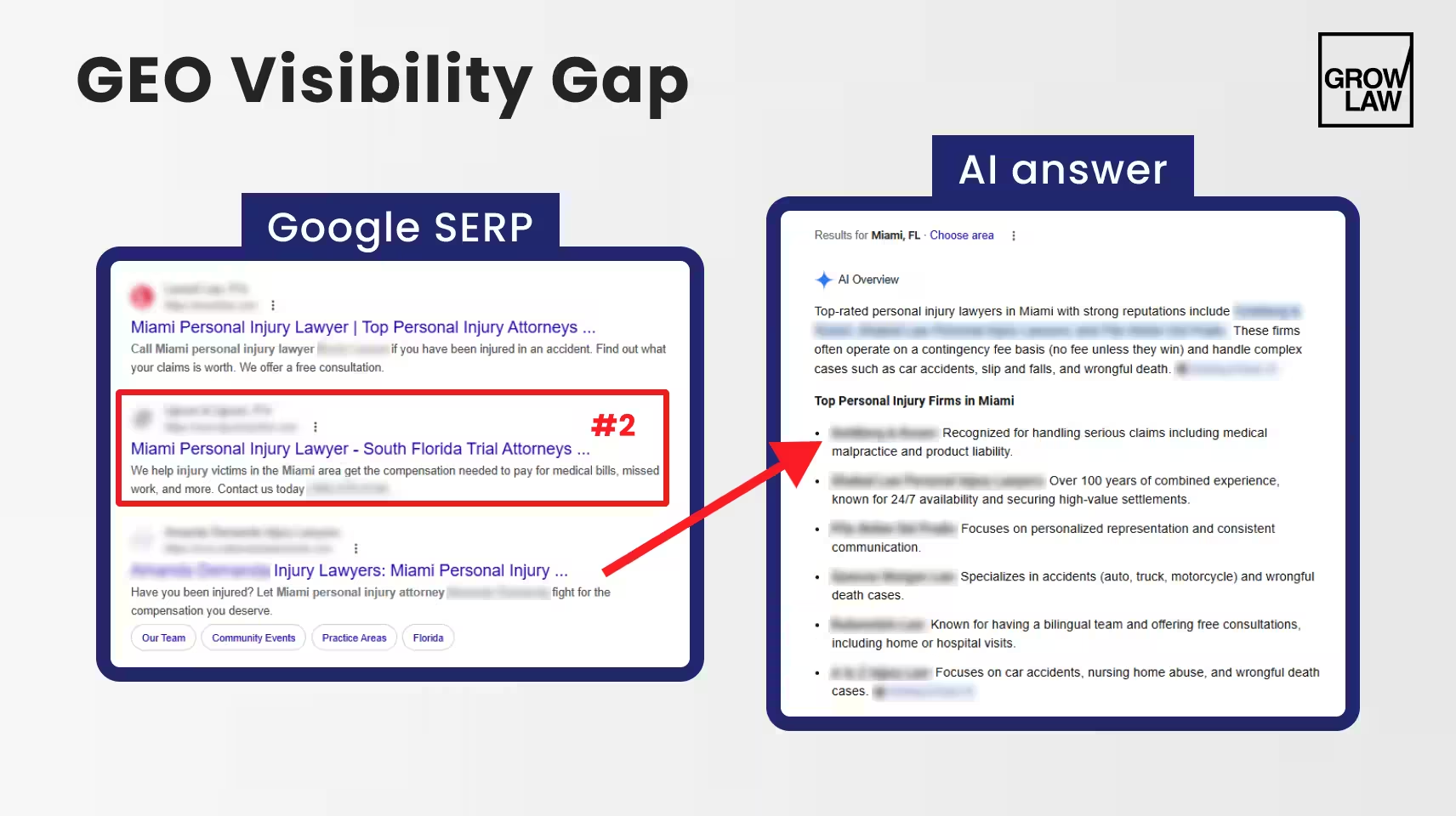
GEO for law firms addresses a specific gap: the difference between ranking in traditional search and being cited inside an AI-generated response. These are not the same thing, and optimizing for one does not guarantee the other.
A firm can hold position #2 organically for a high-value keyword and have zero presence in the AI answers that the same prospect is reading.
72% of Grow Law’s law firm clients now appear in AI Overviews; 28% are directly cited in AI-generated answers. That’s not a future projection — it’s the current distribution among firms that have invested in GEO.
Across those clients, Grow Law’s average results include 1,200%+ web traffic growth and 1,018% more qualified leads — numbers that reflect what compounding AI and organic visibility produce over time.
Texas Horizons Law Group, for example, saw a 1,300% increase in qualified leads and 5,250% increase in organic traffic — a result increasingly tied to appearing in AI-surfaced results, not just traditional rankings. For firms that haven’t invested in GEO, the gap is active and growing.
See how Grow Law builds AI search visibility for attorneys: GEO for law firms
GEO vs. SEO vs. Answer Engine Optimization: What’s the Difference?
The terminology in this space is genuinely confusing, and the confusion has a cost — firms end up doing traditional SEO work and expecting GEO results.
GEO for legal firms and law firms specifically is sometimes used interchangeably with AEO and LLM SEO, but the distinctions matter.
Here’s how the three concepts actually differ:
The overlap is real — strong SEO and good AEO both contribute to GEO.
But GEO requires additional signals that traditional SEO work doesn’t produce: Q&A-format content structured around how people actually prompt AI, entity-building across legal directories and publications, and specific schema types (attorney, service, review) that LLMs use to identify citable sources.
We audited a personal injury firm that ranked #2 organically for their primary keyword. Traffic was stable, and traditional SEO metrics looked solid. But a GEO audit showed the firm was cited in zero ChatGPT or Gemini answers for the 12 most common legal questions prospects ask before hiring a PI attorney.
A competitor ranked #5 organically was appearing in AI Overviews for 8 of those 12 queries. The gap wasn’t about rankings — it was about AI citation signals the #2 firm hadn’t built.
How AI Models Decide Which Law Firms to Cite
LLMs don’t rank pages the way Google does. They identify citable sources based on a different set of signals — and understanding those signals is the core of LLM SEO for law firms. The five that matter most:
Among Grow Law’s law firm clients, 72% appear in AI Overviews, and 28% receive direct citations in AI-generated answers. The difference between those two groups is primarily the depth of entity signals and the presence of Q&A-format content — not domain authority or backlink count.
Traditional SEO rank does not transfer to AI citation. A firm can rank #1 on Google and be invisible to every LLM that a prospect consults before picking up the phone.
The 6 Platforms Where GEO Visibility Happens — and Which Matter Most for Lawyers
Grow Law optimizes law firm GEO across six AI platforms. They don’t all work the same way, and they don’t all carry equal weight for legal queries:
For most law firms, the priority order is: Google AI Overviews first (highest search-intent traffic volume), ChatGPT second (highest conversational query volume), Perplexity third (highest citation transparency — users see which firms are sourced and click through). Gemini and Copilot follow. The AI optimization for law firms that generates the fastest measurable results targets these three platforms first.
GEO Strategies for Law Firms: What to Implement First
Grow Law’s GEO implementation follows a 7-step sequence built from auditing and optimizing dozens of law firm AI presences. The order matters — each step builds on the previous one:
Step 1 — AI audit. Find which queries in your practice area trigger AI-generated answers, and which firms get cited. This tells you the gap you’re closing and which content to build first. Without an audit, GEO work is directionally blind.
Step 2 — Q&A content. Build pages structured around how prospects actually prompt AI — not how they type keywords into Google. ‘What happens if I’m hit by an uninsured driver in Texas?’ performs in AI answers. ‘Uninsured motorist attorney Texas’ is a keyword page that doesn’t.
Step 3 — Schema implementation. Add Attorney, LegalService, Review, and LocalBusiness schema sitewide. These are the structured signals LLMs use to identify and categorize your firm as a citable legal source.
Step 4 — Technical access. Open your site to AI crawlers — GPTBot, PerplexityBot, ClaudeBot — by checking and updating robots.txt. Many firms are blocking these bots as a holdover from old SEO practices, making themselves invisible to LLMs by default.
Step 5 — Entity mentions. Earn citations in the legal directories and publications AI models reference as authoritative sources: Avvo, Justia, FindLaw, Super Lawyers, state bar publications, and legal media outlets.
Step 6 — Visual optimization. AI Overviews increasingly pull images and structured visual content. Optimize images with descriptive alt text, add attorney headshots with proper markup, and include charts or diagrams that AI can reference.
Step 7 — Community presence. Participation in legal forums, Q&A platforms, and professional associations that AI models treat as authority signals — not for direct traffic, but for entity reinforcement.
A criminal defense firm came to Grow Law with solid Google Business Profile performance but zero AI citation presence. A content audit revealed no Q&A-format pages, no attorney schema, and no structured FAQ content — the exact signals LLMs use to identify citable sources.
After building 15 conversational Q&A pages, adding attorney and service schema sitewide, and earning 8 mentions in legal directories AI models reference, the firm went from zero AI citations to appearing in Perplexity and ChatGPT answers for their primary practice area + city combination within 4 months.
GEO implementation requires coordinated execution across content, technical, and off-site signals. See Grow Law’s full process: generative engine optimization for attorneys
The results of sustained GEO investment compound the same way SEO does. Generative engine optimization for law firms is not a short-term tactic — it builds citation authority that accumulates over time.
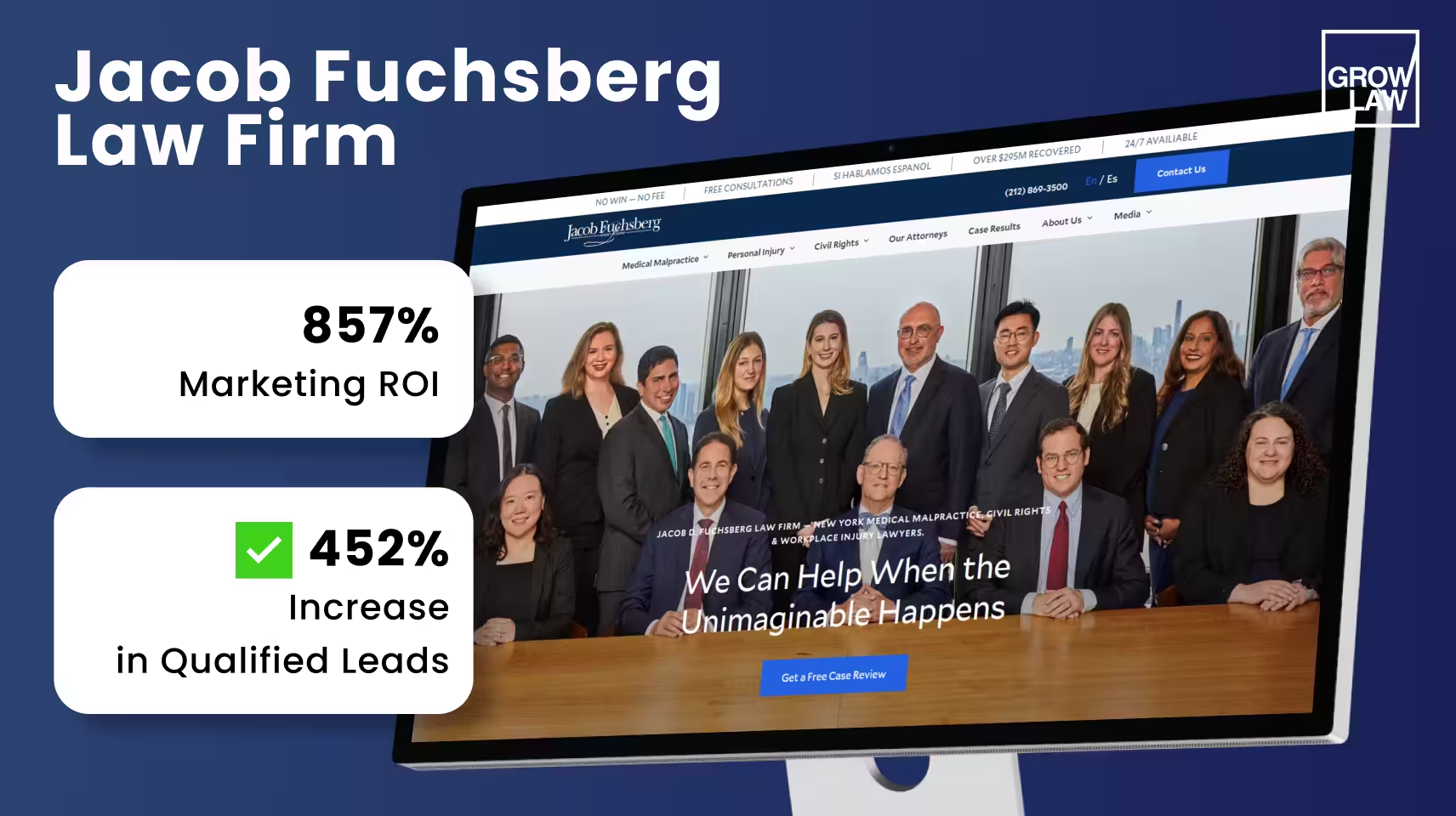
Jacob Fuchsberg Law Firm achieved a 2,451% marketing ROI and 758% increase in qualified leads through an integrated digital presence strategy — the same foundation GEO builds on. Eli Fuchsberg noted that the firm ranked higher and increased its number of retained cases directly as a result.
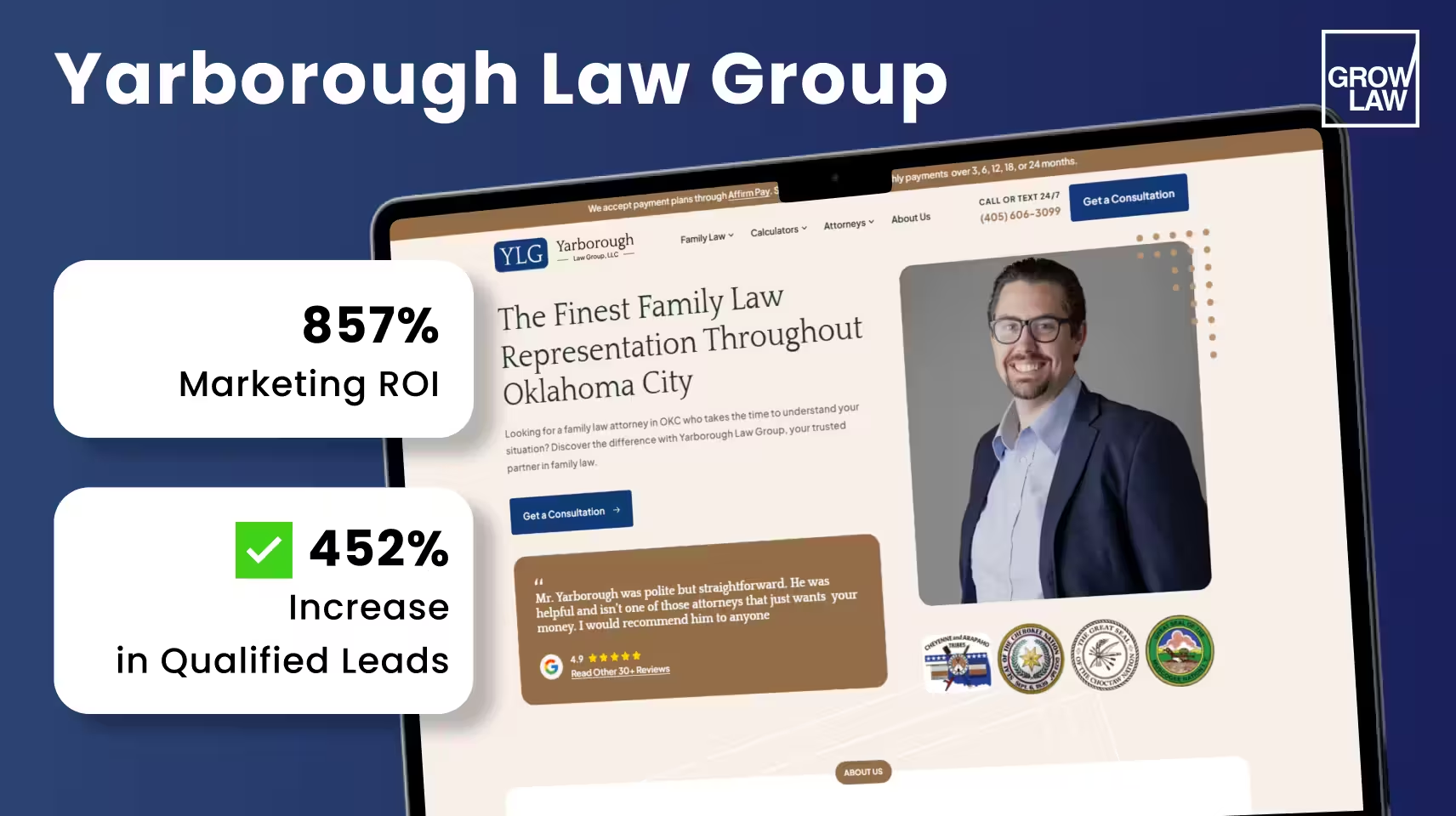
Yarborough Law Group tells the same story from a different angle: 857% marketing ROI, 452% increase in qualified leads, and 2,938% organic traffic growth. Cole Yarborough had to hire additional staff to handle the volume, which is what sustained authority-building and AI visibility produce when the pipeline actually fills.
GEO Mistakes That Keep Law Firms Out of AI Answers
- Blocking AI crawlers in robots.txt. GPTBot, PerplexityBot, and ClaudeBot are blocked by many law firm sites — a holdover from the old SEO practice of restricting all non-Google bots. The result: the firm is invisible to the LLMs that crawlers feed. Check your robots.txt and remove restrictions on AI crawlers explicitly.
- No Q&A-format content. LLMs cite sources that directly answer questions. A service page that says ‘We handle personal injury cases in Houston’ doesn’t get cited. A page that answers ‘What should I do immediately after a car accident in Texas?’ does. If your site has no Q&A-format pages, you have no AI citation surface.
- Thin attorney bios with no entity signals. AI needs to connect an attorney’s name to a specific practice area, city, bar admission, and legal expertise to treat them as a citable entity. A bio that says ‘John Smith is a dedicated attorney serving clients throughout the state’ gives LLMs nothing to work with. Build bios that are structured, specific, and schema-marked.
- Optimizing for Google only and ignoring Perplexity and Copilot. Many firms focus entirely on Google AI Overviews and miss Perplexity, where citation transparency is highest and users actively see which firms are sourced. Bing indexing (which feeds Copilot) is also frequently neglected — a structural visibility gap for B2B legal queries.
- Treating GEO as a one-time project. AI models update their training data and retrieval patterns continuously. Content that earns citations today can lose position if competitors build stronger entity signals or publish more comprehensive Q&A content. GEO requires the same ongoing maintenance discipline as SEO — not a one-time sprint.
Summary
- GEO — generative engine optimization — addresses the gap between traditional SEO rankings and AI citation presence. The two are not the same thing and don’t automatically transfer.
- 72% of Grow Law’s law firm clients appear in AI Overviews; 28% are directly cited in AI-generated answers. The gap for firms without GEO investment is active and measurable.
- The key AI citation signals are: entity recognition, Q&A-format content, schema markup, third-party mentions in legal directories, and topical authority depth.
- Priority platforms: Google AI Overviews (highest search-intent volume), ChatGPT (highest conversational volume), Perplexity (highest citation transparency).
- GEO implementation follows a 7-step sequence: AI audit → Q&A content → schema → technical access → entity mentions → visual optimization → community presence.
- The most common mistakes — blocking AI crawlers, no Q&A content, thin attorney bios — are fixable, but require deliberate execution, not a one-time effort.
Ready to build your firm’s presence in AI-generated answers? AI search optimization for law firms