
Just like Google did back in 2005, ChatGPT is having its moment.
It now handles 1.7 million requests every minute, with thousands upon thousands of people using it to find lawyers.
But how does ChatGPT decide which law firms to recommend? And more importantly, how can you optimize for ChatGPT so your firm shows up in those answers?
Give us 10 minutes. We’ll break down ChatGPT optimization for law firms, how it decides which lawyers to recommend, and 6 steps you can use today to get cases.
Key Takeaways
- Write clear, question-first content. ChatGPT looks for answers instead of keywords.
- Build authority signals like awards, credentials, and experience.
- Structure your pages with strong FAQ headings and direct answers.
- Create high-intent, location-specific pages to match your service areas.
- Get external endorsements with reviews, backlinks, and mentions.
- Test and refine consistently as AI visibility grows over time, not overnight.
What Does ChatGPT Optimization for Law Firms Mean?
ChatGPT optimization for law firms is the process of structuring your law firm’s online presence and content to get found and recommended by AI search engines like ChatGPT.
The inventor of AI search optimization, Evan Bailyn, has pointed out, “ChatGPT will often use the top-ranked search results to inform its suggestions.”
He’s right. As per our own research, SEO plays a MAJOR role in whether your firm gets picked up by ChatGPT, but it’s only part of the equation.
Unlike traditional search engines like Google (where the goal is to rank on a search results page), ChatGPT optimization focuses on appearing in AI answers.
The stakes are higher because ChatGPT only mentions a small number of sources!
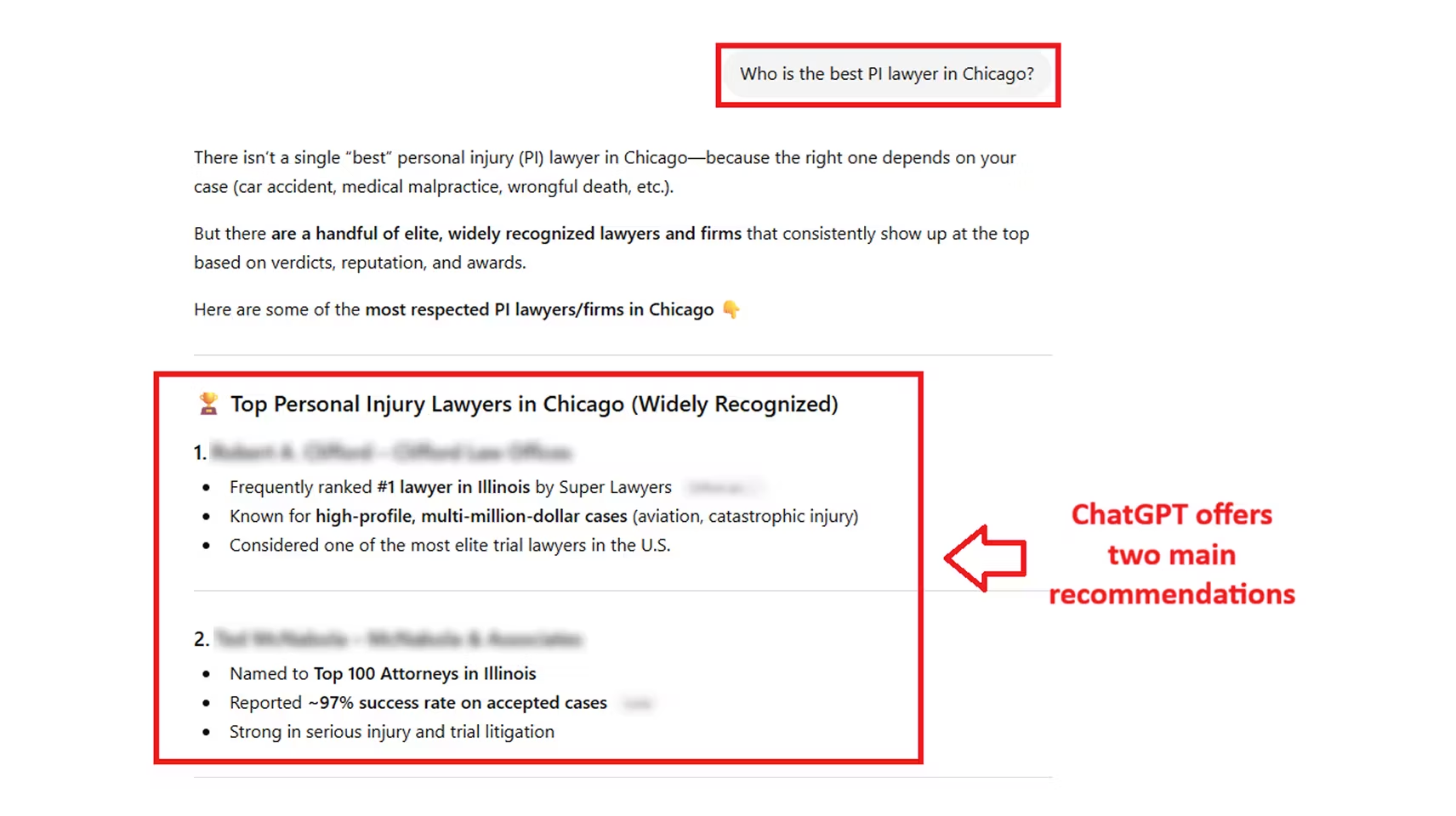
— SEO vs. ChatGPT Optimization
The biggest shift comes down to this:
- SEO: You compete for clicks on a page filled with ads, the Map Pack, and organic results.
- ChatGPT optimization: You compete to be one of the lawyers ChatGPT recommends.
With traditional SEO, ranking on page one is the goal.
With generative engine optimization for law firms (i.e., ChatGPT optimization), your firm needs to be clear, authoritative, and structured enough to be featured by AI.
But as we said, ChatGPT optimization is not replacing SEO. It builds on it. Without strong SEO, your chances of getting featured by AI are very slim.
— What “Being Featured” Actually Means
“Being featured” means your firm is referenced directly inside an AI-generated response. That could include:
- Your practice area page being summarized
- Your FAQ content answering a legal question
- Your firm being recommended as a trusted option
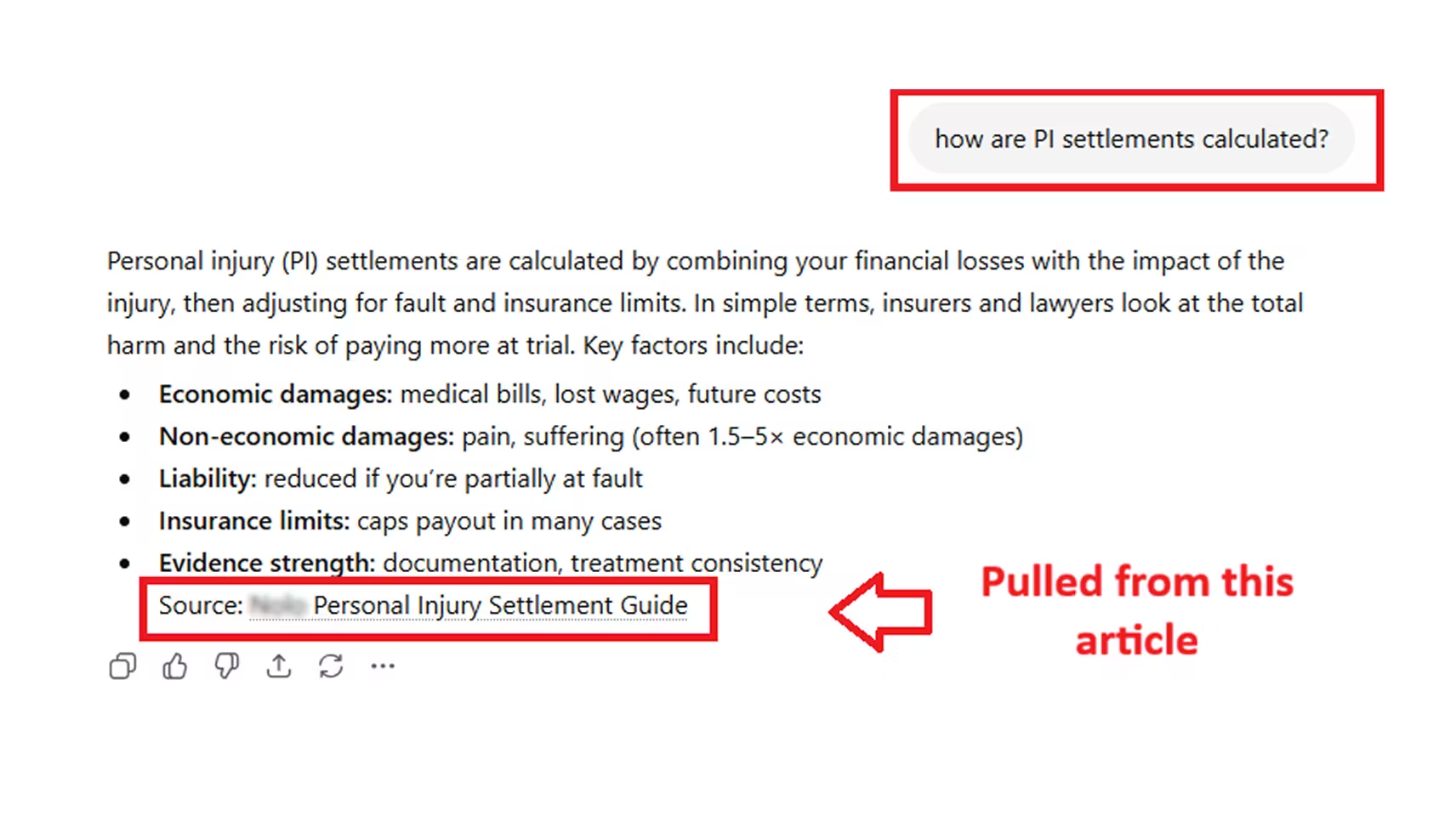
In high-stress moments, when someone is actively looking for legal help, this kind of visibility can lead directly to consultations and new cases!

Why Law Firms Can’t Ignore ChatGPT Search in 2026
A study conducted by Future Publishing with 510 participants showed that 27% of Americans now skip Google entirely and use AI tools like ChatGPT.
That’s why you must know how to optimize for ChatGPT search. Your visibility depends on it.
— Which High-Intent Legal Queries Are Moving to AI?
At Grow Law, we’ve run 1,000+ experiments across ChatGPT, Gemini, and Perplexity, and here’s what we keep seeing: legal searches on AI are fast, urgent, and high-stakes.
- “Do I need a lawyer after a car accident?”
- “How much is my case worth?”
- “Who is the best immigration lawyer near me?”
These are EXACTLY the types of queries AI handles well.
And that’s why we highly recommend the ChatGPT search optimization techniques you’re about to read.
How ChatGPT Finds and Chooses Law Firms to Recommend
Let’s get to how to optimize your web presence for ChatGPT.
ChatGPT doesn’t “rank” websites like Google. It pulls from sources it considers clear, trustworthy, and relevant to the question being asked.
ChatGPT relies on a mix of signals across the web, including:
- Your website content (practice pages, blogs, FAQs)
- Authority mentions (directories, media, backlinks, reviews)
And speaking of reviews, Evan Bailyn points out that companies with ratings below ~3.5 stars (around 70%) are significantly less likely to be recommended by ChatGPT.
4 Core ChatGPT Optimization Signals for Law Firms
At a high level, ChatGPT optimization comes down to how clear, credible, and structured your content is.
ChatGPT isn’t looking for the “best-designed” site. It’s looking for content it can trust and confidently include in its answers.
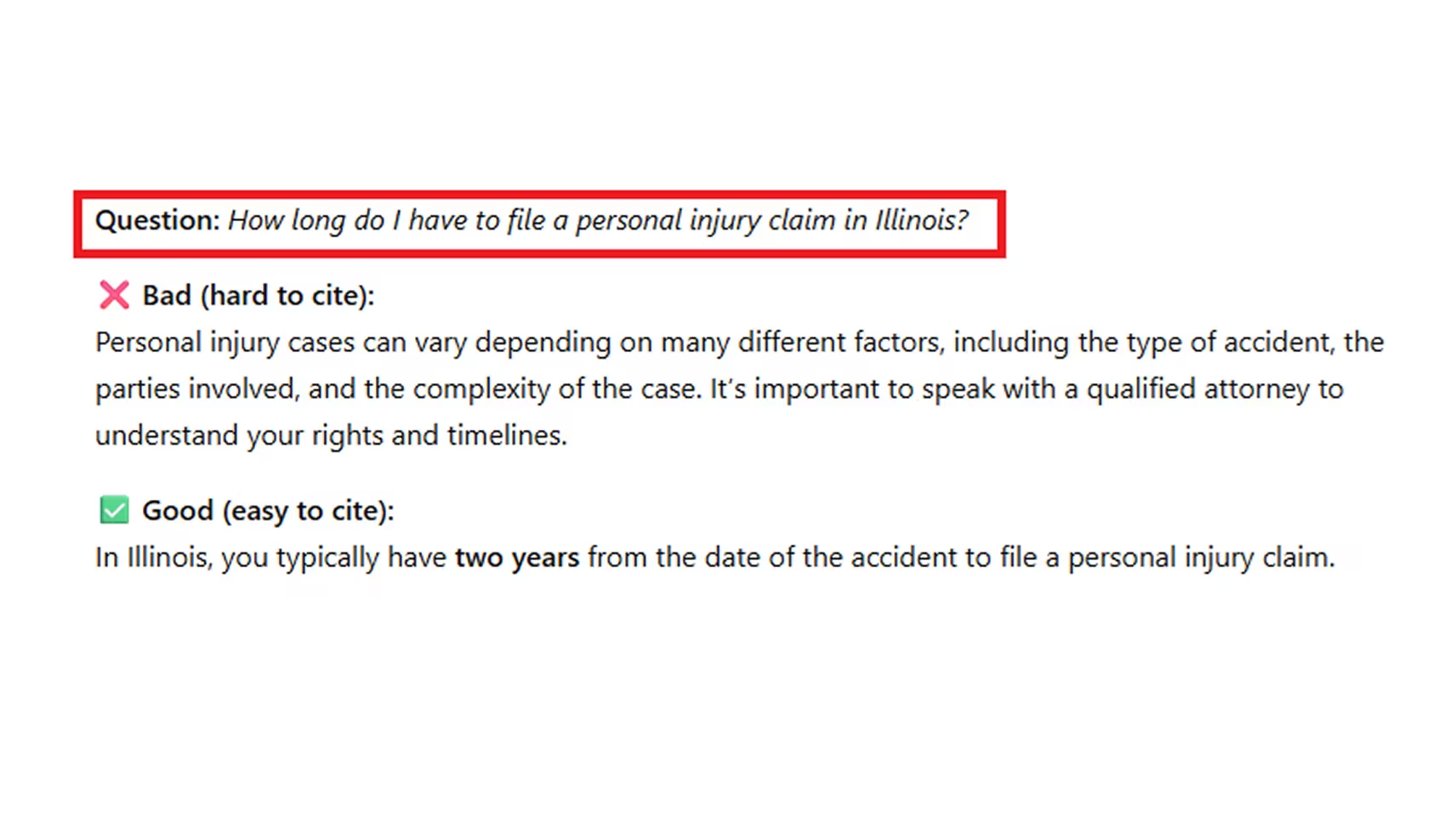
— Content Clarity
Is your content vague or overly complex? If so, it probably won’t get used. To improve how to optimize content for ChatGPT, focus on:
- Direct, question-based answers
- Simple, conversational language
- Clear headings and structured sections
Make sure your content reads like a clear answer. That is far more likely to be featured.
— Authority Signals
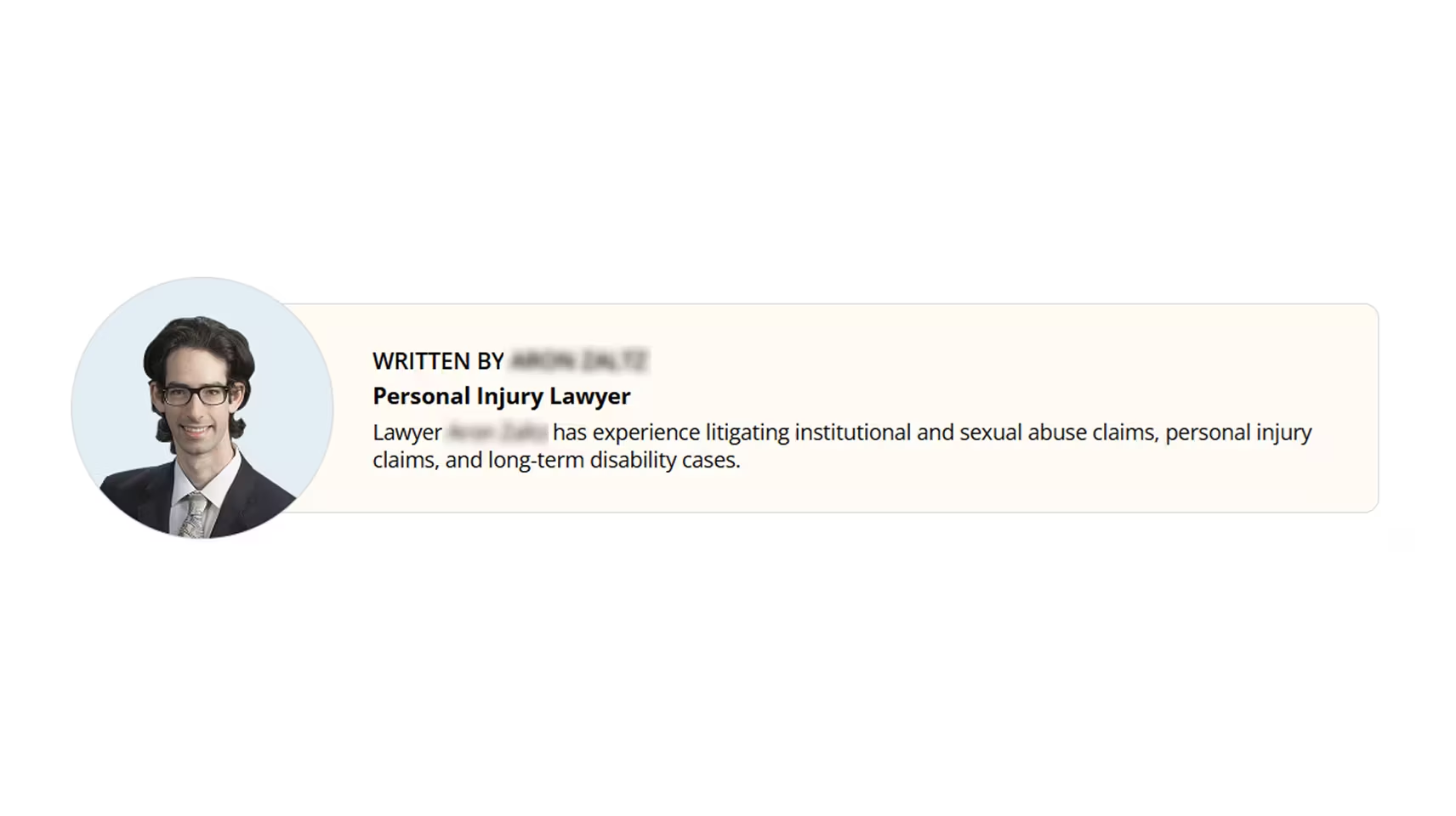
Legal content requires a higher level of trust. ChatGPT looks for signals like:
- Detailed attorney bios
- Credentials and experience
- Practice area depth
Just like in the screenshot below, make sure your blogs have a real attorney bio, clearly identified, with relevant experience tied directly to the content.
— External Validation
Your credibility isn’t built on your site alone. ChatGPT also looks at:
- Backlinks from reputable sources
- Legal directories and listings
- Media mentions and third-party references
These signals prove that your firm is recognized beyond your own content.
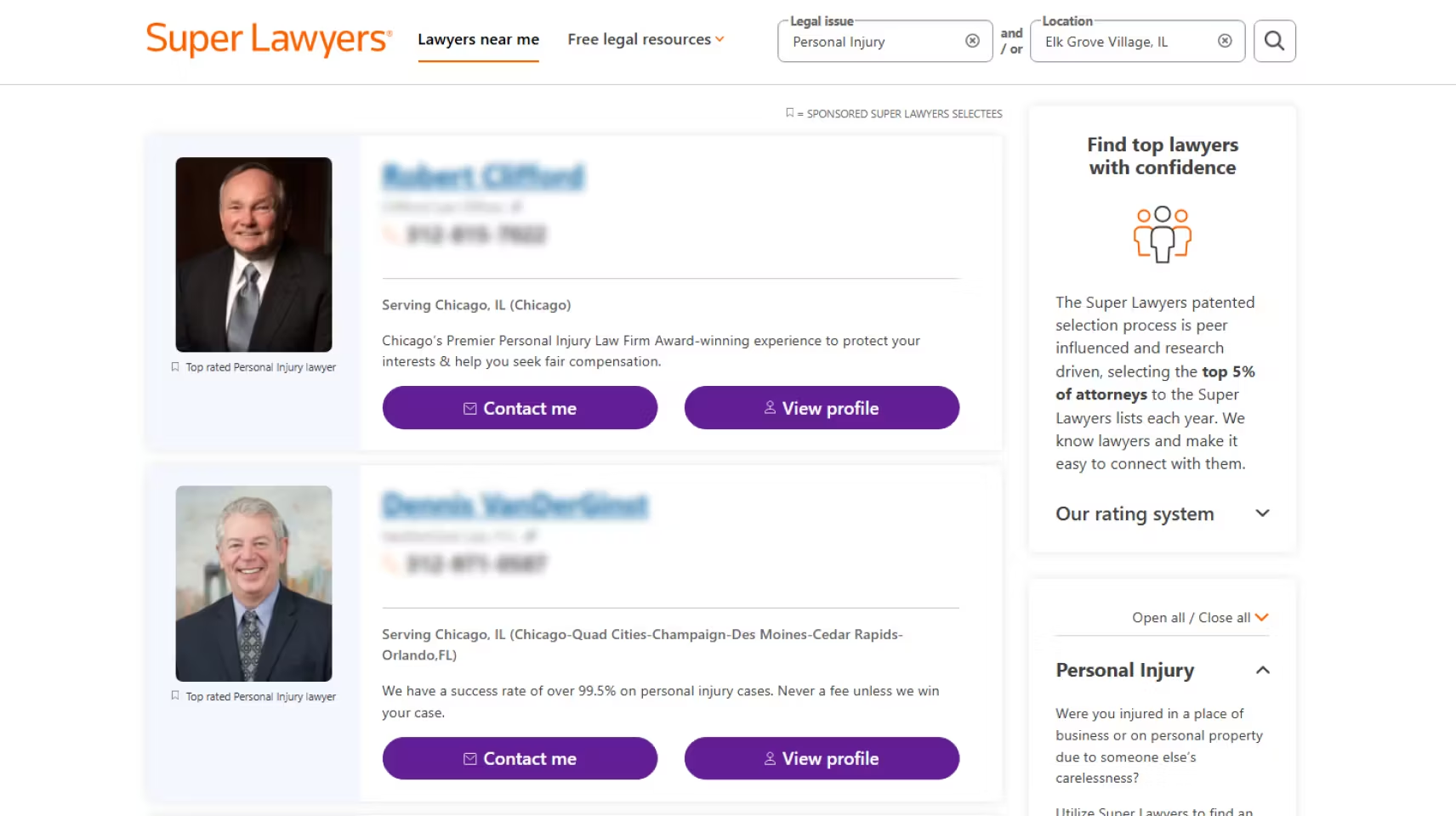
As per our research, ChatGPT heavily favors Super Lawyers (a major source for peer recognition), Avvo, and Martindale-Hubbell.
— Technical Structure
Finally, even the strongest content won’t perform if it’s hard to interpret. Make sure your site is:
- Well-structured and easy to crawl
- Organized with a clear page hierarchy
- Built with clean, readable formatting
At the end of the day, if AI can’t easily process your content, it won’t use it. Simple.

How to Optimize Your Law Firm Website for ChatGPT (6-Step Framework)
ChatGPT attracts 900 million users a month, as per Backlinko.
That’s where your prospects are. That’s where you need to be.
The key is knowing how to optimize your web presence for ChatGPT so it can actually be featured in its answers.
Using this 6-step framework, 72% of our law firm clients appeared in AI Overviews, 28% were directly featured in AI-generated answers, and 98% received AI-driven qualified leads.
Step 1: Build Pages That Answer Top Legal Questions
If you want to attract clients from ChatGPT, start with buyer-ready pages.
Instead of broad content, answer questions like:
- “How long do I have to file a claim?”
- “What is my case worth?”
- “Do I need a lawyer for X situation?”
Incorporate these questions into key areas on your practice area pages, attorney bios, FAQ pages, and local service pages.
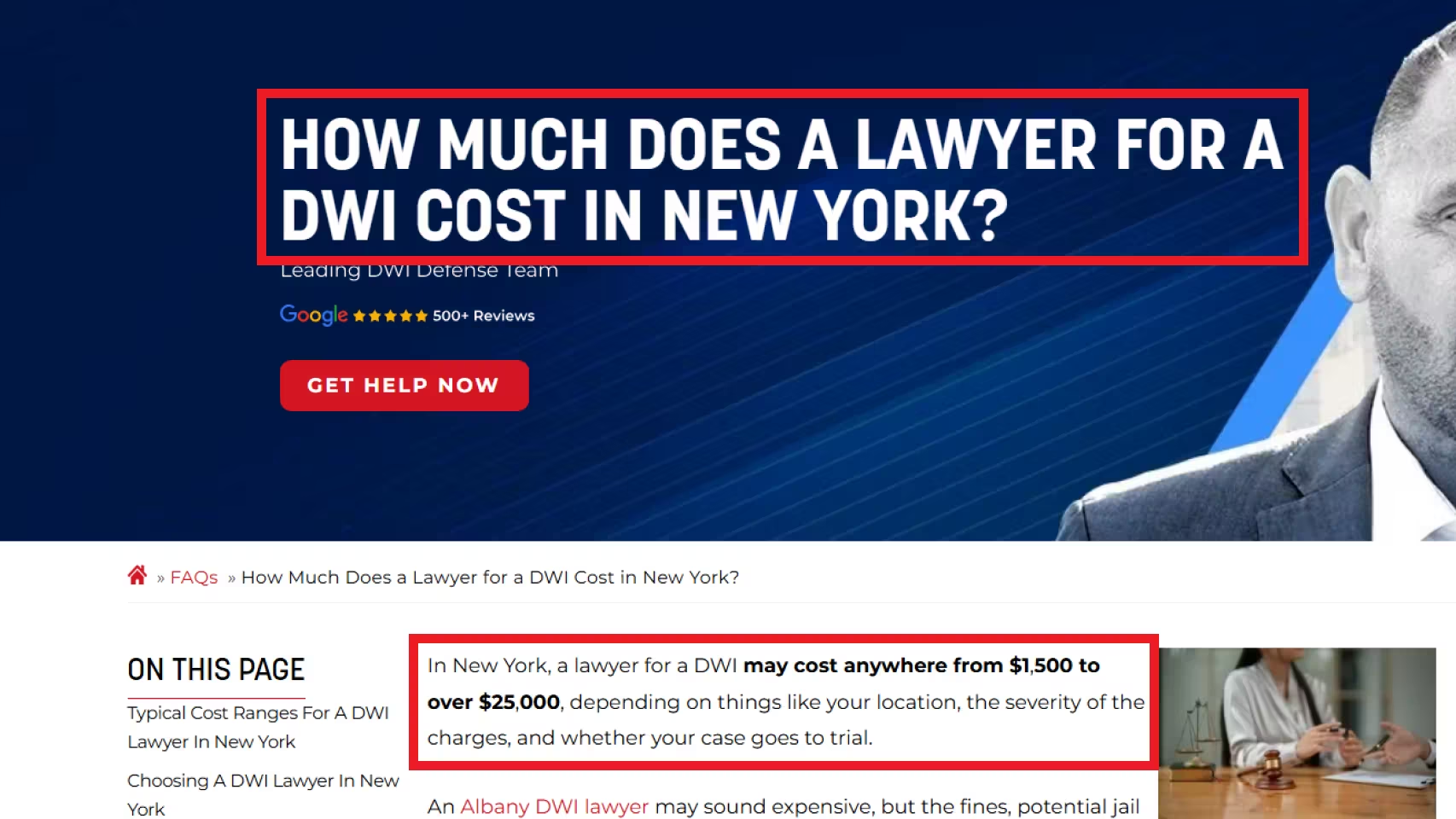
DWI Tom has an excellent page dedicated to the FAQ “How much does a DUI lawyer cost in New York?”
Take note of how he answers the question right at the top.
Step 2: Structure Content for AI Readability
Strong ChatGPT search optimization techniques start with structure. Make your content:
- Easy to scan (short paragraphs, headings)
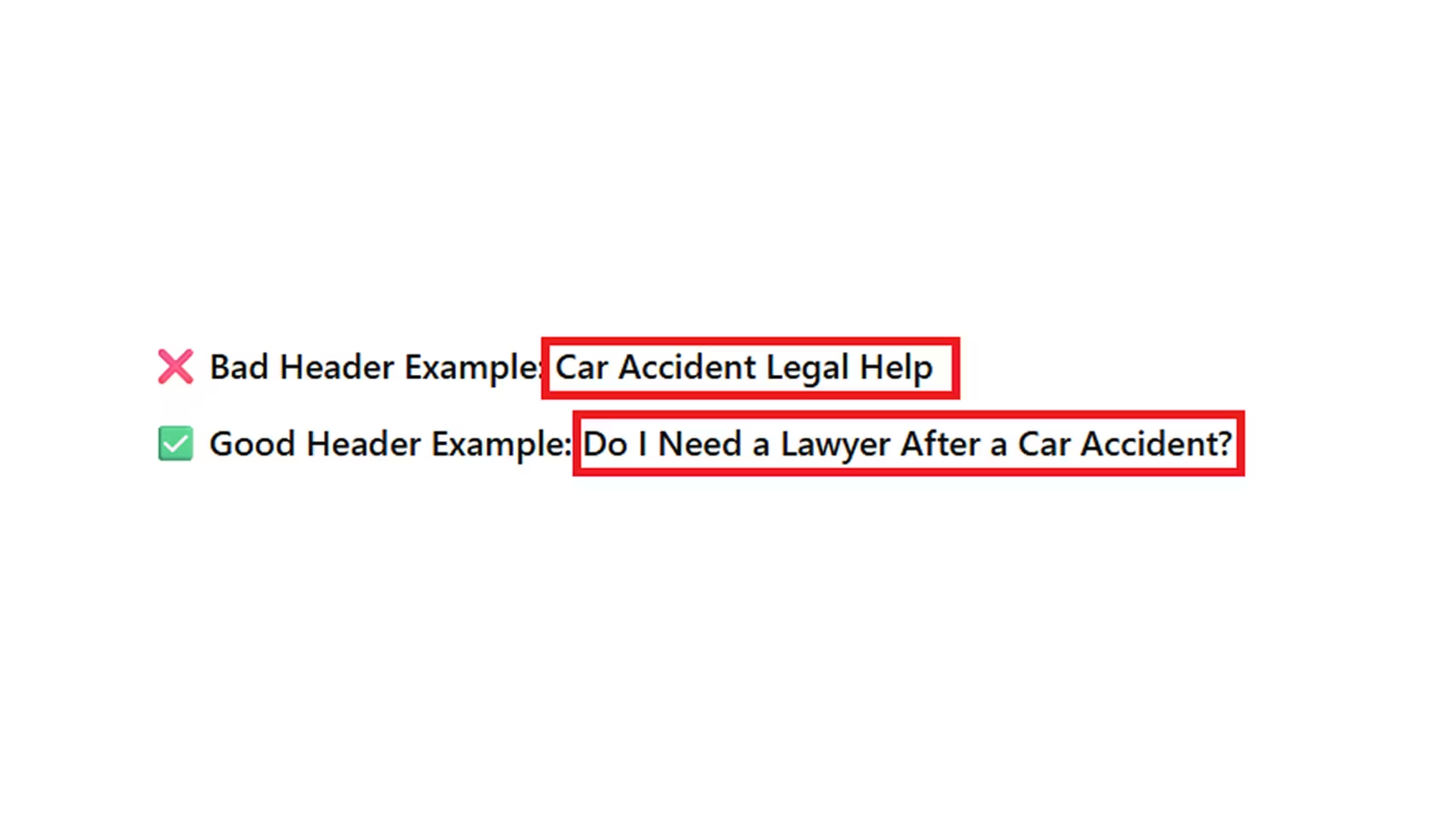
- Question-driven headings
- Direct and concise answers at the top
If AI can’t quickly extract the answer, it will skip you entirely.
Step 3: Strengthen Authority Signals
Legal content falls under Google’s Your Money or Your Life (YMYL) category.
This means AI tools are far more picky about which lawyer they cite as opposed to which baker they cite.
Google itself points out, “We have very high Page Quality rating standards for YMYL pages because low-quality YMYL pages could potentially negatively impact a person’s happiness, health, financial stability, or safety.”
You must frequently mention:
- Attorney credentials in each blog
- Case experience on your Home and About page
- Practice area depth (dedicated pages for each case type)
Criminal Attorney Cincinnati legitimizes their firm by adding industry awards and mentions right on their homepage. Worth taking note!

In GEO for law firms, you must focus on authority. The stronger your authority, the more likely your firm is to be referenced.
Step 4: Build Local and Intent Relevance
To improve how to optimize for ChatGPT search, make your content location-aware.
What does this mean?
- City-specific pages like “Personal Injury Lawyer in Chicago.”
- “Near me” relevance using phrases like “best car accident lawyer near me.”
- Local legal context with things like “California follows comparative negligence laws.”
AI prioritizes answers that are relevant to the user’s location.
Step 5: Earn Mentions Beyond Your Website
Your visibility doesn’t stop at your website. AI also cares about “web chatter” or how your firm is perceived across the web.
That includes:
- Backlinks from reputable sources
- Legal directory listings (like Avvo or Justia)
- Media mentions and third-party features
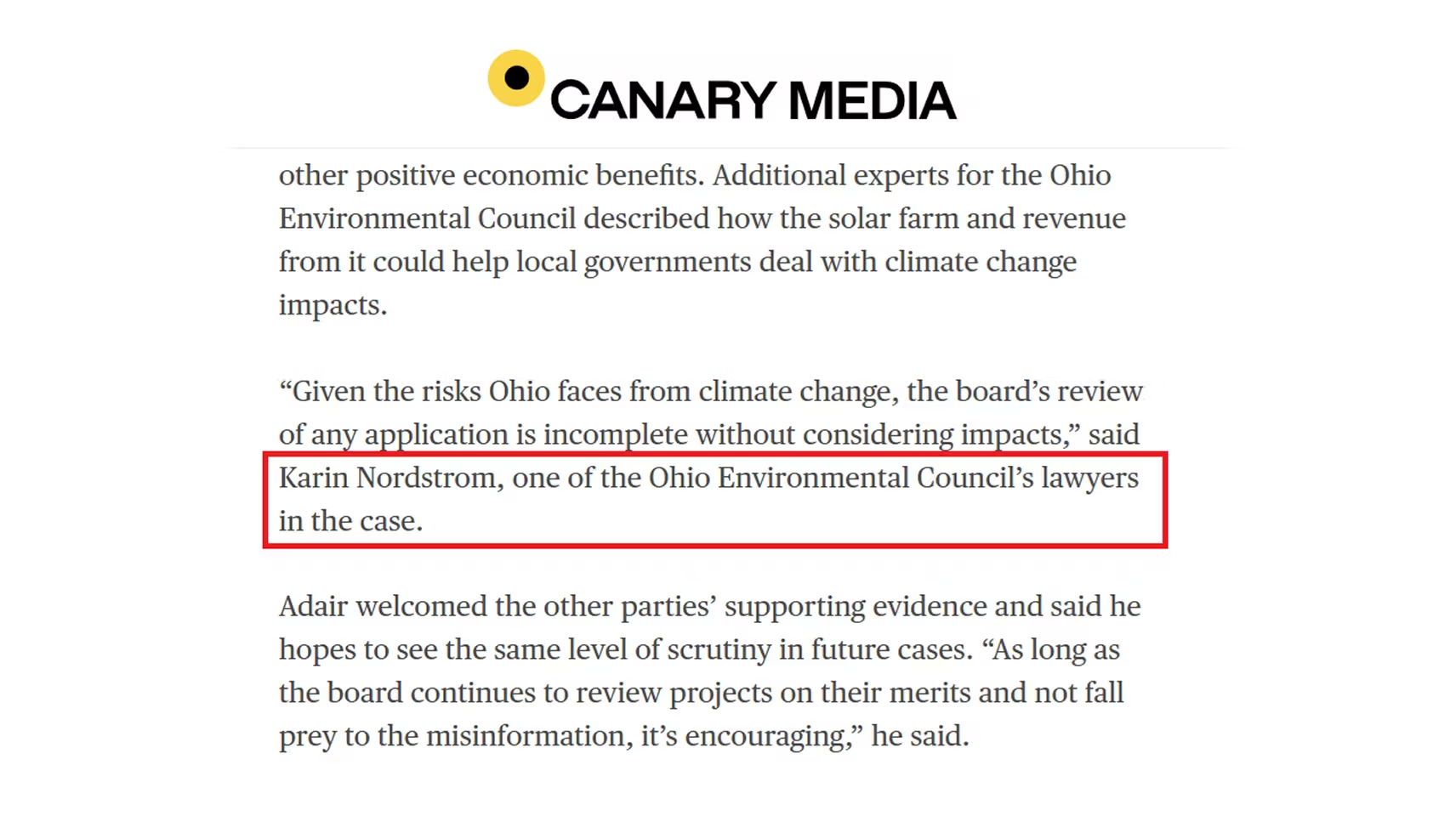
This article by Canary Media breaks down a contested solar project in Ohio, where legal experts like Karin Nordstrom were brought in to assess evidence and influence the final ruling.
These signals show that your firm is trusted beyond your own content, making it more likely to be featured in AI-generated answers.
Step 6: Align With How People Prompt ChatGPT
To understand how to optimize for ChatGPT, think about how people ask questions.
Users don’t type keywords like “DUI lawyer.” They describe their situation: “Will I lose my license after a first-time DUI in California?”
That means your content should reflect:
- Natural language queries
- Full, conversational questions
- Real-life legal scenarios
This shift mirrors the rise of voice search, where queries are longer and more conversational.
Over 71% of users prefer speaking to typing when searching, which is exactly how people interact with AI tools like ChatGPT.
Common ChatGPT Optimization Mistakes Law Firms Make
Fair warning:
It’s easy to do ChatGPT optimization the wrong way. Here are 6 of the most common mistakes in AI search optimization:
- Writing for rankings, not answers: Traditional SEO focuses on clicks. ChatGPT optimization requires clear, direct answers that can be quoted in AI responses.
- Using generic, non-specific content: If your content could apply to any firm, it won’t stand out. AI prioritizes specific, experience-driven answers.
- Weak authority signals: Legal is a high-trust (YMYL) category. Without credentials, case experience, and depth, your content is less likely to be featured.
- No structured, scannable formatting: Long, unstructured paragraphs are hard for AI to extract. Clear headings and concise answers perform better.
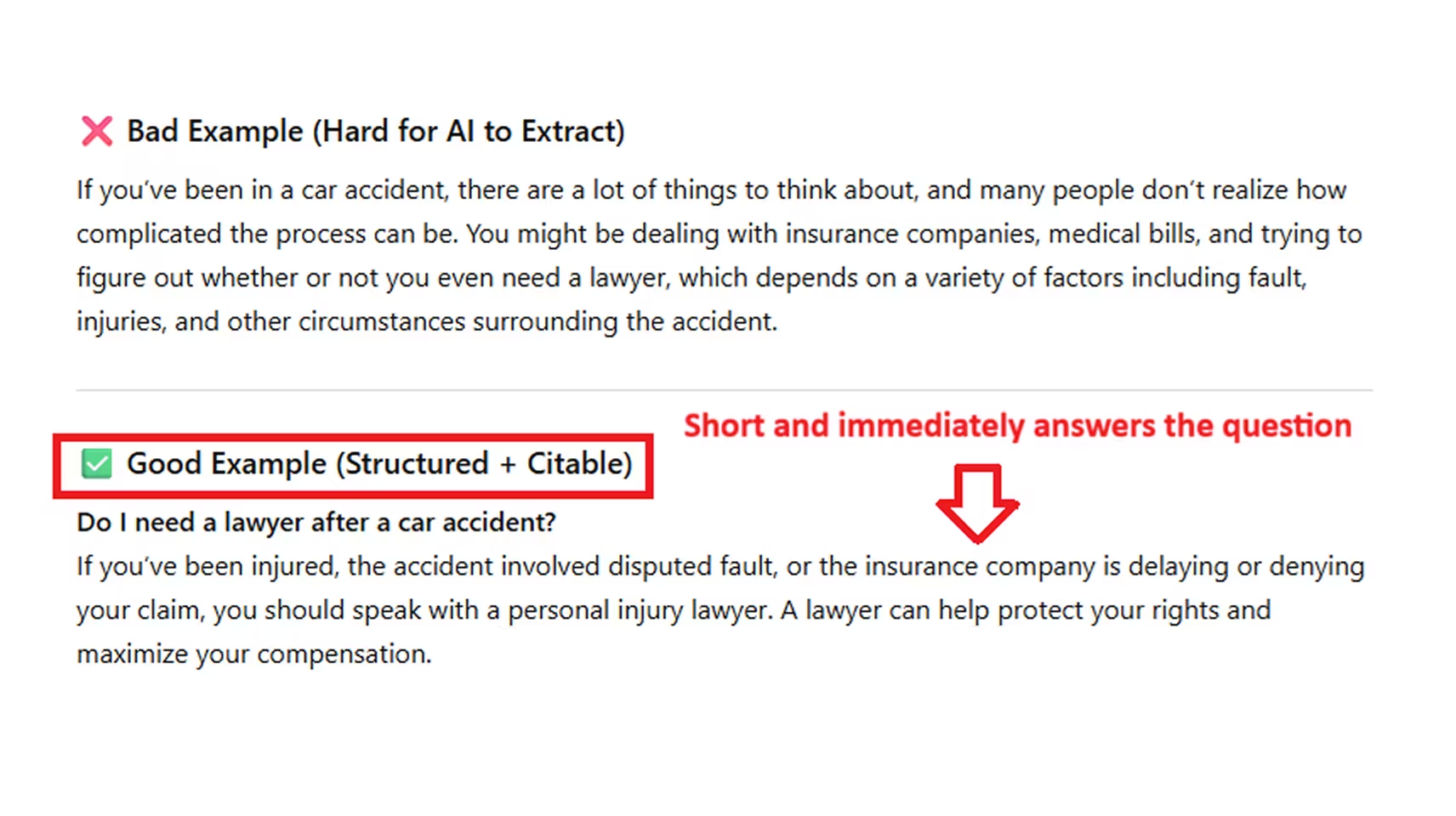
- Ignoring real search behavior: Users ask full questions, not keywords. If your content doesn’t reflect that, it won’t align with AI queries.
- No external validation: Firms with no backlinks, directory presence, or mentions lack the credibility AI looks for.
Avoid these mistakes, and you’ll greatly improve your chances of getting on AI’s radar.
How to Measure Your Visibility in ChatGPT
Once you follow these rules on how to optimize for ChatGPT search, the next question is simple: Is your firm showing up?
Unlike traditional SEO, there’s no ranking report. You need to test visibility directly.
What to Track:
- Prompt testing: Ask ChatGPT questions like “who is the best immigration lawyer near me” or “how much is a car accident case worth?” and check if your firm appears.
- Competitor comparison: Look at which firms are being mentioned instead of you, and analyze what they’re doing differently in terms of content, authority, and structure.
- Consistency across queries: Showing up once isn’t enough. You want to appear across multiple related questions in your practice area.
Don’t expect overnight results. Unlike paid ads, ChatGPT visibility builds over time.
Most firms start seeing early signals within a few weeks, but meaningful traction can take 30–90 days.
In law firm generative engine optimization, the key is consistency. Make sure to recheck your visibility every 2 weeks.

Millions of People Use ChatGPT. Ignore It Today & You’ll Miss Cases Tomorrow.
We’ll be straightforward: ChatGPT optimization for law firms is VERY time-consuming.
You must structure your content for AI and build strong authority signals to increase your chances of getting featured.
Even a tiny slip-up can cost you your visibility.
Partner with Grow Law today. Since 2008, we’ve helped 100+ law firms compete (and win!) in some of the most aggressive markets in the country.
We unify SEO, PPC, and AI-driven search strategies to help firms like Jacob D. Fuchsberg Law Firm see a 758% increase in qualified leads.
Don’t ignore AI. You’ll likely lose $5,000+ cases to a competitor.