
Do you show up in Google’s AI Overviews (AIO)?
These sit at the very top of search results, and instantly answer questions like “Do I need a lawyer?” or “What is my case worth?”
To grab this “Position 0” spot, you need AI Overview optimization for law firms. In 2026, it’s one of the best ways to gain credibility, visibility, and ultimately, more case inquiries.
But where do you begin? At Grow Law, we’ve been closely monitoring AI Overviews since their inception in 2024.
We studied 300+ sites and pinpointed exactly how Google selects Position 0 law firms. Keep scrolling and read our 6-step blueprint to get featured in AI Overviews.
Key Takeaways
- Target real-world legal questions that trigger AI Overview results
- Structure content in a clear Q and A format for AI extraction
- Build topical authority across practice areas, not just single pages
- Strengthen your credibility with reviews, citations, and expert content
- Optimize technical factors like schema, internal links, and page speed
- Track AI visibility regularly (we’ll give you a great tool for this!)
What Are Google’s AI Overviews?
Google AI Overviews are AI-generated summaries that appear at the very top of search results, primarily for informational queries like “What happens after a DUI arrest?”
Google has described this as their attempt to “take the legwork out of searching.”
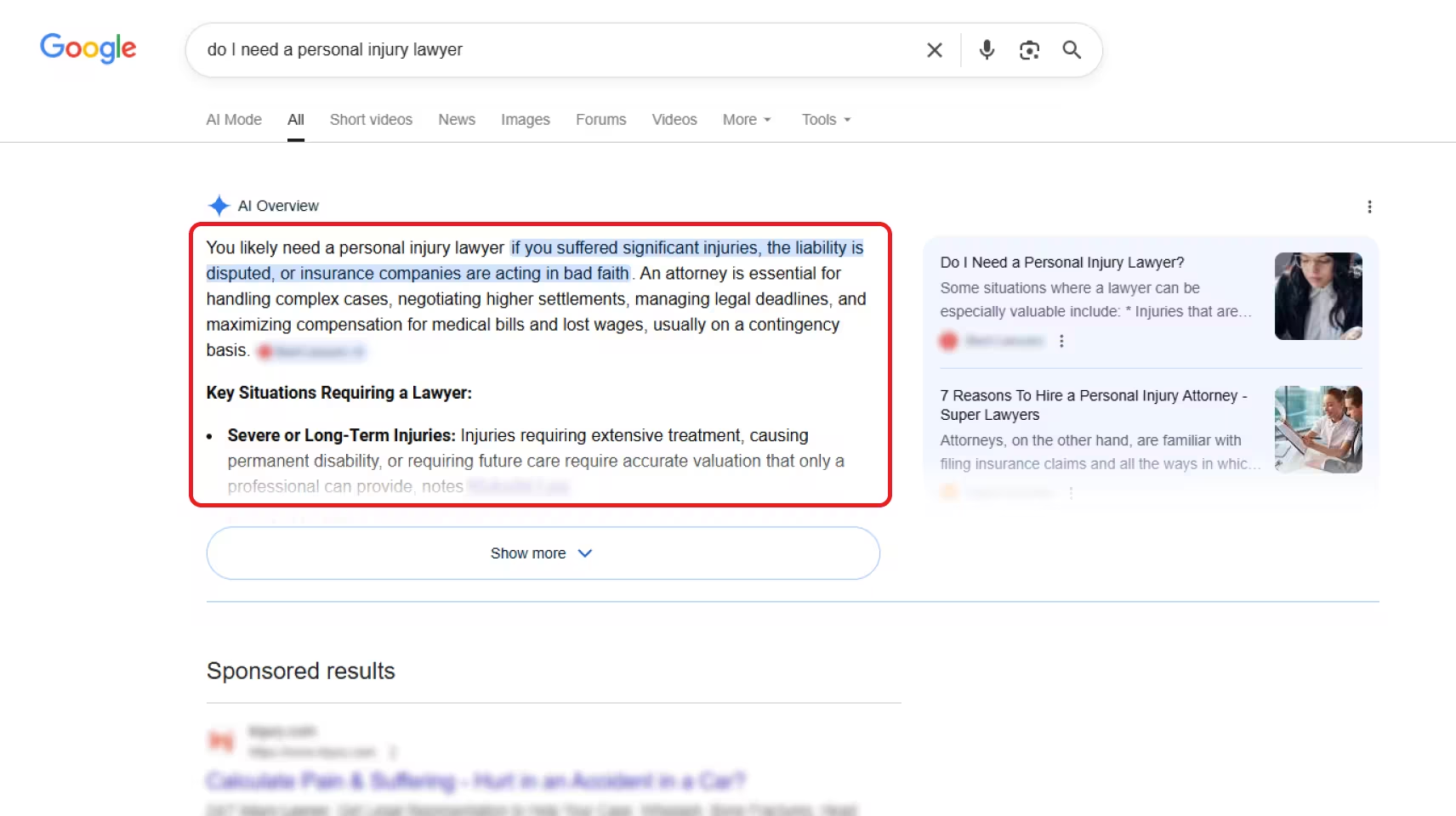
To make AI Overviews easier to understand, remember:
- They sit in Position 0, above ads and organic listings
- They instantly answer legal queries like “Do I need a personal injury lawyer?”
- They pull and synthesize content from multiple sources, citing only a few
When you ask a question, Google uses the “query fan-out” technique. It splits your question into multiple related sub-questions behind the scenes.
It then pulls answers from different sources and combines them into one AI Overview.
So, to optimize content for Google AI Overviews, your content must answer multiple related questions clearly and in depth.
And the clock’s already ticking. Ahrefs found that sites are seeing a 20% to 40% decrease in organic traffic due to AI Overviews.
You must optimize for AI Overviews ASAP. Every quarter you wait, LLM SEO for law firms (i.e. AI Overview optimization) gets much costlier.
What Are the Benefits of Optimizing for AI Overviews?
When you optimize for AI Overviews, you position yourself as “the lawyer to call.”
There’s a powerful psychological effect at play! If Google is citing your firm as the answer, users feel confident in you, too.
It’s more than visibility. It’s an implied endorsement.
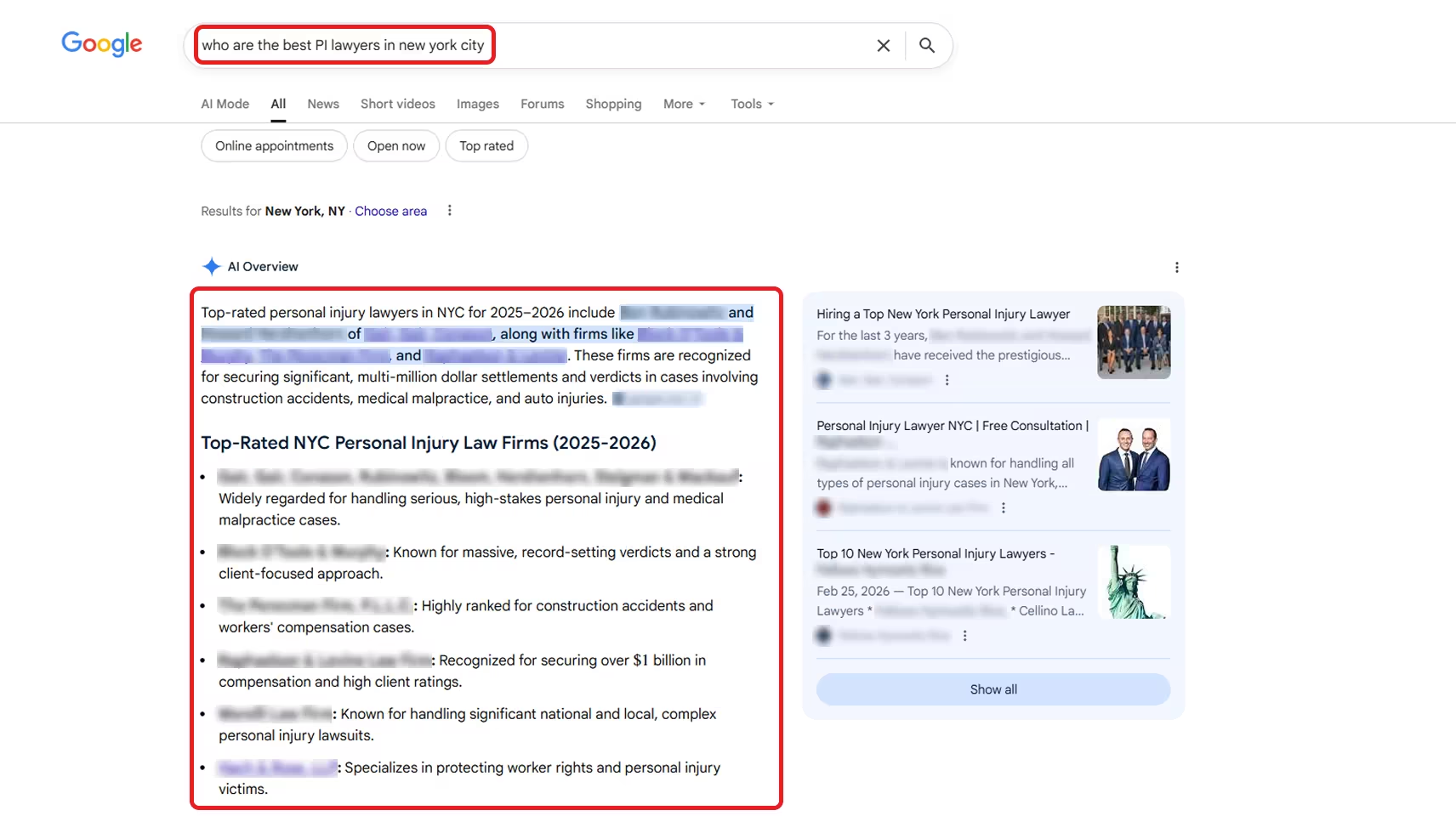
72% of our law firm clients appear in AI Overviews.
Trust us, we’ve seen the benefits of “Position 0” placements first-hand:
- Appear above all other results, capturing the majority of user attention first
- Traffic is more qualified, with users closer to hiring after AI-assisted research
- Repeated mentions build brand recall if you appear for multiple keywords
- Localized content captures serious searchers in your area, ready to hire
- AI-optimized content extends your visibility into voice search and assistants like Siri
Speaking of, over 70% of voice queries are phrased as full questions like “How do I transfer property to my children without probate?”
That’s the same format AI Overviews and tools like ChatGPT rely on!

How Does Google Choose Which Law Firms to Put in AI Overviews?
You need to understand one thing:
AI Overview optimization for lawyers is less about keywords and more about clarity, structure, and trust.
For almost 30 years, Google’s mission has been to “organize information and make it universally accessible and useful.”
AI Overviews is the next evolution of this mission.
Instead of picking the “#1 result,” Google now breaks a query into parts and pulls the best pieces from different sources.
But how does Google determine which law firms to include in its answers?
- Content clarity (Q&A structure): Pages that directly answer legal questions are easier for AI to extract and use.
For instance, we Googled: “What is the average settlement for a car accident in Dallas?” KRW Lawyers shows up first.
We can see why. Their content is structured in bullets with transparent pricing details.

- Topical and domain authority: AI loves firms with well-developed content that dives deep into their practice area.
- Entity trust signals: This one is big. AI favors firms that have tons of reviews, citations, and consistent mentions.
- Structured data and formatting: Use clean headings, schema, and scannable sections to improve AI extraction.
- Crawlability and accessibility: Fast, well-linked pages help Google interpret your content more effectively.
To optimize content for Google AI Overviews, you have to shift your mindset.
Don’t just try to rank. Give accurate, to-the-point answers as if you were speaking with a client face-to-face.
6 Key Steps to Master AI Overview Optimization for Law Firms
We didn’t just study this. We tested it.
Across 350+ hands-on experiments with AI Overviews, ChatGPT, and Perplexity, we tracked which pages got picked and why.
These are the 6 most critical steps you must follow to optimize for AI Overviews.
Step 1: Write Content to Address Real-World Legal Questions
To optimize content for Google AI Overviews, your content must match how real people search.
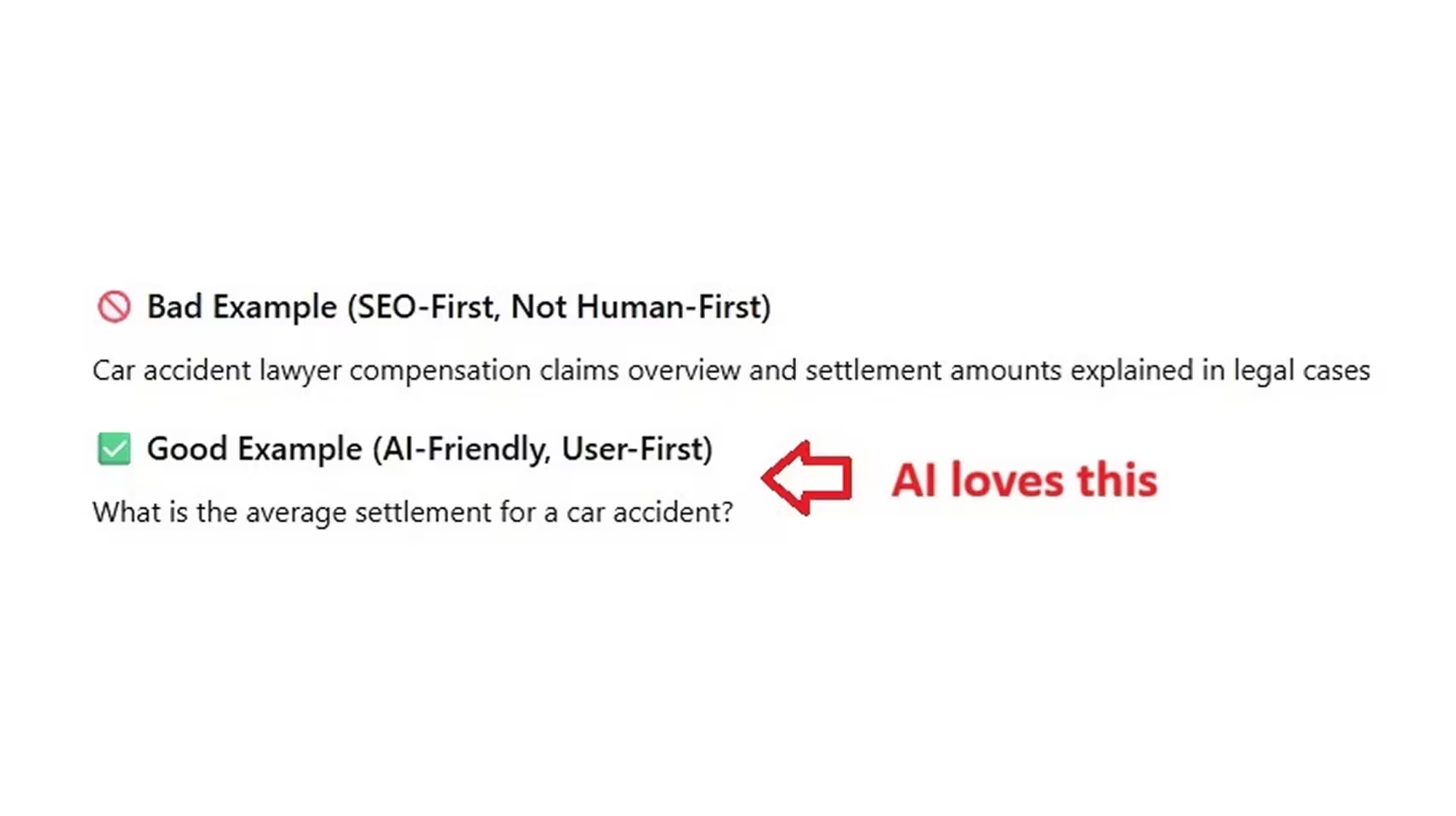
In our findings, most AI-triggering queries are conversational and question-based, which is exactly how Google builds summaries.
- Focus on pressing questions like “What is the average settlement for a car accident?”
- Use Q&A formatting so answers are clear and easy for AI to extract.
- Prioritize clarity over length with direct answers that are 1-4 lines long.
Q&A content is foundational in how to optimize content for AI Overviews.
Step 2: Strengthen Topical Authority
In your AI Overview optimization, don’t just focus on a single page. Own the entire topic.
What does this mean? Google favors law firms that demonstrate depth across an entire subject.
- Build pillar pages (e.g., personal injury law) and cluster pages (personal injury lawyer cost)
- Cover related questions like settlements, timelines, liability, and damages
- Interlink pages to create a clear content ecosystem
Perecman excels in the “Pillar” and “Cluster” model. They have a main Personal Injury page linking to sub-topics like Work Injuries, Workers’ Comp, etc.
This is excellent topical authority!
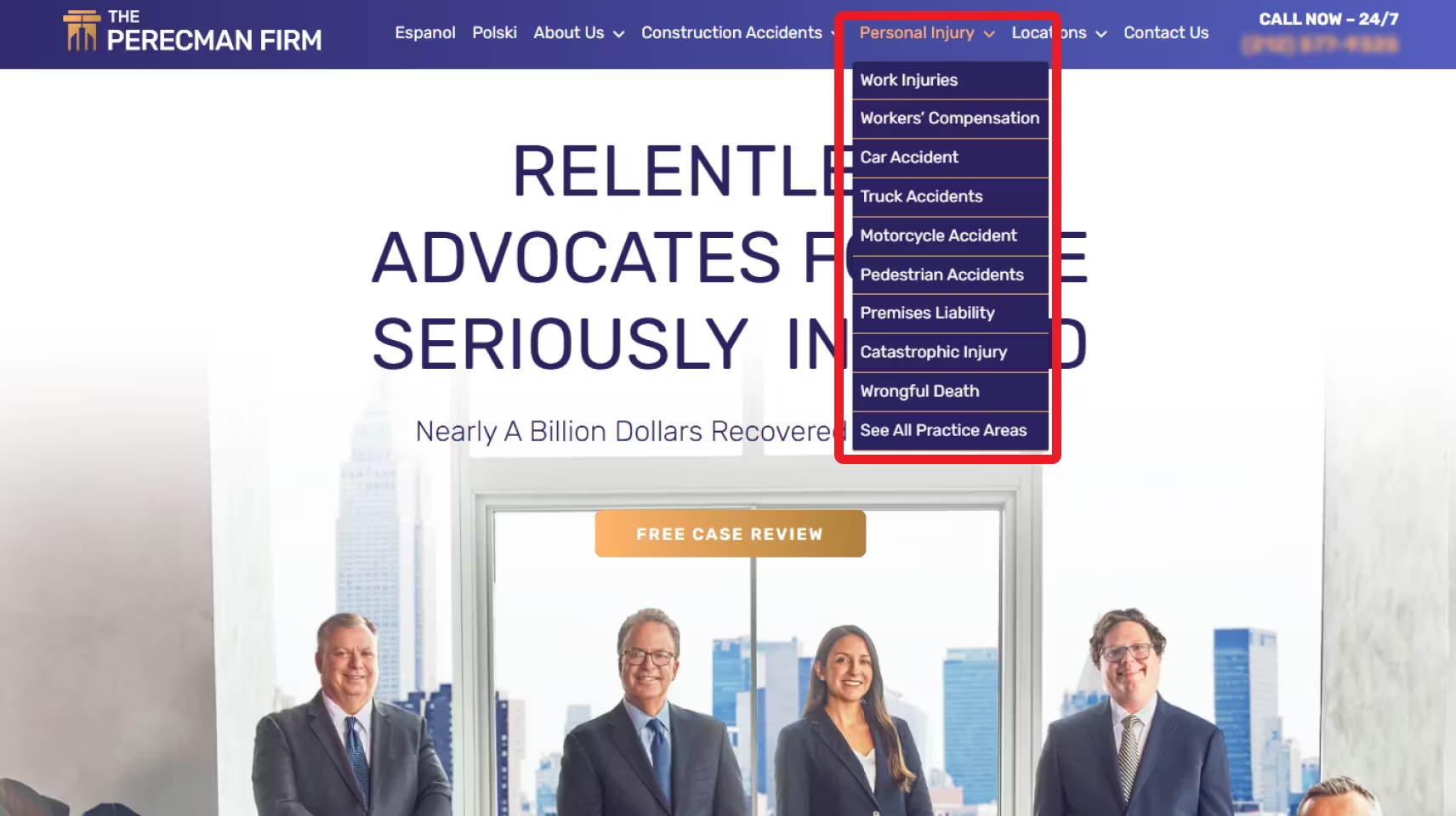
Step 2 is a critical part of how to optimize for AI Overviews. Google hates surface-level coverage. It wants to see complete expertise.
Step 3: Structure Content So AI Can Understand It
Let’s talk about machine readability.
When you optimize content for Google AI Overviews, you’re helping AI understand what your content means.
AI systems aren’t human after all. They rely heavily on structured signals to interpret and extract information correctly.
- Use schema markup (FAQ, Article, LegalService) to define your content clearly
- Organize pages with consistent heading hierarchy (H1 → H2 → H3)
- Keep answers tight and directly under relevant headings
- Avoid cluttered layouts or buried key information

Remember, generative engine optimization for law firms (i.e., AI search optimization) goes beyond good writing. It requires clean formatting and proper schema markup.
Step 4: Improve Website Accessibility and Crawlability
This one is boring, but stick with us.
Technical performance plays a HUGE role in how to optimize for AI Overviews. Even the best content will not show up if Google can’t easily “crawl” it.
- Improve page speed; 53% of mobile users leave if a site takes over 3 seconds to load.
- Google uses mobile-first indexing; if your site isn’t optimized for mobile, your visibility suffers.
- Use clean internal linking to connect related legal topics. This helps Google understand content relationships.
- Optimize crawl access with robots.txt. This ensures important pages aren’t blocked.
P.S. Not sure if your site is mobile-friendly? Use SE Ranking’s mobile test and aim for a score above 70.


Step 5: Build E-E-A-T and Author Authority
Trust is everything in AI Overview optimization (especially for legal content).
If your content doesn’t clearly show who wrote it and why they’re qualified, it’s far less likely to be pulled into AI Overviews.
Take this child custody article from Carroll Law Office. It’s backed by a highly credible author, James Carroll, who is a principal attorney with real courtroom experience.
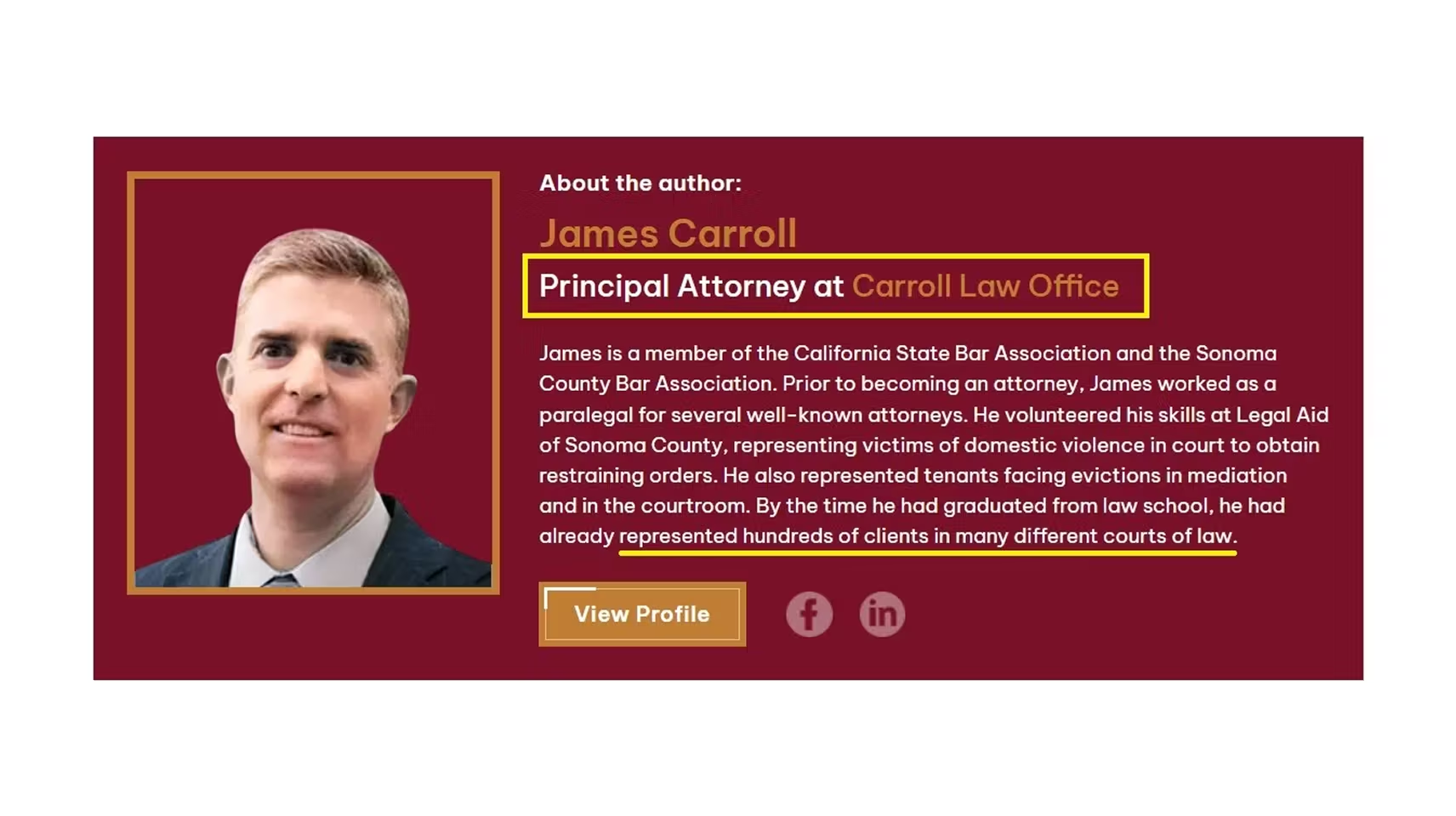
To strengthen your authority and optimize content for Google AI Overviews:
- Add detailed author bios with legal credentials, bar memberships, and case experience
- Reference statutes, case law, and trusted legal sources to ground your content in authority
- Include practical insights from real client scenarios or courtroom experience
- Strengthen off-page credibility with mentions, citations, and consistent NAP/reputation signals
Google has made this clear: “We determine which content demonstrates aspects of experience, expertise, authoritativeness, and trustworthiness, or what we call E-E-A-T.
If your competitors show stronger E-E-A-T, they’ll be cited in AI Overviews.
Step 6: Leverage Existing Top Rankings
That’s right! We’ve found that AI optimization relies on 80% of your current SEO foundation.
To fully optimize for AI Overviews, you still need strong SEO fundamentals.
- Target keywords already ranking positions 1–10 and upgrade those pages for AI extraction (don’t start from scratch).

- Refresh top pages with clear Q&A sections, short answers, and updated legal info to increase citation likelihood.
- Strengthen on-page SEO: optimize titles, H1–H3s, internal links, and entity relevance for each practice area.
- Build supporting content around top pages to create topical clusters that Google can pull from.
Research shows roughly 76% of AI Overview citations come from pages ranked 1 to 10, making SEO visibility a prerequisite for AI inclusion.
Which Pages Should Law Firms Optimize for AI Overviews?
You may have guessed: Not all pages carry the same weight.
In AI Overview optimization for law firms, Google tends to pull from pages that are already close to the decision-making moment. Focus on:
Practice Area Pages
These sit the closest to conversion.
Practice pages already target legal queries, which makes them prime candidates when you optimize content for Google AI Overviews.
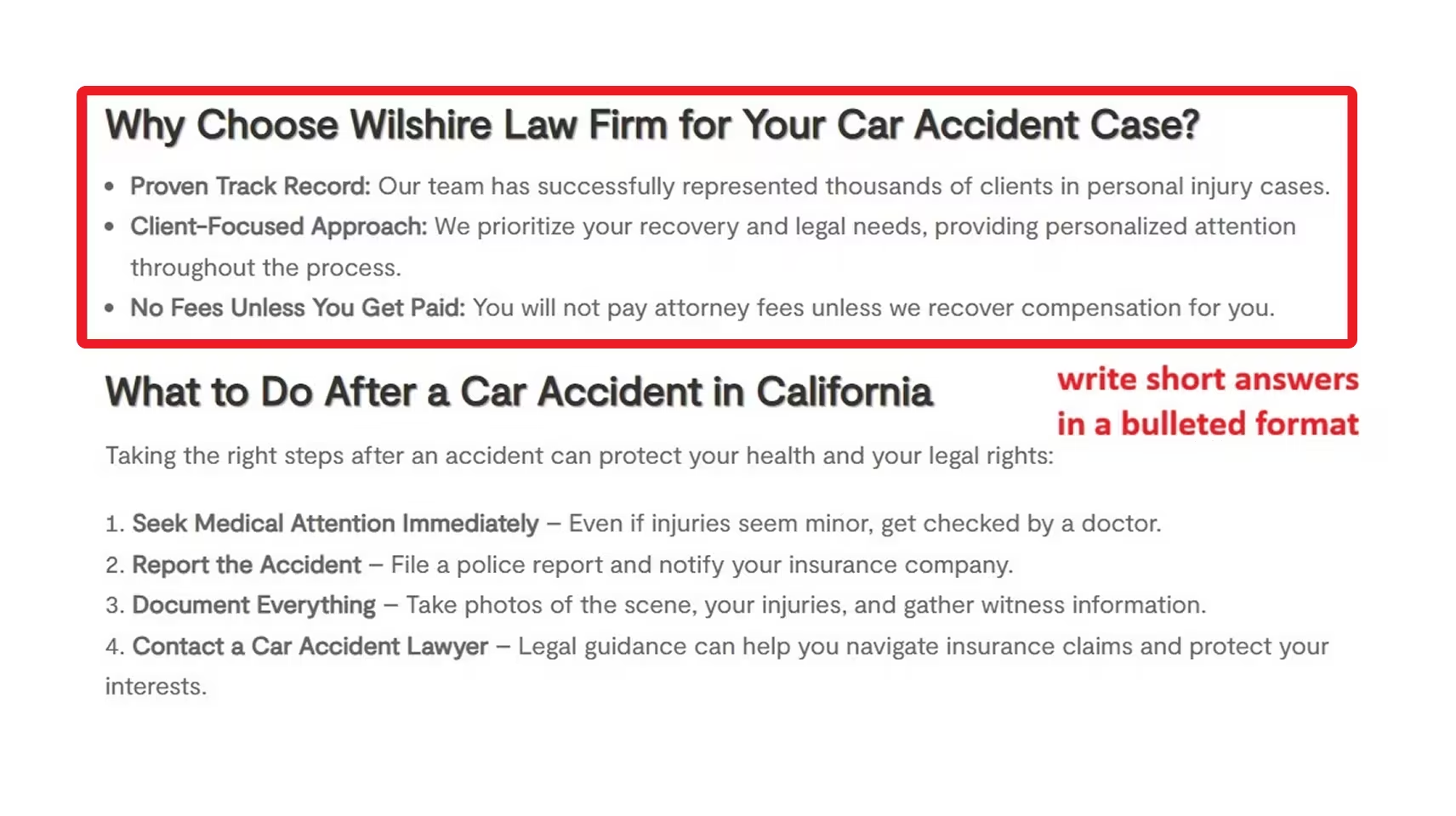
But instead of just listing services, directly answer what clients are asking like cost, timelines, outcomes, and next steps.
Wilshire Law Firm has some pretty great AI-friendly practice pages, along with FAQs and concise answers.
FAQ Pages
You cannot skip this!
FAQs are one of the most underutilized assets in AI Overview optimization.
They naturally mirror how users phrase questions, which aligns perfectly with how AI Overviews are generated.
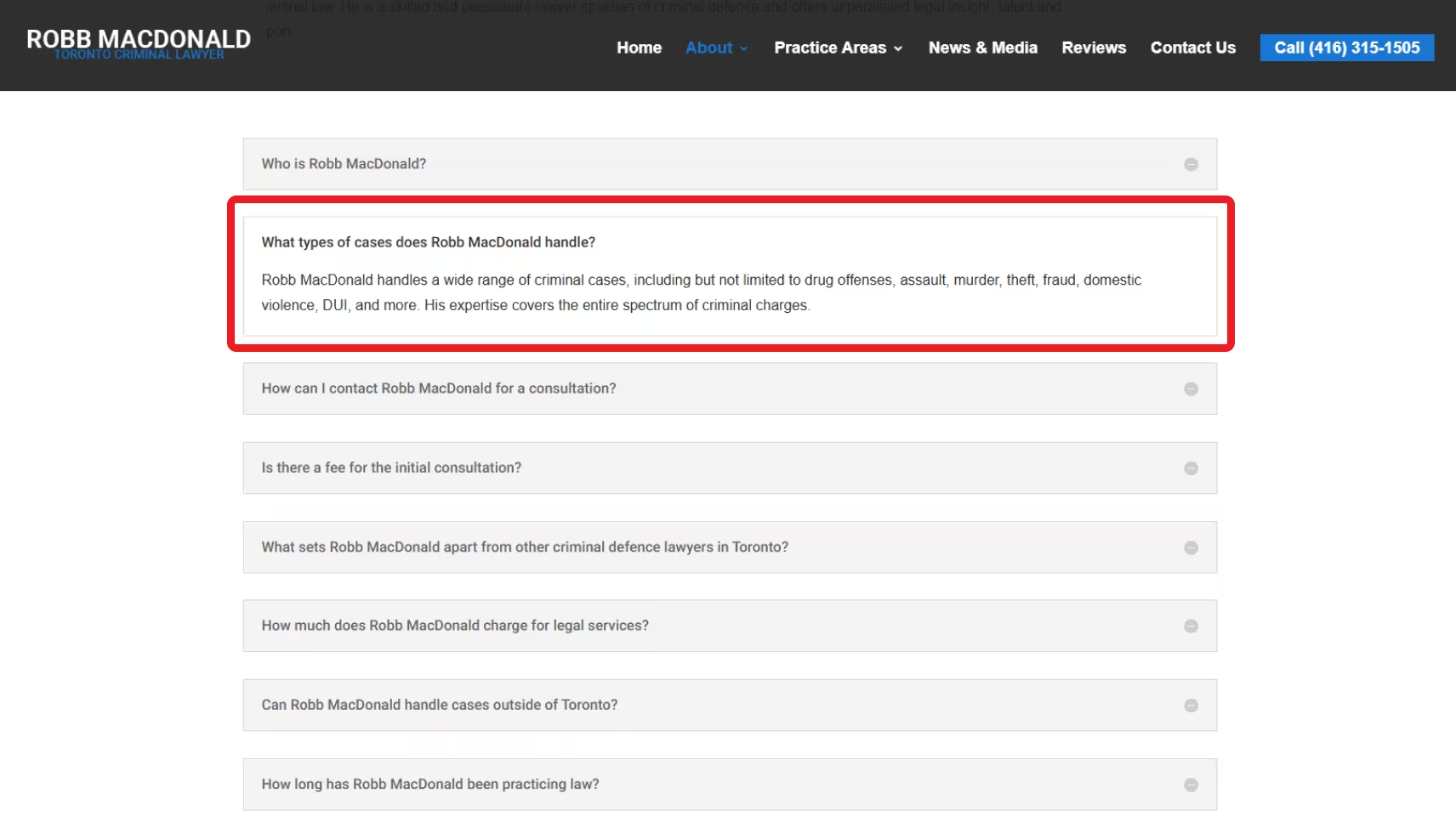
Robb MacDonald, for example, has a well-structured FAQ page. Pages like these act like a direct feed into Google’s answer engine.
Attorney Bio Pages
These play a different role. They reinforce trust.
AI systems evaluate content AND who is behind it.
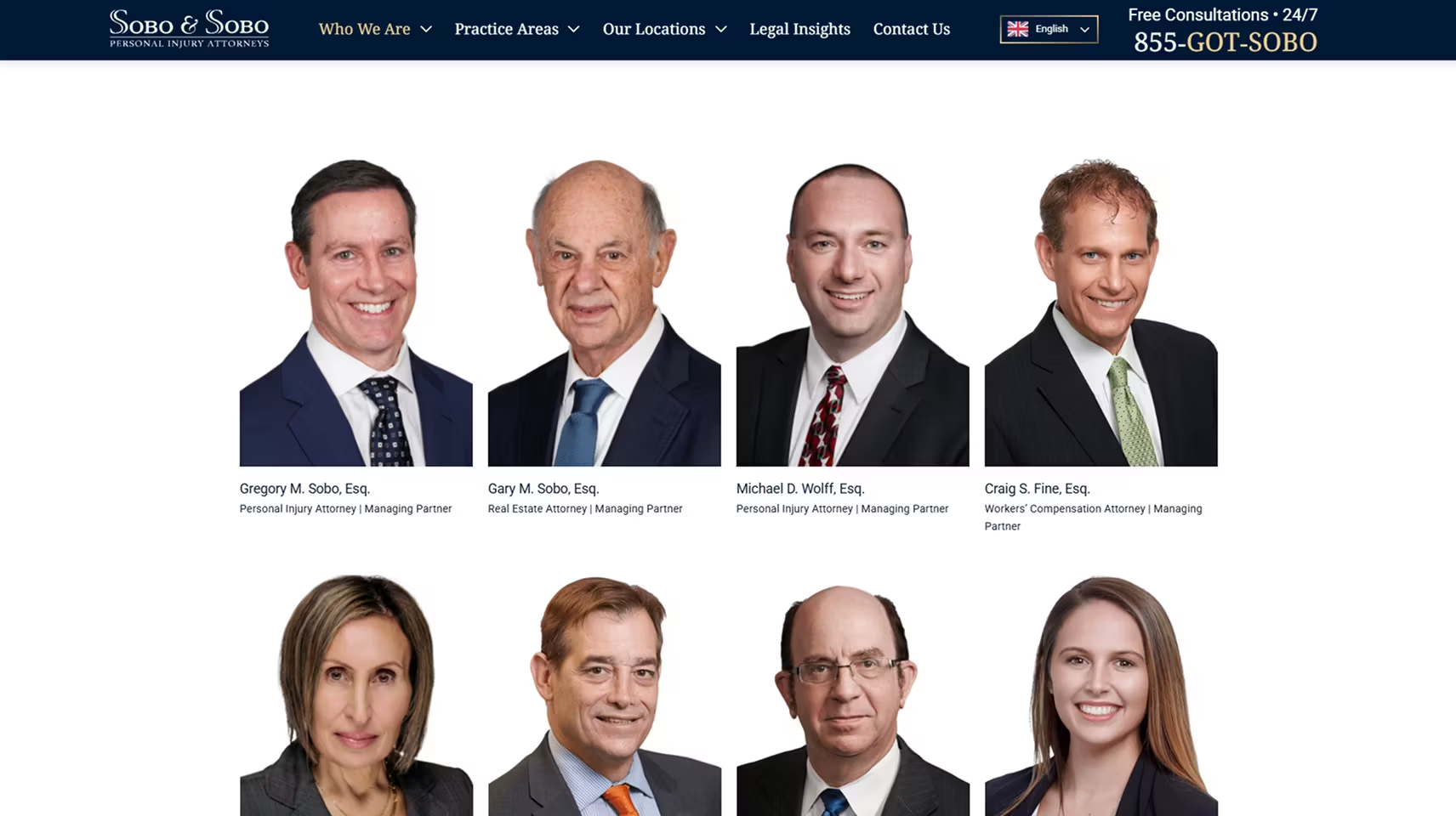
Write strong bios and add awards/credentials to increase your chances of being cited over competitors with generic or anonymous content.
Take a little inspiration from Sobo Law. They have a “Meet Our Attorneys” page along with dedicated pages for each attorney.
Local Pages
Google cares about proximity. Are you close enough to the searcher to actually help them?
AI Overviews tailor answers based on location. Pages that clearly signal jurisdiction, local laws, and service areas are more likely to surface.
Heimanson and Wolf does an excellent job here with 8 dedicated pages for each location across California and hyper-local content on each.

The 5 Biggest Mistakes That Keep Lawyers Out of AI Overviews
We analyzed 300+ law firm sites while working on this AI Overview optimization for law firms article.
What we found: Most firms are making a few obvious mistakes:
1. Ignoring “Query Fan-Out” (Incomplete Answers)
Most firms answer the main question, but miss the follow-ups Google expects. AI doesn’t just look at one query; it expands into related questions.
2. Neglecting Structure and Internal Linking
Missing schema, weak page hierarchy, and poor internal linking make it harder for Google to crawl, connect, and extract your content for AI Overviews.
3. Skipping Original Insights and Data
AI models prioritize first-hand experience, case insights, and proprietary data over recycled material.
For instance, South Florida Justice built a Personal Injury Settlement Calculator to give you an instant estimation. AI loves these types of proprietary tools.

4. Writing for Bots Instead of People
Keyword-stuffed pages don’t get cited. When you optimize content for Google AI Overviews, your content must directly answer the user’s question in clear, natural language.
5. Weak or Missing Authority Signals
If Google can’t verify who wrote the content, it will skip your site. Missing author bios, credentials, and credible references reduces your chances of appearing in AI Overviews.
Good answer engine optimization for law firms starts with these small (but mighty) steps.
Pro Tip: Bookmark this article and come back to it later. You can use the above as a checklist before you hit “Publish” on any of your content.
How to Measure Your AI Overview Visibility
Start simple. Google your own services and see if you appear in AI Overviews.
Try queries like “who is the best estate planning lawyer in [city]” or “how much does a DUI lawyer cost in [city]?”
Do this weekly and give it 4–8 weeks after making changes before expecting movement.
But manual checks only go so far. You can’t track this in Google Analytics, and you can’t see how (or if) tools like ChatGPT or Gemini are recommending you.
That’s why we recommend our own tool, AI Grader.
Enter your law firm, and it will run 60+ real queries across ChatGPT, Perplexity, and Gemini to show:
- How often AI recommends your firm
- Which competitors appear above you
- Clear steps to improve visibility and capture more leads
Run your free report in 2 minutes.
Grow Your AI Visibility. Sign More Cases in 2026.
You now have our full blueprint to optimize for AI Overviews.
Here’s the quick recap:
- Align your content with common legal questions
- Structure answers so AI can easily extract them
- Build authority with reviews, credentials, and strong author bios
- Fix technical issues like your site speed and mobile-friendliness
- Track your AI visibility with tools like AI Grader
But this is really hard to execute alone.
Getting into AI Overviews takes constant effort, testing, and refinement across your entire site.
Partner with Grow Law today. Since 2008, we’ve helped 100+ law firms sign cases consistently, even in hyper-aggressive markets like New York and Chicago.
Using our SEO, PPC, and AI-driven search, firms like Omar Ochoa saw a 1,000% increase in qualified leads.
Ready to grow your visibility and leads?