
SEO for malpractice lawyers operates in one of the most competitive and trust-sensitive corners of legal search.
The prospect searching for a medical malpractice attorney isn’t just comparing firms — they’ve been harmed by a professional they trusted, and they’re evaluating every signal about whether your firm is credible, accessible, and capable of helping them. That changes what content converts, what local signals matter, and what E-E-A-T looks like for this practice area.
This guide covers why med-mal SEO is different from general legal marketing, how local and keyword strategy works for sub-practice areas like surgical errors and birth injuries, what content builds trust before a prospect ever calls, and what realistic results look like when the strategy is executed properly.
Why Medical Malpractice SEO Is Different — and More Competitive Than It Looks
Most med-mal attorneys assume their primary SEO competition is other plaintiff lawyers.
The reality is more complex.
In local search, med-mal firms compete with large personal injury practices that list medical malpractice as a sub-practice, hospital system legal resource pages that rank on YMYL authority, and general medical information sites that answer the same questions your target clients are searching. A firm with genuinely strong med-mal expertise can be outranked by a hospital’s “know your rights” page simply because the hospital domain carries more authority.
A medical malpractice firm in a mid-size market came to Grow Law completely invisible in local search — outranked by large PI firms and a regional hospital system’s own legal resources page.
Their site had one generic “medical malpractice” page with no geographic targeting and no sub-practice pages covering surgical errors, birth injuries, or misdiagnosis.
After restructuring the site into six dedicated sub-practice pages, building geo-targeted content for their service area, and optimizing the Google Business Profile with med-mal-specific categories, the firm entered the local 3-pack for their primary market keyword within 4 months and increased inbound consultation requests by 220%.
The client’s psychology also matters here.
Someone who has experienced medical negligence is searching from a place of distrust and vulnerability — they’ve already been let down by a professional.
The firms that convert from search are the ones whose content signals expertise, transparency, and accessibility before the first call.
See how Grow Law builds SEO and marketing programs for med-mal firms: medical malpractice lawyer marketing
Local SEO for Medical Malpractice Lawyers: Owning Your Market
For most med-mal practices, local search is the highest-converting acquisition channel. Someone searching “medical malpractice attorney [city]” or “surgical error lawyer near me” has already decided they need legal help — they’re choosing between firms.
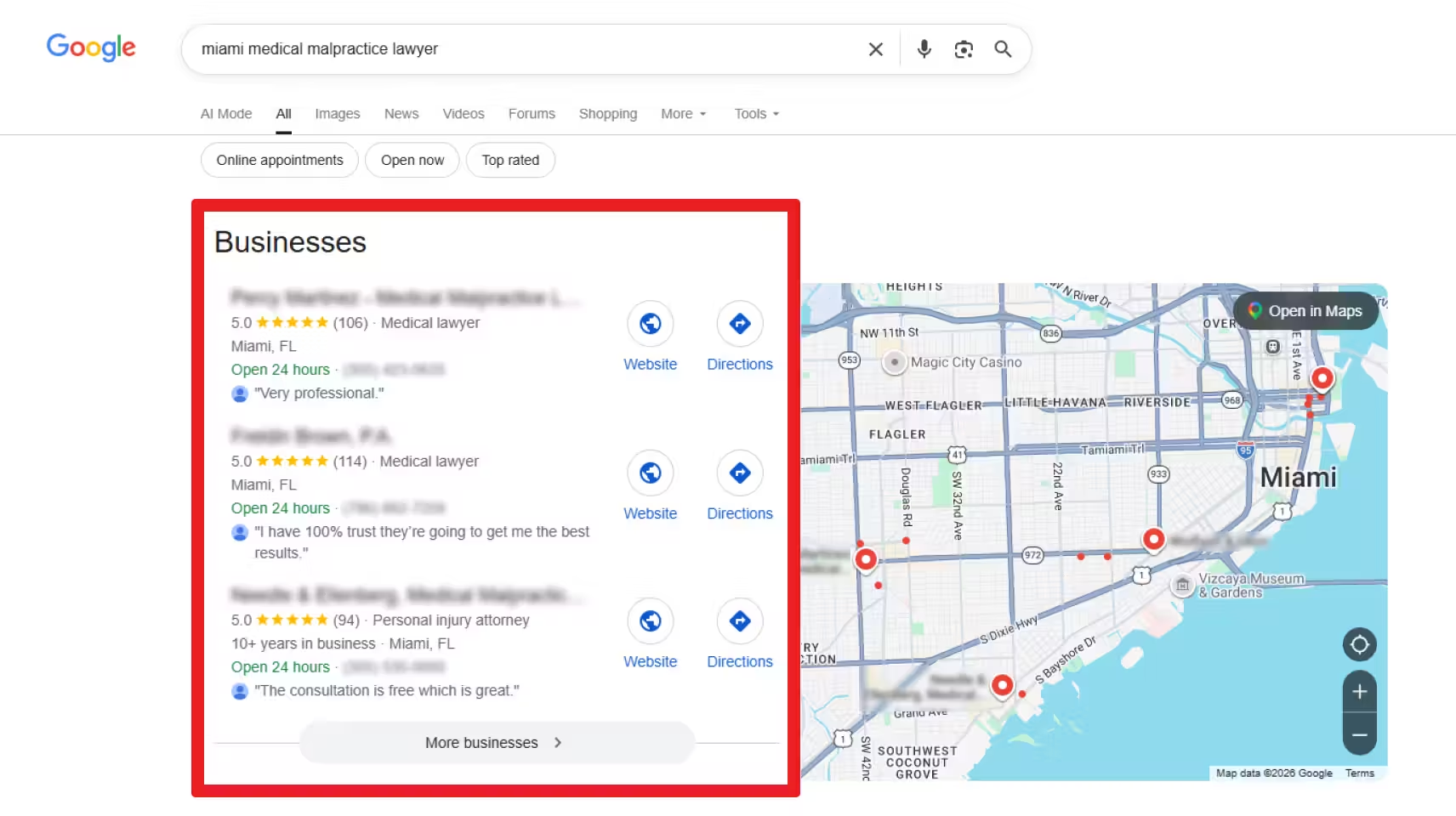
The Google 3-pack and local organic rankings for those queries directly determine how many of those prospects call your firm versus a competitor.
Managing your Google Business Profile is free and starts at business.google.com — and for med-mal firms, it’s the fastest-impact local SEO lever available.
The local SEO fundamentals that matter most for med-mal, in order of impact:
Keyword Strategy for Medical Malpractice Attorney SEO
The med-mal keyword landscape spans four tiers with very different intent profiles.
Effective seo for medical malpractice attorneys requires targeting all four — not just the bottom-funnel local queries that most firms optimize for.
The research cycle for med-mal is longer than most practice areas — prospects often search for days or weeks before contacting an attorney.
A firm that only targets the bottom-funnel queries captures only a fraction of the available pipeline
Firms that also publish problem-aware and trust content build relationships with prospects earlier in their decision process — and those prospects convert at higher rates when they’re ready to call.
The med-mal firm that answers “how do I know if I have a case” ranks for a query that generates leads before the prospect has decided to hire anyone. That’s the compounding value of top-of-funnel SEO content.
Content Strategy: Building Trust With Med-Mal Prospects Before They Call
The trust dynamic in medical malpractice is unlike any other practice area. The prospect has been harmed by a professional they trusted — a doctor, a hospital, a medical team.
They’re not just evaluating your legal credentials; they’re evaluating whether you’re someone they can trust with something deeply personal and already painful.
The content that converts in this environment is content that answers their specific fear and uncertainty directly, not content that describes your practice.
A med-mal attorney came to Grow Law with adequate organic traffic but a low consultation request rate.
The site answered the legal process questions well — how cases work, what damages are available, and how contingency fees work.
But it didn’t answer the questions prospects actually ask before reaching out: “How do I know if I have a case?” “Will I have to go to court?” “How long does a medical malpractice case take?” “What if I’m wrong about what happened?”
After publishing 10 trust-focused FAQ pages targeting those specific pre-contact queries, and adding attorney biography pages with case result summaries, the firm’s consultation request rate increased 85% over 5 months — without any increase in traffic.
The content architecture that produces those results:
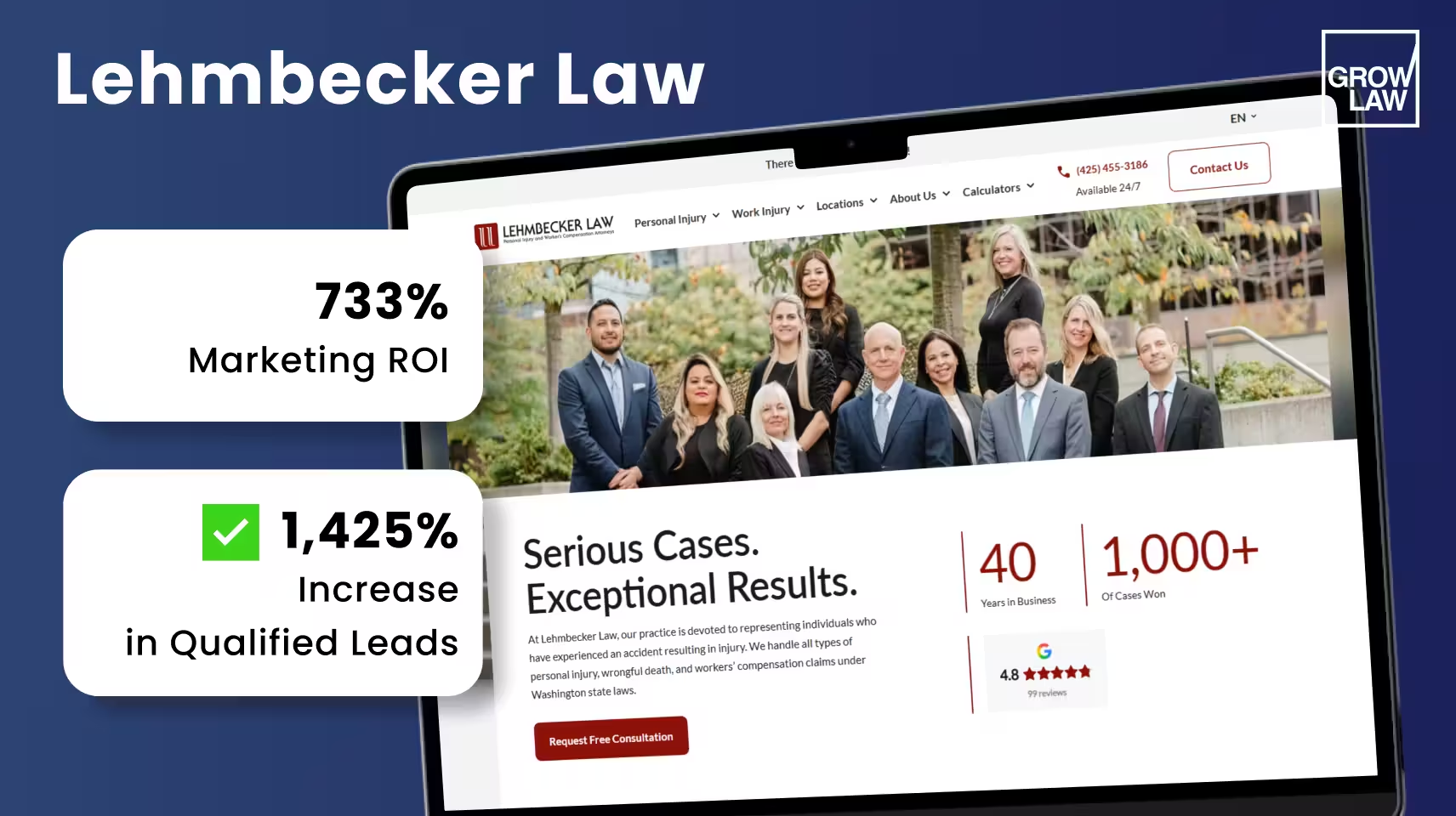
Lehmbecker Law partnered with Grow Law to improve lead quality and maintain consistent content production. Anna Hardy noted that Grow Law’s team stays engaged, holds regular monthly meetings, and doesn’t sign you up and forget about you. The result: 733% marketing ROI, 1,425% increase in qualified leads, and 2,556% increase in organic traffic — driven by consistent content that built authority over time.
Grow Law builds content strategies specifically for medical malpractice firms: SEO services for medical malpractice attorneys
E-E-A-T and Technical SEO for Medical Malpractice Firms
Medical malpractice content is YMYL — Your Money or Your Life — which means Google applies its highest E-E-A-T scrutiny to it.
A med-mal firm can produce excellent content and still have it suppressed if the site’s E-E-A-T signals are weak. The firms that rank consistently in this space are not necessarily the ones with the most content; they’re the ones whose content is backed by the strongest credibility signals.
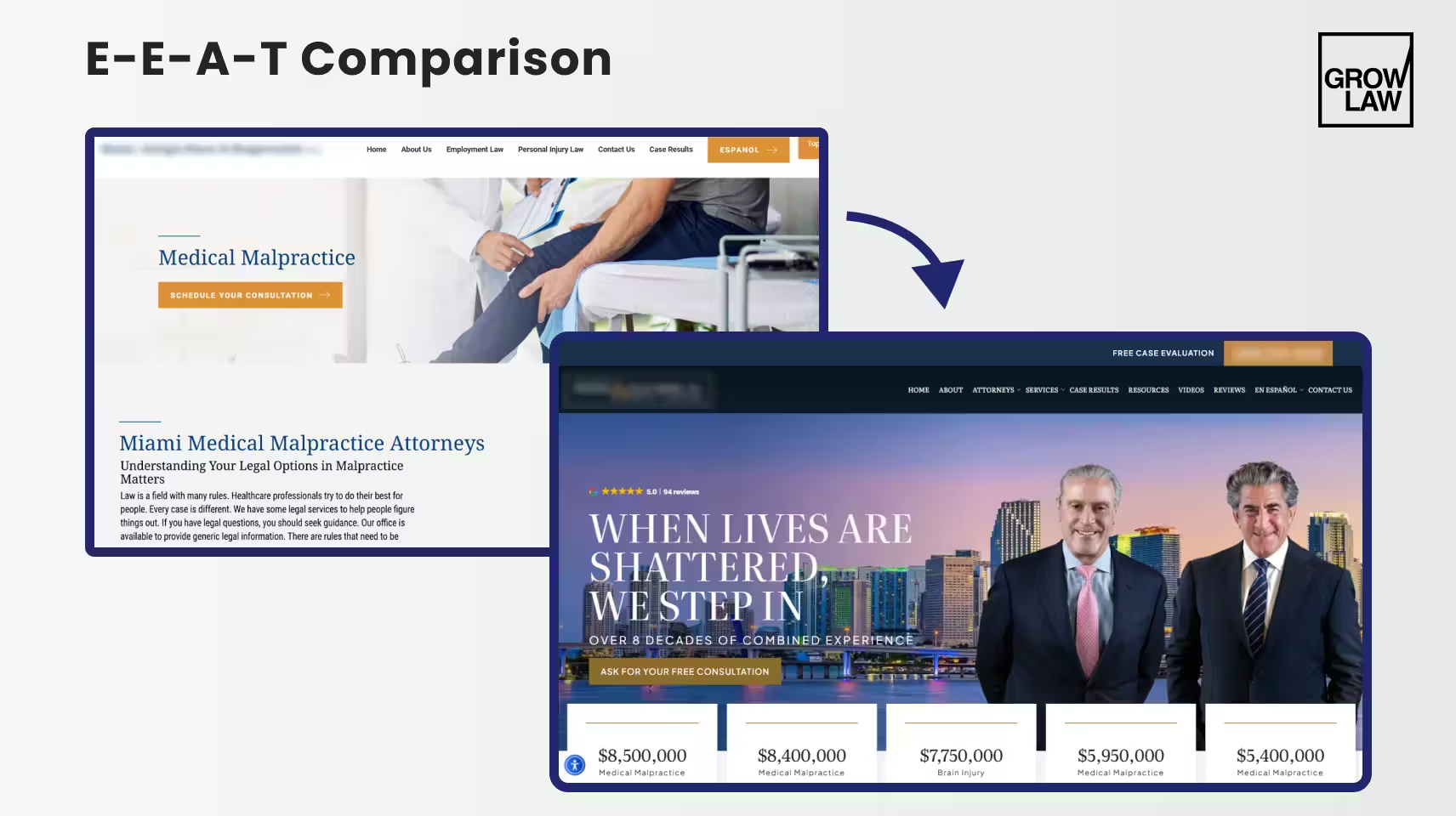
Grow Law’s team brings 80+ years of combined experience operating in hyper-competitive legal markets — the E-E-A-T requirements for med-mal are exactly the environments where that depth of experience matters most.
Med-mal firms that neglect these signals consistently see their content underperform relative to its technical SEO quality. The E-E-A-T layer is not optional for YMYL content — it’s the prerequisite for everything else to work.
ROI and Timeline: What Medical Malpractice Lawyer SEO Actually Produces
Medical malpractice attorney marketing at its best doesn’t just generate more leads — it generates better cases.
Eli Fuchsberg of Jacob D. Fuchsberg Law Firm described it directly: “We’ve increased our number of retained cases and the quality and strength of the cases.”
That distinction matters for med-mal practices, where one strong case can represent more revenue than dozens of average ones.
Jacob Fuchsberg Law Firm generated a 2,451% marketing ROI and 758% increase in qualified leads through their Grow Law partnership, with Eli Fuchsberg citing over 1,000% ROI in marketing.
KJT Law Group achieved a 440% increase in qualified PPC leads while cutting cost per lead by 50% — a combination that reflects what integrated SEO and PPC programs produce when properly coordinated.
Across Grow Law’s client base, med-mal programs deliver 400%–800% marketing ROI, 4x–8x ROI on every marketing dollar, and up to 40% more cases. Grow Law has generated over $50 million in qualified legal leads in the last 6 months. Here’s what the timeline looks like for a typical med-mal firm:
Summary
- SEO for malpractice lawyers competes in a three-front battle — against other plaintiff firms, large PI practices, and hospital-system content — requiring a more precise strategy than general legal SEO.
- Local SEO with sub-practice area pages (surgical errors, birth injuries, misdiagnosis) and a fully optimized GBP drives the highest-converting med-mal traffic.
- The med-mal keyword landscape spans four tiers from high-intent local to problem-aware and trust queries — firms that target all four build a compounding organic pipeline.
- Content that converts in med-mal answers the prospect’s fear and uncertainty before they call — not just legal process questions. Targeted FAQ and trust content increased one firm’s consultation rate 85% without more traffic.
- YMYL E-E-A-T requirements make attorney credentials, case results, peer recognition, and schema markup non-negotiable — not optional improvements — for med-mal content to rank.
- Medical malpractice attorney marketing produces 400%–800% ROI with sustained execution — Jacob Fuchsberg Law Firm achieved 2,451% ROI and 758% more qualified leads, with better case quality as the headline outcome.
Ready to build a consistent pipeline of high-value medical malpractice cases through organic search? Medical malpractice law firm marketing services