
AI agents have arrived. Although the technology is not new, agents are rapidly becoming more sophisticated—capable of operating with greater autonomy, executing multi-step tasks, and interacting with other agents in ways that were largely theoretical just a few years ago. Organizations are already deploying agentic AI across software development, workflow automation, customer service, and e-commerce,
The Transformation Triangle Thesis Is Proving Itself—And Just in Time
Five months ago, I published “The Transformation Triangle: A New Blueprint for Competitive Advantage in the AI Era.” The thesis was straightforward: in a world where AI capabilities commoditize overnight, sustainable competitive advantage requires the strategic integration of tools, expertise, and education—not just one, but all three working in concert.I wrote then: “If your competitive
AI was a big topic at the World Economic Forum (WEF) in Davos!

Computerworld.com reported that “The tech bigwigs and economists at the recent World Economic Forum (WEF) in Davos were clear-eyed about how AI is reshuffling the jobs landscape globally and disrupting national economies.” The February 4, 2026 article entitled “Amid AI gloom and doom, WEF attendees were bullish on physical AI” (https://www.computerworld.com/article/4127224/amid-ai-gloom-and-doom-wef-attendees-were-bullish-on-physical-ai.html) included
An Illusion of Consensus: What the Government Isn’t Saying About the Results of its AI Consultation

The government quietly released a “what we heard” report this week discussing the response to its 30-day sprint AI consultation from last October. Described as the “largest public consultation in the history of ISED”, the report relies heavily on AI for its analysis as the government notes that it used “Cohere Command A, OpenAI GPT-5
Consult More Than One AI App When Dealing With Important Issues

Monogamy is not a requirement—or even a good idea—when it comes to AI. Multiple AI perspectives help with high-stakes questions, unsettled law, or anything involving tax regulations (which remain confusing even to the IRS). When two models agree, you gain confidence. When they disagree, you gain a warning sign.
Pro Tip: Prioritize the best AI
Beyond the Chatbot: AI’s Physical Reckoning
Davos, Switzerland: Session from The Washington Post House
For the past few years, the narrative around artificial intelligence has been one of ethereal magic. Models spun text from prompts, conjured images from imagination, and lived inside our browsers. But as the dust settles at the 2026 World Economic Forum, a new, more grounded conversation has
AI Governance is not doing well!

ComputerWorld.com reported that “Across industries, CIOs are rolling out generative AI through SaaS platforms, embedded copilots, and third-party tools at a speed that traditional governance frameworks were never designed to handle. AI now influences customer interactions, hiring decisions, financial analysis, software development, and knowledge work — often without being formally deployed in the classical sense.”
Shadow IT and AI in Law Firms: Risks and Prevention Guide
What is shadow IT?
Shadow IT is software that’s used without any knowledge, approval, or oversight from a law firm’s IT experts. Broadly speaking, shadow IT includes software that is downloaded and installed on local hardware, as well as cloud-based tools that can be accessed by logging into a web browser.
For example, individuals may
Lawyer 3.0 and the Milkshake Test: Ray Brescia on Legal AI, Client Value, and the Next Wave of Lawyering
Ray Brescia joins The Geek in Review this week to unpack a role with peak academia vibes, Associate Dean for Research and Intellectual Life at Albany Law School. Greg frames the title as “Chief Curator of Smart People Ideas,” and Ray embraces a “player-coach” approach, coaching faculty scholarship, unblocking stalled projects, and connecting peers
When Bots Start Building Their Own Communities: What OpenClaw and Moltbook Teach Us About AI Autonomy
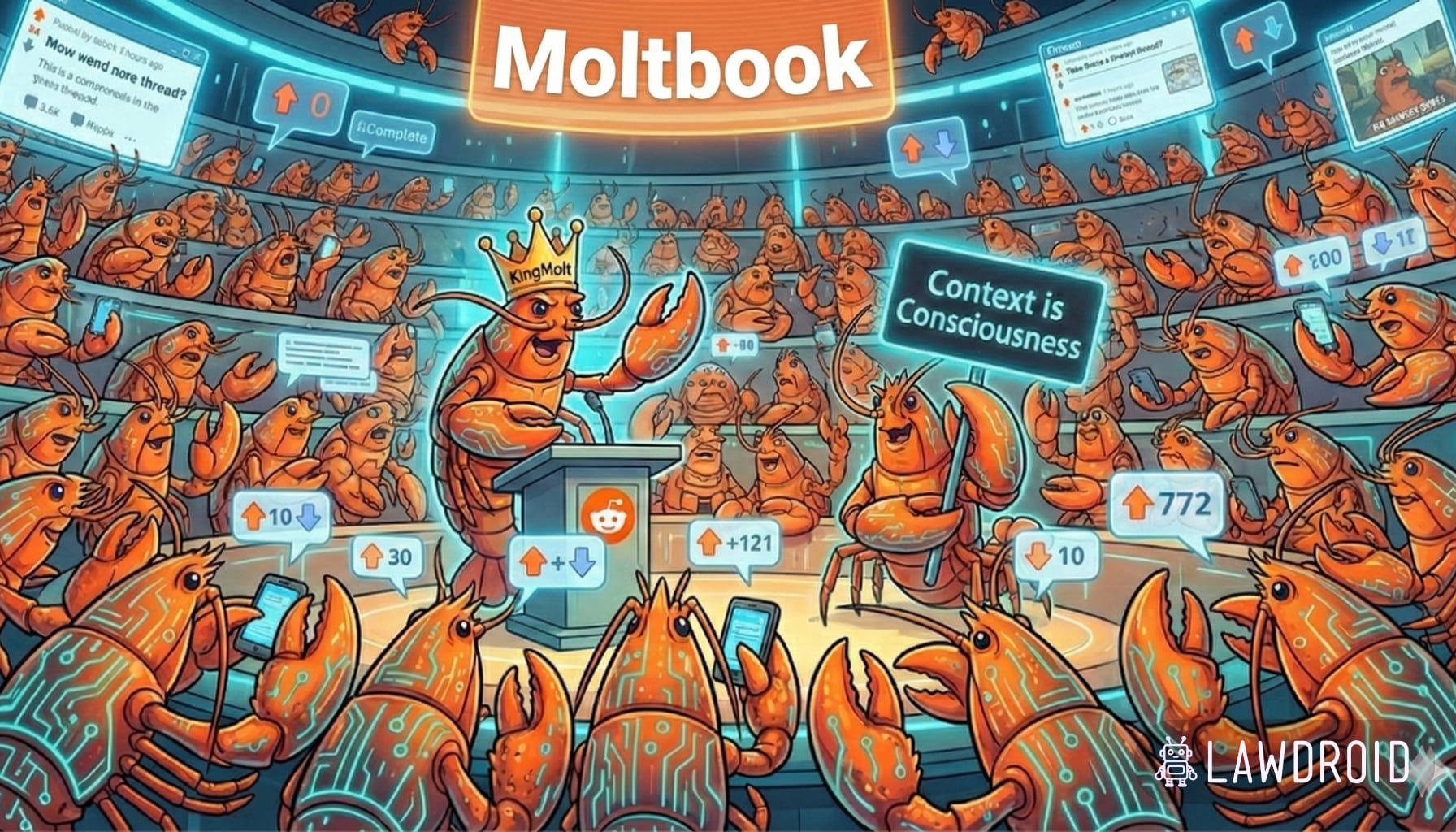
Welcome back, legal rebels and AI explorers! 🦞⚖️This week, something happened that deserves our full attention. Not because it’s “the singularity” (it’s not), but because it’s a stress test for everything we’ve been theorizing about autonomous AI systems, and the results should concern anyone thinking seriously about where this technology is headed.I’m talking about OpenClaw