
On September 24, 2025, Covington’s tech industry experts explored what legal teams, government affairs professionals, and business leaders at tech companies need to know during this pivotal period and offered insights into anticipated challenges and emerging opportunities in the year ahead. Eight Covington attorneys shared their insights during a 60-minute session moderated by Covington partner
AI at the Speed of Enterprise R&D: Isomorphic Labs and the Future of Drug Discovery
EmTechMIT, Cambridge, MA: In recent years, enterprise R&D in biotechnology has been fundamentally reshaped by the rise of artificial intelligence. At EmTechMIT, Chief Business & Legal Officer Sarah Korman of Isomorphic Labs (ISO), the Alphabet-backed spinout from Google’s DeepMind, offered a behind-the-scenes look at how AI is accelerating the design and development of novel medicines,
University of Chicago Law School AI Lab Launches LeaseChat, a Free Tool to Help Renters Understand Their Leases and Legal Rights
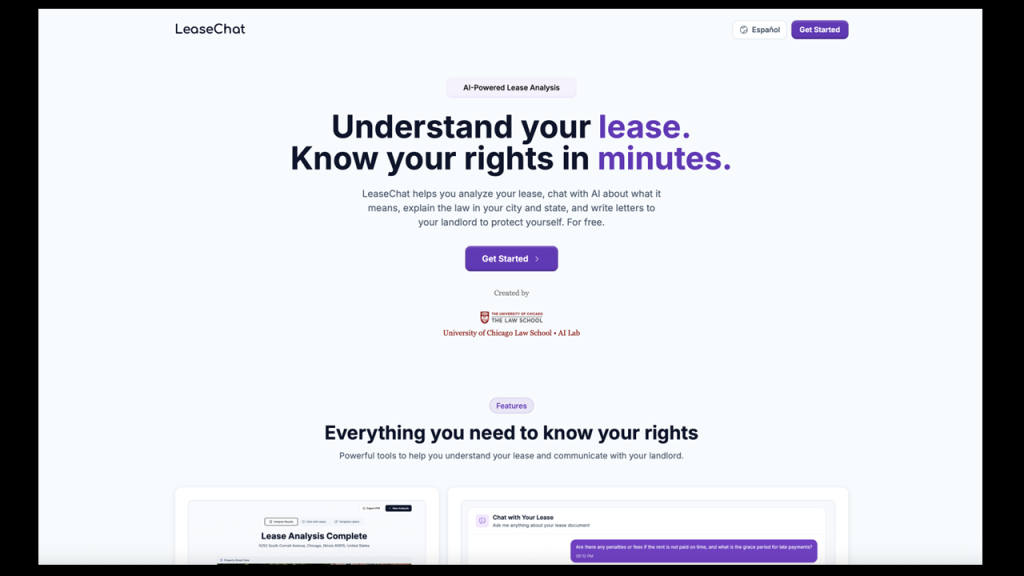 Fewer than four months after the University of Chicago Law School announced it would be launching an AI Lab, a course designed to teach law students how to build generative AI tools to help people who cannot afford an attorney, the 10 students in the lab’s inaugural class have developed and launched their first product.
The Masters Conference Names Legal Industry Veterans Kevin Vermeulen As CEO and Mike Dalewitz As Chairman, Plans 2026 Rebrand and Refocus
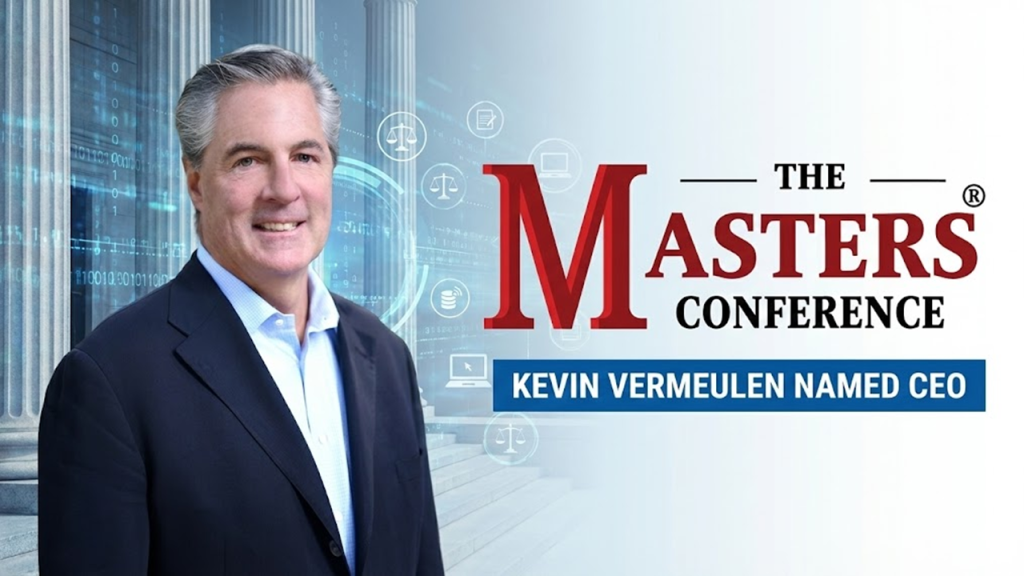 The Masters Conference, an education and thought leadership forum focused on e-discovery, litigation, information governance, AI and related disciplines for legal professionals, has named legal industry veteran Kevin Vermeulen as its new chief executive officer. Masters also announced that Mike Dalewitz, a veteran e-discovery entrepreneur and former advisor to The Masters Conference, is returning to
Anyone surprised that AI is a new college major?
The NewYorkTimes.com reported that “Artificial intelligence is the hot new college major. This semester, more than 3,000 students enrolled in a new college of artificial intelligence and cybersecurity at the University of South Florida in Tampa.” The December 1, 2025 article entitled “College Students Flock to a New Major: A.I.” (https://www.nytimes.com/2025/12/01/technology/college-computer-science-ai-boom.html) included these
Debunking Dubious Justifications for the AI Bubble

AI founders seem to have a never-ending list of reasons — and hyperventilated pitch decks — explaining why their financial losses don’t matter. Some are hopeful, some are delusional, and some are just echoes of arguments that would-be billionaires floated in the dot-com era—updated with better graphic design.
A new article at LLRX.com, entitled The
Australia launches new AI guidance
New guidance for the development and deployment of Artificial Intelligence replaces the existing Australian Government voluntary standard and calls into question the status of proposed mandatory guardrails. The Guidance for AI Adoption At the end of October, the Department of Industry, Science and Resources and the National AI Centre published new Guidance for AI Adoption
Like Lawyers In Pompeii: Is Legal Ignoring The Coming AI Infrastructure Crisis? (Part I)
While everyone debates AI hallucinations, we may be missing a bigger threat. The infrastructure powering AI may not be able to sustain everything vendors are promising.
Think about it: 26 major US utilities already have requests to supply an additional 711 gigawatts of new data center power. That’s nearly equal to the entire continental US
Reimagining Litigation Workflows through AI: A Panel Recorded Live at the Everlaw Summit
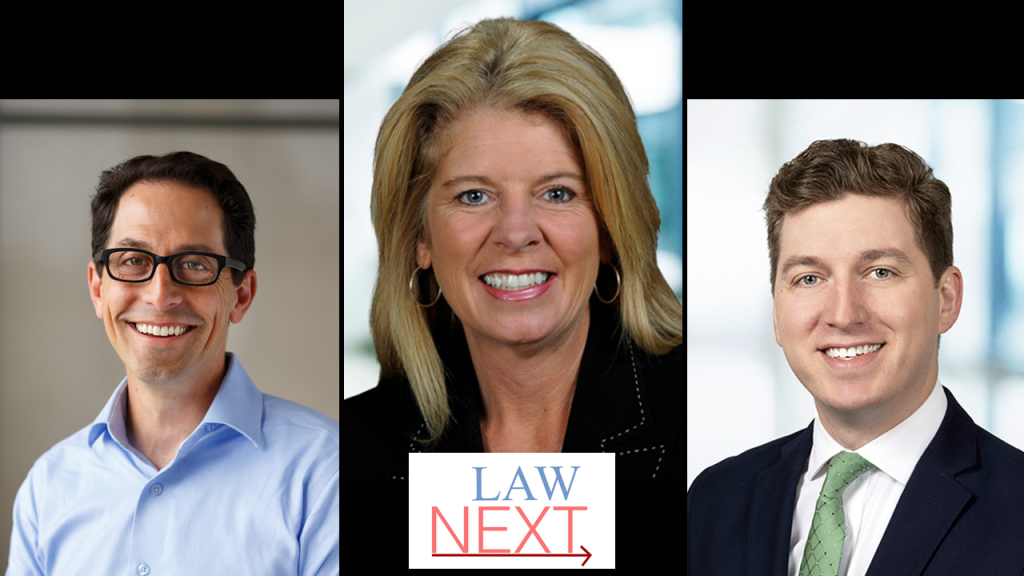 As new tools using generative AI promise to change the way we litigate and conduct discovery, what are the implications for day-to-day litigation workflows? On today’s episode of LawNext, we feature a conversation with three guests about how law firms are navigating the urgency around gen AI adoption while staying grounded in practical realities. LawNext
USPTO’s Revised Inventorship Guidance for AI-Assisted Inventions: What Changed, What Stayed, and What Practitioners Should Do Now

The U.S. Patent and Trademark Office (USPTO) has issued updated examination guidance (“New Guidance”) on inventorship in applications involving artificial intelligence (AI). The document rescinds and replaces the February 13, 2024 guidance and clarifies how inventorship should be determined when AI is used in the inventive process. The New Guidance jettisons the Pannu test for