
 In news that is perhaps an indicator of the legal industry’s interest in generative AI, the document management company NetDocuments said today that its launch of PatternBuilder MAX AI was its “most successful product launch by a factor of 10.”
From the product’s initial launch in October to early last month, the product grew to
Tennessee Enacts Legislation to Protect Musicians from AI-Generated Voice Impersonations
State lawmakers across the country continue to pursue new legislation to regulate the use of artificial intelligence (“AI”), and especially the creation and distribution of AI-generated content (sometimes referred to as “deepfakes,” “synthetic content,” or “fabricated media”). On March 21, 2024, Tennessee’s governor signed the Ensuring Likeness, Voice, and Image Security Act (“ELVIS Act”) (
Tech Snippets Today – Anurag Dhingra, CTO and Head of Engineering at Webex by Cisco with Joseph Raczynski
This was an extremely refreshing conversation with Anurag Dhingra, Chief Technology Officer and Head of Engineering at Webex by Cisco. He has a deeply technical background and has risen through the ranks to focus on the importance about generative AI in the workplace.
In today’s tech-dependent world, Cisco notes the importance of delivering tech with
Exploring the Intersection of Generative AI and Cybersecurity at ILTA EVOLVE – Ken Jones and Josh Smith
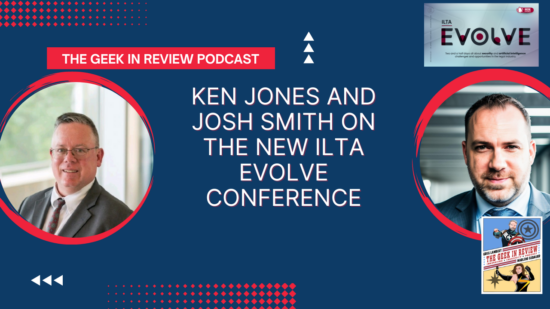
The International Legal Technology Association (ILTA) is launching a new conference called EVOLVE, which will focus on the rapidly evolving topics of generative AI and cybersecurity in the legal industry. Ken Jones, Principal Consultant at Xerdict Group LLC, and Josh Smith, Information Security Manager at Ogletree Deakins, join the podcast to discuss
Utah Enacts First AI-Focused Consumer Protection Legislation in US
The National Law Journal published the following article by Greenberg Traurig https://www.natlawreview.com/article/utah-enacts-first-ai-focused-consumer-protection-legislation-us Making Utah the first U.S. state to enact a major artificial intelligence (AI) statute governing private-sector AI usage, on March 13, 2024—coincidentally, the same day the European Parliament adopted the EU AI Act1—Utah Gov. Cox signed into law S.B. 149 (AI Law). The AI Law, set
Divergent Paths on Regulating Artificial Intelligence
By Joy C. Rosenquist, Bradford Kelley, Deborah Margolis, and Alice Wang on April 1, 2024 PRINT There are increasingly divergent ways that governments across the world are seeking to regulate AI in the workplace. In March 2024, the European Parliament approved the European Union’s Artificial Intelligence Act, the world’s first comprehensive legal framework on AI.
Medium Article: The Coming Copyright Reckoning for Generative AI
Courts are preparing to decide whether generative AI violates copyright—let’s talk about what that really means Copyright law in America is a complicated thing. Those of us who are not lawyers understandably find it difficult to suss out what it really means, and what it does and doesn’t protect. Data scientists don’t spend a lot
Article: The Law vs AI: Now the legal battles are starting to intensify
With OpenAI’s Voice Engine promising to convincingly replicate an individual’s speech from just a 15-second clip, the focus on AI regulation and legal challenges to its operation are intensifying. While the astonishing progress toward photorealistic generative video from OpenAI’s Sora has been getting an enormous amount of attention, behind the scenes there are a lot
FTC Probes Reddit Proposal to License User Content for AI Training

In a regulatory filing, Reddit announced that the FTC is probing Reddit’s proposal to sell, license and share user-generated content with third parties to train artificial intelligence (AI) models. This move underscores the growing scrutiny over how online platforms harness the vast amounts of data they collect, particularly in the context of AI development.
OMB Issues First Governmentwide AI Policy for Federal Agencies
On March 28, the White House Office of Management and Budget (OMB) released guidance on governance and risk management for federal agency use of artificial intelligence (AI). The guidance was issued in furtherance of last fall’s White House AI Executive Order, which established goals to promote the safe, secure, and trustworthy use and development of